
Summary
Editor's rating
Value for money: who this cheap renewed compact actually makes sense for
Design and handling: tiny, light, and a bit old-school
Battery life: better than I expected for an old compact
Build and durability: feels solid enough, but it’s still an old device
Photo performance: good in daylight, noisy when the sun goes down
What you actually get with this renewed IXUS 95 IS
Pros
- Very small and light, genuinely pocketable and easy to carry anywhere
- Decent daylight image quality with usable 3x optical zoom and optical stabilisation
- Simple controls and interface, good for non-techy users or as a kids’/backup camera
Cons
- Poor low-light performance and basic VGA video only
- Small, dated LCD that’s hard to see in bright sunlight
- Older renewed model with no modern connectivity and limited long-term confidence

Specifications
View full product page →| Brand | Canon |
A tiny camera in 2026: still worth bothering with?
I picked up this renewed Canon Digital IXUS 95 IS mostly out of curiosity and nostalgia. I’ve been using phones for photos for years, but I wanted a tiny dedicated camera I could throw in a pocket and not worry about. This one popped up cheap in the Amazon Renewed section, 10 MP, 3x zoom, old-school 2.5" screen, and I thought: why not. So this is not a pro review, it’s just how it felt to actually use it for everyday stuff: walks, family visits, a night out, and some random street shots.
First thing to be clear about: this is an old model, just refurbished. So you’re obviously not getting 4K video, crazy autofocus tracking, or huge dynamic range. The promise is more basic: a compact camera that fits in any pocket, simple menus, and pictures that are at least as good as (or slightly better than) a cheap phone in good light. I used it for about two weeks, roughly 400 photos and a handful of short VGA clips.
During that time I carried it instead of my phone for photos on purpose. If I wanted to take a picture, I reached for this first. That really shows you quickly where it works and where it annoys you. I shot a bit of everything: portraits of friends, food on a table, buildings, night streets, and some quick shots of a moving dog in the park. No tripod, no fancy settings, just casual point-and-shoot with some experiments in the different modes.
Overall, my feeling is that it’s a pretty solid little camera for casual daytime use, especially if you like the feel of a real shutter button and an optical viewfinder. But it also feels dated in a bunch of ways: video is rough, low light is noisy, and the small screen is not very pleasant once you’re used to modern phones. If you go in with that in mind, it can still be a fun and practical tool, especially at a low renewed price.
Value for money: who this cheap renewed compact actually makes sense for
On the price side, the main point is this: you’re buying a very basic, older compact, but you’re paying a pretty low renewed price for it. That’s the whole deal. If you’re expecting it to compete with a modern mid-range smartphone camera in every situation, you’ll be disappointed, especially in low light and video. But if you look at it as a tiny dedicated camera with optical zoom that you don’t mind tossing around, it starts to make more sense.
For me, the value comes from a few specific things:
- It’s small and cheap enough that I’m not scared to take it to the beach or a bar.
- It has optical zoom and a real shutter button, which is nicer than pinching on a screen.
- Daylight photos look clean and more natural than what some very cheap phones produce.
If you already have a recent smartphone with a decent camera, this is more of a fun backup or nostalgia toy than a serious upgrade. Where I think it actually makes sense is for people who want a simple camera for kids, grandparents, or casual users who don’t care about tech but want something they can physically hold and click. Also for people who like to separate photography from their phone: no notifications, no distractions, just a small camera for walks and trips.
Considering the 1‑year limited warranty from Amazon Renewed and Canon branding, I’d say the value is decent if you find it at the lower end of the price range. If the price creeps too close to newer entry-level compacts or used more modern models, then I’d probably look elsewhere. But as a budget, pocketable point-and-shoot that still does the basics reliably, it offers fair bang for the buck, as long as your expectations are realistic.
Design and handling: tiny, light, and a bit old-school
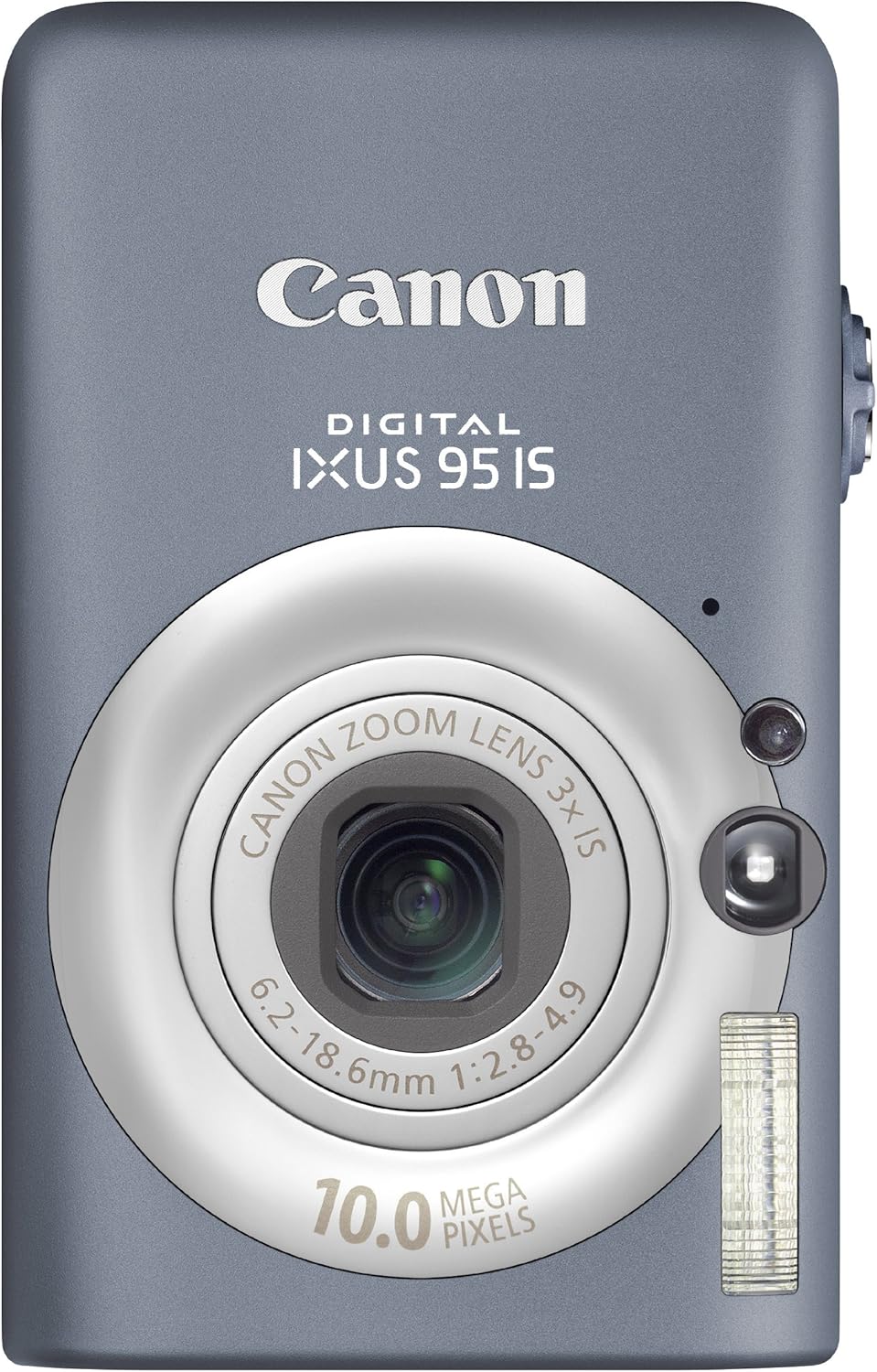
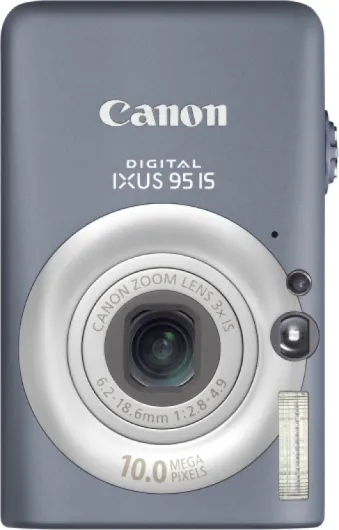
The design is very much classic Canon IXUS: small rectangle, rounded corners, and a simple lens in the middle. It weighs about 118 g, which is lighter than most smartphones. In hand it feels almost like a toy at first because we’re so used to heavier devices now. But once you start using it, the lightness is actually nice. I could keep it in a jeans pocket all day and forget it was there. No pulling on the pocket, no awkward bulge like with some bigger compacts.
The controls are basic but logical. On top you’ve got the power button and the shutter with the zoom ring. On the back there’s a mode dial, a D‑pad with shortcuts (flash, macro, self-timer, display), a playback button, and a menu button. No touch screen obviously. After a few days, I was doing everything by muscle memory: half-press to focus, full press to shoot, thumb on the dial to switch between Auto, Program, and Movie. If you’ve used any compact camera in the last 15 years, you’ll pick it up instantly.
The weak point for me is the screen. It’s a 2.5" LCD with 230k dots, which was fine back in the day but looks pretty rough now. Outdoors in bright light it’s just about usable if you crank the brightness, but you’ll often rely on the optical viewfinder instead. The viewfinder is tiny and not super accurate for framing, but when the sun is blasting the screen, it’s still helpful. Indoors the screen is okay; colours are a bit washed out, but you can check focus and composition well enough.
One design detail I liked is the physical on/off button and lens cover. When you power it down, the lens retracts and a mechanical cover slides over it. That means you can throw it in a bag without worrying about scratching the lens. The downside is the lack of any real grip: the front is smooth, and if your hands are sweaty, it can feel a bit slippery. I ended up using the wrist strap all the time, just in case. Overall, the design is simple, pocketable, and clearly from an earlier era, but still practical if you value small size over anything else.
Battery life: better than I expected for an old compact
Battery life was one of my concerns, since this is a renewed, older camera. The listing says lithium-ion, and the unit I got came with a generic replacement battery, not a fresh Canon one. I charged it fully and then used it as my main camera over a weekend trip. I turned it on and off a lot, used the flash occasionally, and reviewed photos on the screen quite a bit. By the end of the day, I had taken around 150+ photos and a handful of short videos, and the battery icon was just hitting the last bar.
Over the two weeks, I’d say I was getting roughly 200–250 shots per charge, depending on how much I chimped (reviewed photos) and how much flash I used. That’s not insane, but it’s actually not bad for such a small battery and an old design. It definitely outlasted my phone on days when I was shooting a lot, simply because it’s only doing one job: taking photos, not running apps and data in the background.
Charging is old-school: you pop the battery out and drop it into the external charger. No USB charging directly in the camera. Personally I don’t mind that; I just left the charger plugged in near my desk and dropped the battery in overnight. If you plan to use this camera a lot on trips, I’d strongly suggest grabbing a second cheap spare battery. They’re small and light, and it removes any stress about running out of juice halfway through a day.
One thing to note is that since it’s a renewed product, battery quality might vary between units. Mine held charge fine, but I wouldn’t expect the same consistency you get from a brand new modern camera with a rated CIPA figure. Still, for casual use—weekend outings, family events, a holiday—you’ll probably be okay as long as you charge it the night before. For the price bracket, the battery situation is acceptable, just not impressive.
Build and durability: feels solid enough, but it’s still an old device
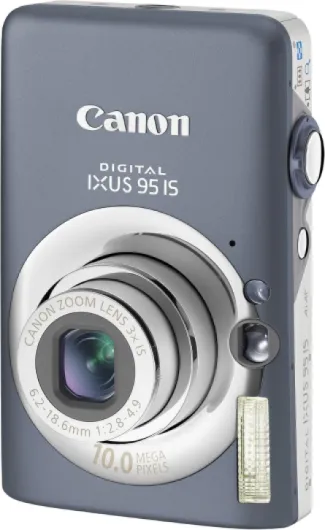
The camera body itself feels pretty solid for such a small compact. The outer shell seems to be a mix of metal and plastic, with a slightly cold touch that suggests some aluminium on the front. There’s no creaking when you twist it a bit, and all the doors (battery/SD compartment and the little flap over the USB port) close firmly. Over the two weeks I used it, I tossed it into a bag with keys and random stuff (not smart, I know) and it came out without scratches on the lens or major marks on the body.
The lens mechanism is usually the weak point on these old compacts. On my unit, the lens extended and retracted smoothly every time. No grinding noises, no hesitation, and the lens cover always opened fully. I did get one moment where I turned it on in my pocket by accident, and the lens tried to extend but was blocked. The camera beeped and gave a lens error, but as soon as I turned it off and on again in the open, it was fine. So I’d definitely use the wrist strap and avoid powering it on while it’s still in your pocket.
Keep in mind, though, this is a refurbished camera from an older generation. Internally, components have age, even if they’ve been checked. The buttons on my unit worked fine, but you can feel a slight softness on the mode dial, like it’s been used for years. It’s not a big deal, but it reminds you that you’re not dealing with a fresh product. I wouldn’t rely on this as a professional tool or the only camera on a once-in-a-lifetime trip without a backup.
For normal day-to-day use—family gatherings, casual travel, throwing it in a bag for walks—it feels sturdy enough. Just don’t expect any weather sealing or drop protection. A small drop on carpet or a short fall from a chair is probably okay; concrete might be the end of it. If you treat it like a delicate gadget and not like a rugged action cam, it should hold up fine. Given the low renewed price, I’m comfortable with the durability, but I also know it’s not built to survive serious abuse.
Photo performance: good in daylight, noisy when the sun goes down
In terms of image quality, I’d put it like this: in good light, it’s perfectly decent; in low light, it struggles. During the day, outdoors, the 10 MP sensor and Canon processing still hold up surprisingly well. I took it out for a walk around town, shooting buildings, trees, and random street scenes. On a laptop screen, the photos look clean and sharp enough for social media or small prints. Colours are a bit on the warm side but pleasant, and the exposure is usually on point in Auto mode.
The 3x optical zoom (35–105 mm) is useful for framing. At the wide end it’s okay for groups and buildings; at the long end you can get decent close-ups of faces without standing in someone’s space. It’s not a huge zoom range, but better than nothing, and definitely nicer than digital zoom on a cheap phone. The optical stabilisation helps a bit when you’re zoomed in. I could shoot at slower shutter speeds (around 1/20–1/30) and still get reasonably sharp shots if I held it steady.
Where it falls apart is low light and indoor shots without flash. Once the ISO climbs, you get visible noise and smudging. I tried taking photos in a dim bar and the results were pretty meh: grainy, soft, and with some motion blur if people were moving. The camera does have a built-in flash and that saves some situations, but you get that classic compact look: bright subjects, darker background, and a bit of red-eye if you’re not careful. It’s fine for casual party snapshots, but not something you’ll frame on the wall.
Focus performance is okay but not fast by modern standards. It uses contrast-detect AF with a single point, and sometimes hunts a bit in low contrast scenes. For static subjects it’s fine; for a running dog or kids moving fast, I had a lot of missed shots. The Face Detection does help for simple portraits; it usually locks on faces quickly in daylight. In short: it’s a solid daytime point-and-shoot, but if you mainly shoot at night or indoors in bad light, you’ll hit its limits very fast.
What you actually get with this renewed IXUS 95 IS
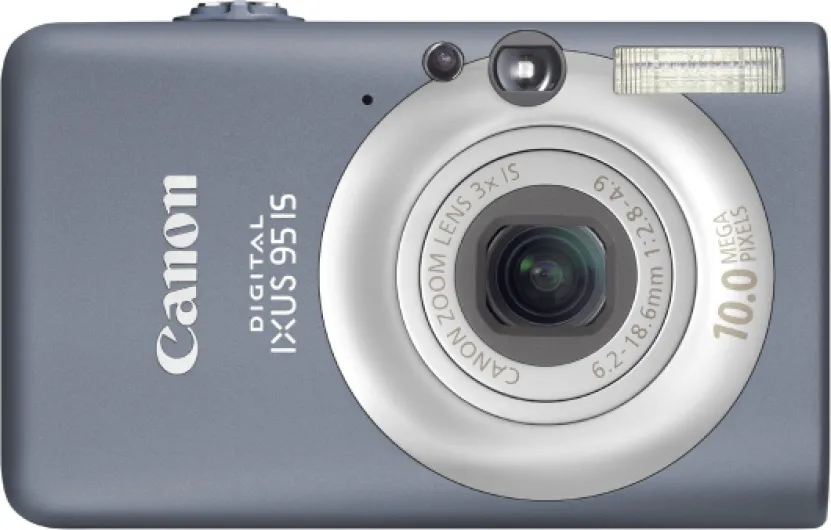
Out of the box, the package is pretty straightforward. It’s the camera body in grey, a battery (third-party in my case, not Canon-branded), a basic charger, and a generic USB cable. No SD card was included, so I had to dig one out. Just keep that in mind: you’ll need a regular SD (not microSD without adapter) to start shooting. The listing describes it as renewed, and that’s accurate: this is not a new product, it’s an old compact that’s been cleaned up and tested.
The specs are simple: 10 MP sensor, 3x optical zoom (35–105 mm equivalent), optical image stabilisation, and 2.5" LCD. It shoots JPEG only, no RAW, and video tops out at 640 × 480 at 30 fps in AVI format. There are a bunch of shooting modes: Auto, Program, portrait, night, sports, macro, and some scene stuff. It also has Face Detection and a Smart Auto mode that tries to guess the scene for you. So it’s mostly designed for people who don’t want to fiddle with settings, just point and press.
Compared to using a phone, the key difference is the optical zoom and the physical controls. You get a proper zoom lever around the shutter button and a dedicated playback button, plus a tiny mode dial. No touch screen, no apps, no Wi‑Fi. It really is just a camera. If you’re fine transferring photos with a USB cable or card reader, it’s simple enough. For me, I just pulled the SD card and stuck it into my laptop; that was quicker than messing with the old USB 2.0 connection.
In practice the camera feels like a small, self-contained tool: you turn it on, it’s ready in about a second, you shoot, and that’s it. No notifications, no distractions. If you want a distraction-free way to take casual photos, it does that job. Just don’t expect any modern connectivity or fancy extras. For the price I paid, I wasn’t expecting miracles, and on that front it matched the description pretty well.
Pros
- Very small and light, genuinely pocketable and easy to carry anywhere
- Decent daylight image quality with usable 3x optical zoom and optical stabilisation
- Simple controls and interface, good for non-techy users or as a kids’/backup camera
Cons
- Poor low-light performance and basic VGA video only
- Small, dated LCD that’s hard to see in bright sunlight
- Older renewed model with no modern connectivity and limited long-term confidence
Conclusion
Editor's rating
After a couple of weeks using the Canon Digital IXUS 95 IS as my main casual camera, I’d sum it up like this: it’s simple, small, and still usable in 2026, but very much limited by its age. In good daylight, it takes perfectly decent photos with pleasant colour and enough detail for social media, albums, and small prints. The 3x optical zoom and optical stabilisation are handy, and the physical controls make it easy to grab a quick shot without digging through menus. Battery life is fine for a day of normal use, and the body feels solid enough for everyday carry.
On the downside, low-light performance is weak, video is stuck at 640 × 480, and the small LCD feels dated and hard to see in bright sun. Autofocus is okay for still subjects but not great for fast movement, and of course there’s no modern connectivity at all. So who is it for? I’d say it’s a good fit for people who want a cheap, no-nonsense pocket camera for daylight outings, kids, or grandparents, or anyone who just wants a tiny dedicated camera so they’re not always using their phone. If you shoot a lot at night, care about video quality, or want to edit heavily, you should skip this and look for a newer compact or just stick with a good phone.
Overall, I think it offers good value at the right renewed price, as long as you treat it as a basic tool and not a modern powerhouse. It’s not perfect, and there are better options if you’re willing to spend more, but for simple point-and-shoot use in good light, it still gets the job done.