
Summary
Editor's rating
Value for money: good starter kit if you know its limits
Cheap plastic body, handy flip screen
Two batteries that actually make a difference
Feels fragile, so don’t expect it to survive abuse
Image and video quality: decent in daylight, rough in low light
What you actually get with this camera
Pros
- Includes two 1500 mAh batteries and a memory card, ready to use out of the box
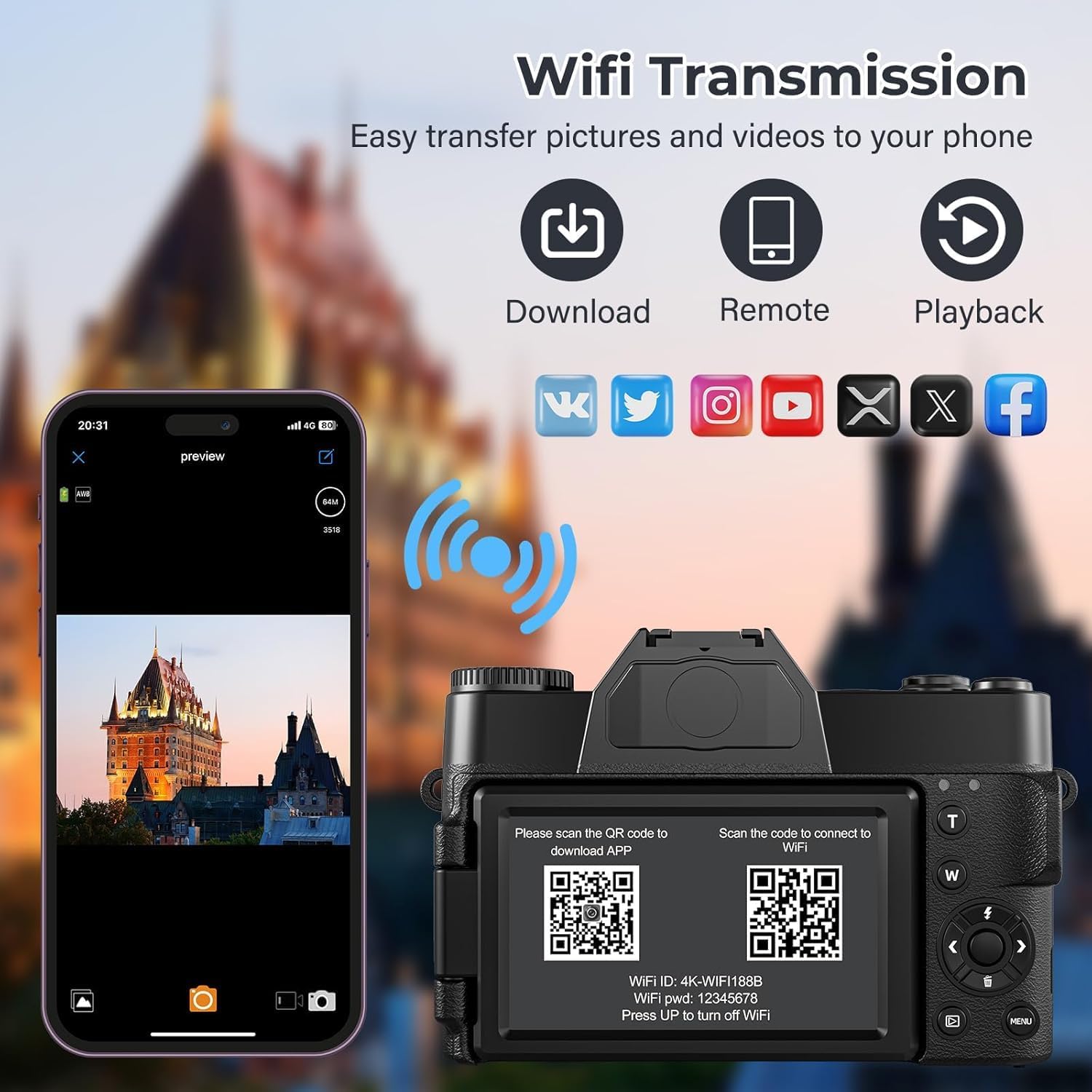
- Flip screen and Wi‑Fi transfer make vlogging and sharing on phone very easy
- Decent image and video quality in good light for the price
Cons
- Cheap plastic feel and no lens cap, so it doesn’t feel very durable
- Weak low‑light performance and heavily advertised specs (75MP, 16x zoom) don’t match real‑world quality
- Digital zoom quickly degrades image quality beyond a few steps

Specifications
View full product page →| Brand | HAMBEA |
A budget 4K camera that looks too good on paper
I’ve been using this HAMBEA 4K digital camera for a couple of weeks, mainly for casual photos, some indoor videos, and a few short vlogs for social media. I grabbed it because the spec sheet looked a bit wild for the price: 4K, 75MP, Wi‑Fi, flip screen, two batteries, SD card included. On Amazon it sounds like you’re getting a professional setup for the cost of a mid‑range Bluetooth speaker, so I was curious how much of that is real and how much is just numbers on a box.
In practice, it behaves like a typical budget compact camera: better than very old phones, roughly on par with a decent mid‑range phone in good light, and clearly weaker as soon as the light drops. If you go in expecting a mini DSLR, you’ll be disappointed. If you just want something simple for a teenager, a beginner, or as a throw‑around travel camera you don’t mind scratching, it starts to make more sense.
The big things that stood out for me were the flip screen, the Wi‑Fi transfer, and the fact it comes with two batteries and a memory card so you can literally use it right out of the box. On the downside, the build feels cheap, the lens is unprotected, and the “75MP” spec is clearly more about marketing than actual image quality. The autofocus is fine when there’s plenty of light, but it struggles in dim rooms and the digital zoom is basically just cropping.
So overall, my mindset with this camera became: it’s a starter toy that gets the job done, not a long‑term photography investment. Once I accepted that, I actually enjoyed using it for quick clips and casual shots. But if you’re picky about image quality or used to a real camera from Canon or Sony, you’ll probably find its limits pretty fast.
Value for money: good starter kit if you know its limits
From a value point of view, this camera sits in an interesting spot. For the price, you’re getting a full kit: camera, two batteries, a 16 GB card, USB cable, and all the basic features you’d want for beginner vlogging – flip screen, Wi‑Fi transfer, 4K video, simple autofocus. If you compare that to buying a used big‑brand camera plus batteries and card, this is obviously cheaper and simpler. For someone who just wants to try out vlogging or give their kid a first camera, it’s a decent deal.
Where the value drops is if you’re expecting it to beat a good recent smartphone. In bright light, it might be similar or slightly better than some budget phones, mainly because you get optical framing and a dedicated device. But in low light, most mid‑range phones with modern processing will do a better job. Also, the whole 75MP and 16x zoom story is mostly just marketing; the real‑world benefits are limited, so don’t buy it for the big numbers alone.
For beginners, teenagers, or casual users, the value is that it’s a separate device you can hand over without worrying about them dropping your expensive phone. The Wi‑Fi transfer makes it easy to get clips onto a phone for TikTok or Instagram, and the controls are simple enough that you don’t need to be a tech nerd to figure it out. If it gets scratched or eventually dies, you haven’t lost a fortune.
So I’d rate the value as good, but very context‑dependent. It makes sense if you want a cheap, all‑in‑one starter camera and you accept that it’s not pro gear. If you already own a solid phone camera and care about image quality, your money might be better spent saving up for an entry‑level mirrorless or a better compact from a major brand.
Cheap plastic body, handy flip screen
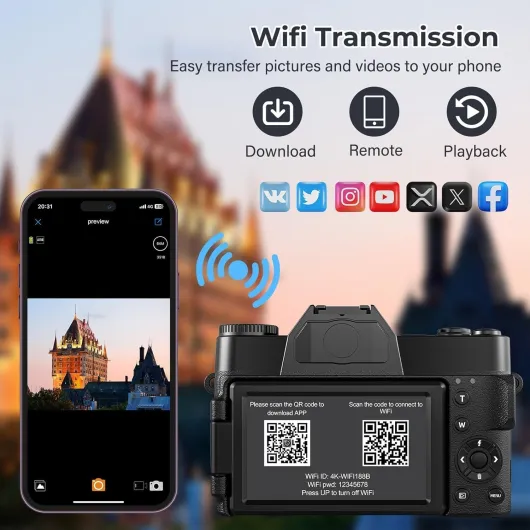
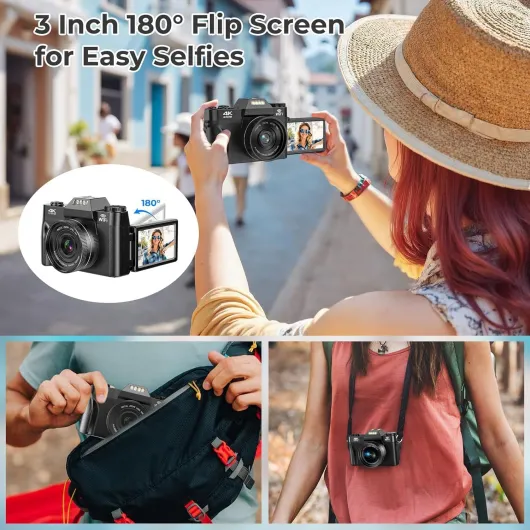
Design‑wise, this camera is a mix of practical ideas and cheap execution. The good part first: the 3‑inch flip screen is genuinely useful. Being able to flip it 180° for selfies or vlogging is great, especially if you’re filming yourself and want to check framing. I used it on a small tabletop tripod for talking‑head clips, and it did the job without fuss. The layout of the buttons is also straightforward: shutter on top, zoom rocker, power, and a few rear buttons for menu, playback, and mode.
On the downside, the whole thing feels like hard, hollow plastic. One of the Amazon reviews said it feels cheap and clunky, and I agree. The buttons have that stiff, clicky feel that reminds me of old budget electronics. Nothing broke on me, but it doesn’t feel like it would survive a serious drop. Also, the lack of any lens cap or cover is just lazy. I kept wiping fingerprints and dust off the lens because it’s always exposed. If you’re thinking of tossing it into a bag, you’ll probably want to buy a small pouch or case.
The camera is very light, which is nice for carrying around all day, but also makes it feel like a toy. Some people will like the low weight, especially kids or beginners who don’t want something heavy, but if you’re used to more solid gear, it’s a bit of a shock. The grip is minimal; it’s basically a flat rectangle with a small bump, so one‑hand shooting feels slightly insecure, especially if you have bigger hands.
Overall, the design is functional but cheap. The flip screen is the star, the button layout is simple, but the plastic body and unprotected lens are clear compromises. If you treat it as a casual camera you don’t baby too much, it’s fine. If you want something that feels premium in the hand, this isn’t it.
Two batteries that actually make a difference
Battery life was one of the nicer surprises. The camera comes with two 1500 mAh batteries, which is very handy. On a single battery, shooting a mix of short 4K clips and photos, I got roughly 1.5 to 2 hours of active use before it started complaining. That’s not crazy, but with the second battery in your pocket, you can easily cover a full day of casual shooting, especially if you’re not recording long continuous videos.
Charging is done via USB, which is convenient. You just plug the camera into a charger or power bank. It’s not the fastest, but overnight charging is no problem. I didn’t see any fancy battery percentage; it’s more of a basic battery icon, so you just have to keep an eye on it. For a budget device, the fact that you don’t have to buy a spare battery separately is a real plus. Many cheap cameras cheap out and only include one.
One thing to note: when recording 4K video continuously, the battery drains quicker and the camera gets a bit warm. Nothing alarming, but don’t expect to film a long event in one go. This is more for shorter clips – vlogs, quick walkthroughs, or a few minutes at a time. The batteries are light, so carrying both isn’t a hassle. I usually left one in the camera and one in my bag and swapped them at lunch.
Overall, for the price range, battery performance is pretty solid. Two included batteries mean you’re covered for a simple day trip or a few hours of shooting without needing a wall socket. If you’re planning serious all‑day filming, you’ll still hit the limits, but for beginners and teenagers doing casual content, it’s more than enough.
Feels fragile, so don’t expect it to survive abuse
Durability is where the low price really shows. The body is hard, glossy plastic, and it doesn’t give that reassuring feeling that it could take a beating. I didn’t drop mine, but just handling it, you can tell it’s not built like a rugged camera. The screen hinge works fine and didn’t wobble during my tests, but I wouldn’t constantly flip it open and slam it shut without some care. One Amazon review mentioned being disappointed by how cheap it felt, and I’m on the same page there.
The biggest concern is the exposed lens. Since there’s no lens cap, the glass is always out in the open. Just putting it in a pocket with keys or coins would be a bad idea. I found myself constantly wiping fingerprints and being careful not to put it face‑down. Long‑term, I can see this lens getting scratched if the user is careless, especially if it’s given to a kid or teenager who throws it in a school bag.
Buttons and ports are basic but functional. The USB port cover feels a bit flimsy, like it could tear if you yank it too hard. On the positive side, nothing creaked or cracked during my normal use, and the flip screen stayed in place without getting loose. But again, I treated it gently. This is not the type of camera you want to take to the beach and cover in sand and water; it’s not weather‑sealed, and I’d keep it away from rain and dust as much as possible.
So, in terms of durability, I’d say it’s fine if you’re careful, risky if you’re rough. Think of it more like a budget gadget than a long‑term investment. If you buy it for a teen, I’d also grab a cheap case or pouch and maybe a microfiber cloth for the lens. That alone will extend its life a lot.
Image and video quality: decent in daylight, rough in low light
In terms of photo quality, this camera is okay as long as you stick to good lighting. Outdoors during the day, it gives you clear enough shots for social media, family photos, and casual travel pics. The colours are a bit on the punchy side, and the sharpness is fine in the centre. Don’t expect true 75MP detail; it’s clearly a small sensor doing a lot of software sharpening and upscaling. When I zoomed in on the files on a laptop, you can see noise and softness, but on a phone screen, it looks alright.
In low light or indoors, the weaknesses show quickly. Noise goes up, details smear, and the autofocus starts hunting more often. The built‑in flash helps for close subjects, but it’s harsh and flat, like most tiny flashes. If you’re filming in a dim bedroom or a bar, don’t expect clean, professional footage. For TikTok or Instagram Stories, it’s usable, but a good recent smartphone will usually handle low light better.
For video, the 4K label is a bit optimistic. Yes, it records at a 4K resolution, but the bitrate and processing aren’t on the level of a proper mirrorless or even some phones. It’s still a step up from very cheap 1080p cams, and for basic YouTube or vlogs it’s okay, especially in daylight. The digital image stabilisation helps a bit with small hand shakes, but if you walk while filming, you still get wobble. I found it best to either stand still, use a small tripod, or brace my elbows.
The 16x digital zoom is only really usable up to maybe 4x if you care about quality. Beyond that, it’s just enlarging pixels and you get mushy, noisy images. Autofocus is fine when the light is good and the subject isn’t moving too fast. For talking‑head videos or simple shots of objects, it locks on and stays there. For kids running around or pets in low light, it struggles. So, performance overall: good enough for beginners and casual use, but nowhere near what the spec sheet suggests if you read it like a pro camera.
What you actually get with this camera
Out of the box, you get the camera, two 1500 mAh batteries, a 16 GB SD card (some reviews mention 32 GB, mine was 16 GB), a USB cable, and the usual basic manual. You don’t get a lens cap, and that annoyed me immediately. The lens is just sitting there exposed, and because the body feels like cheap hard plastic, it doesn’t inspire a lot of confidence if you plan to throw it into a backpack or handbag without extra protection.
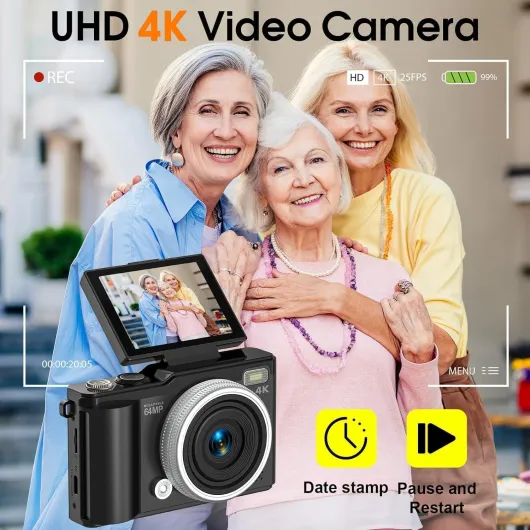
The camera itself is small and light, roughly the size of an older compact point‑and‑shoot. It has a 3‑inch flip screen that rotates 180°, a small built‑in flash, and a simple top dial with only a few modes. You’re not getting deep manual controls or fancy dials here. It’s clearly aimed at beginners: point, press record or shutter, and that’s mostly it. The menus are basic but readable, and after 10–15 minutes of poking around, I understood where everything was.
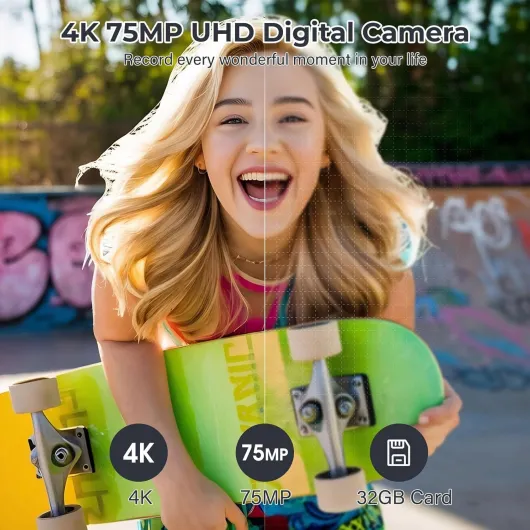
Spec‑wise, the box screams 4K video, 75MP photos, Wi‑Fi, 16x digital zoom, image stabilisation, slow motion, time‑lapse, etc. A lot of that is technically true but needs context. The 4K is there, but not at the level of a real 4K camera. The 75MP is clearly upscaled from a small 1/3‑inch sensor, so don’t expect razor‑sharp poster prints. The 16x zoom is digital only, so quality drops quickly when you zoom in. Still, for casual social media use, it’s good enough.
So the overall package is: a very simple all‑in‑one vlogging camera kit with everything you need to start. No need to buy batteries or a card separately, which is nice if you’re buying this for a teenager or as a gift. Just be aware that the specs sound more premium than the actual real‑world performance. It’s more like a beginner’s gadget than a serious camera body.
Pros
- Includes two 1500 mAh batteries and a memory card, ready to use out of the box
- Flip screen and Wi‑Fi transfer make vlogging and sharing on phone very easy
- Decent image and video quality in good light for the price
Cons
- Cheap plastic feel and no lens cap, so it doesn’t feel very durable
- Weak low‑light performance and heavily advertised specs (75MP, 16x zoom) don’t match real‑world quality
- Digital zoom quickly degrades image quality beyond a few steps
Conclusion
Editor's rating
After using this HAMBEA 4K digital camera for a bit, my take is simple: it’s a decent starter vlogging and photo camera if you keep your expectations realistic. The flip screen, Wi‑Fi transfer, and included extras (two batteries and a memory card) make it very beginner‑friendly. In good light, photo and video quality are perfectly fine for social media, travel snaps, and casual vlogs. The interface is straightforward, so even someone who has only used a phone camera can pick it up and start shooting in minutes.
On the flip side, the build feels cheap, the lens is unprotected, and the big numbers on the box (75MP, 16x zoom, 4K) sound better than they perform. Low‑light quality is weak, and the digital zoom isn’t great beyond a few steps. If you’re used to a Canon, Sony, or even a strong modern smartphone camera, you’ll notice the difference. This isn’t for pixel‑peepers or serious creators who need reliable, clean footage in all conditions.
Who is it for? Teenagers, beginners, and casual users who want a separate camera for vlogging or travel without risking an expensive phone. It’s also fine as a cheap backup camera you don’t mind scratching. Who should skip it? Anyone who’s picky about image quality, plans to shoot a lot in low light, or wants something that feels robust and premium. In short: good value as a learning tool and casual gadget, limited if you’re aiming for pro‑looking content.