
Summary
Editor's rating
Is the Olympus PEN E‑P7 good value for money?
Retro look, small body, and a few layout quirks
Battery life and charging: ok, but stuck in the micro‑USB era
Build quality and how tough it feels in daily use
Image quality, autofocus and stabilisation in real use
What you actually get in the box and what this thing can do
Pros
- Compact, lightweight body with in‑body 5‑axis stabilisation that really helps in low light
- 20 MP sensor and JPEG engine deliver good image quality for everyday and travel use
- Flip‑down touchscreen and Wi‑Fi/Bluetooth make selfies and phone transfers straightforward
Cons
- No built‑in viewfinder and screen can be hard to see in bright sunlight
- No microphone jack or weather sealing, and still using micro‑USB charging

Specifications
View full product page →| Brand | OM SYSTEM |
A small camera that finally pulled me away from my phone
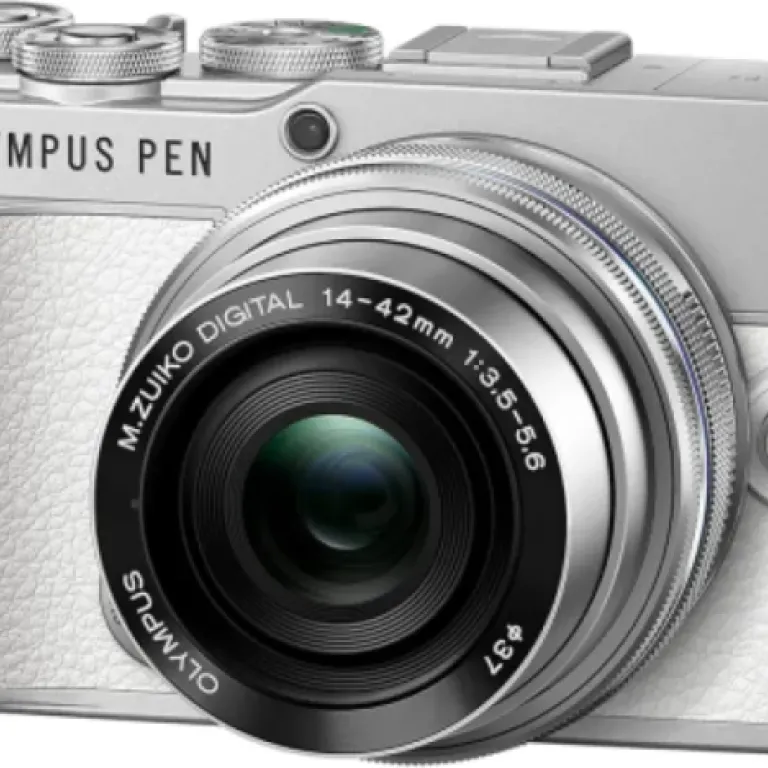
I picked up the Olympus PEN E-P7 kit because I was tired of pretending my phone camera was “good enough” for trips and family stuff. I didn’t want a big DSLR hanging off my neck again, so this little white body with the 14–42mm pancake zoom looked like a good compromise. Micro Four Thirds is familiar territory for me, so I was curious to see if a modern 20 MP sensor and 5‑axis stabilisation would actually feel like an upgrade over my older bodies.
After a couple of weeks using it for walks, a weekend trip, and some indoor family shots, I’d say it’s a pretty solid everyday camera with some quirks. It’s not a pro workhorse and it doesn’t try to be. It’s more like: throw it in a small bag, shoot JPEG most of the time, and enjoy having proper controls instead of digging through phone menus. The built‑in stabilisation and the flip screen got more use than I expected.
It’s not perfect though. There’s no headphone or mic jack, so if you care about serious video sound you’ll be annoyed. The motorised kit zoom is convenient but a bit slow and not very bright. And if you’re coming from full frame, you’ll see the limits in low light and depth of field. But compared to shooting only on a smartphone, the step up in control and consistency is obvious.
Overall, my feeling is: good little travel and everyday camera, especially if you like the idea of swapping lenses later. If you’re expecting pro features or heavy video tools, you’re in the wrong place. If you just want something light that makes photography a bit more fun again, it gets the job done.
Is the Olympus PEN E‑P7 good value for money?
Price‑wise, the E‑P7 kit sits in that mid‑range mirrorless zone: not entry‑level cheap, but also not at the level of the big full‑frame bodies. For the money, you get a 20 MP sensor, in‑body stabilisation, 4K video, Wi‑Fi/Bluetooth, a compact motorised zoom, and a body that you’ll actually want to carry. If you compare it to buying a new phone just for the camera, this gives you more control and lens options for a similar or slightly higher price, depending on what you’re shopping.
Where it shines in terms of value is for someone who wants a small interchangeable‑lens system and is okay with Micro Four Thirds. There are lots of affordable used lenses out there, and the mount is mature. So you can start with the kit lens and later add a cheap 25mm f/1.8 or a small telephoto without breaking the bank. The 5‑axis stabilisation also means even older non‑stabilised lenses are more usable in low light. That makes the system as a whole decent value over time, not just the body.
On the downside, for similar money you can sometimes find cameras with a built‑in viewfinder, better autofocus, or USB‑C – often slightly bulkier, but more feature‑packed. Also, the lack of mic input and weather sealing feels like a cost‑cutting move. If those two things matter to you, the value drops, because you end up needing other gear to fill those gaps. For pure photo use and casual video, it makes more sense than if you’re trying to build a hybrid photo/video setup.
So in my opinion, value is pretty solid but not mind‑blowing. You’re paying partly for the compact size and design. If that’s important to you, the price feels justified. If you don’t care about looks and don’t mind a bigger body, you can probably find more spec‑heavy options in the same ballpark. For someone wanting a light, good‑looking camera they’ll actually carry, with room to grow via lenses, it’s a sensible buy.
Retro look, small body, and a few layout quirks
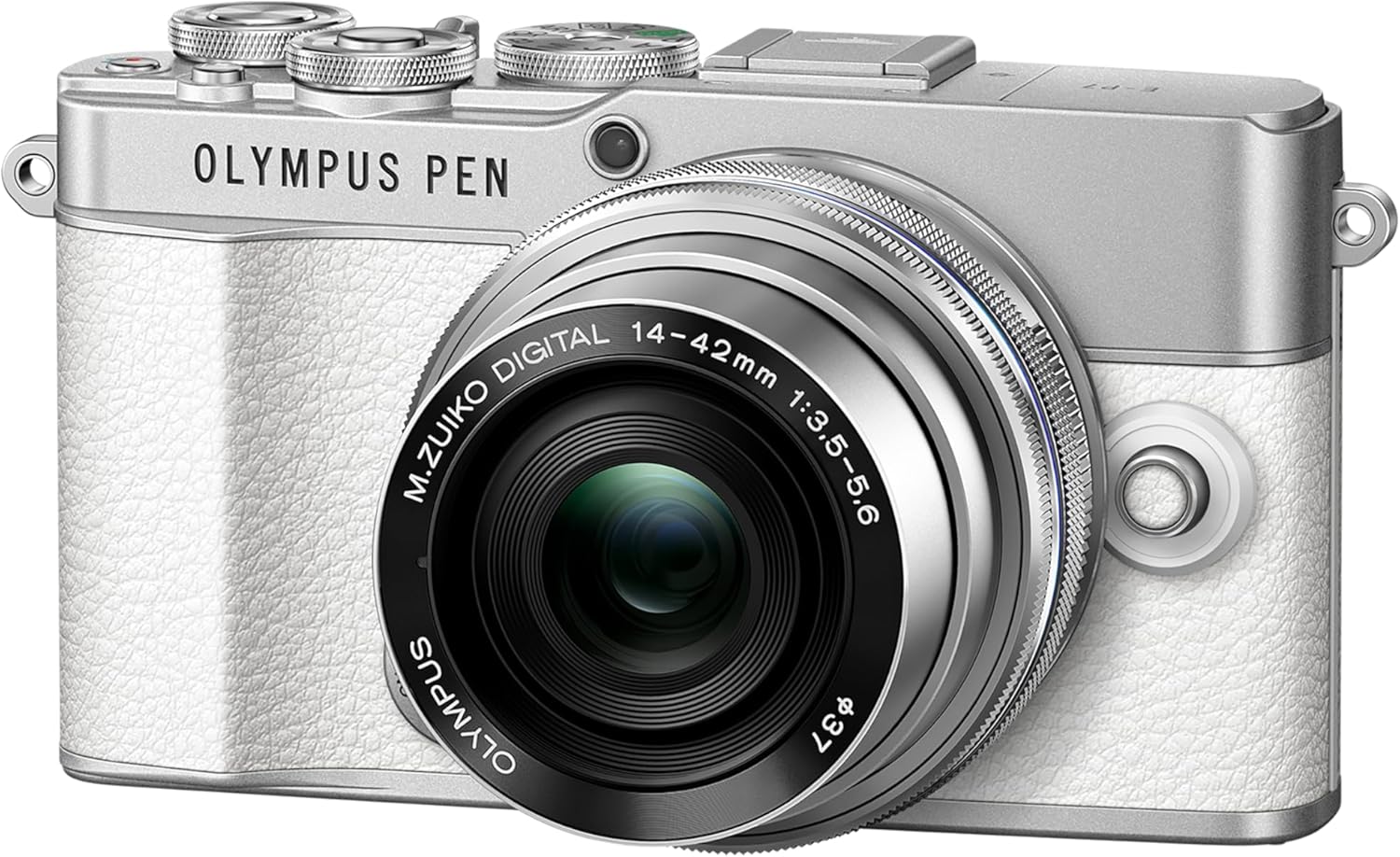
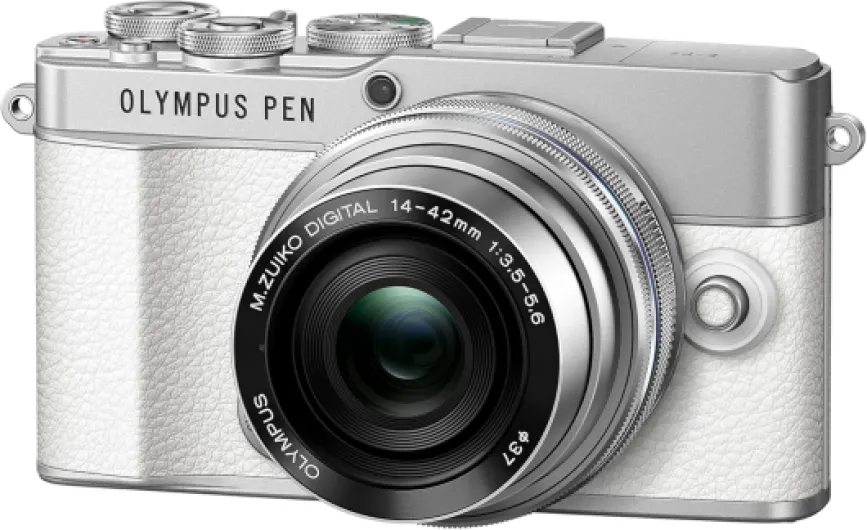
Design‑wise, this camera clearly leans on the old PEN look: retro styling, white body, silver dials. In real life it doesn’t feel cheap or like a toy, even though it’s small. The machined aluminium front and rear dials have a nice click, and the white finish looks clean. It’s the kind of camera people comment on in cafés, which can be good or bad depending on how much attention you want. Compared to a black plastic entry‑level DSLR, this looks a lot more compact and less intimidating.
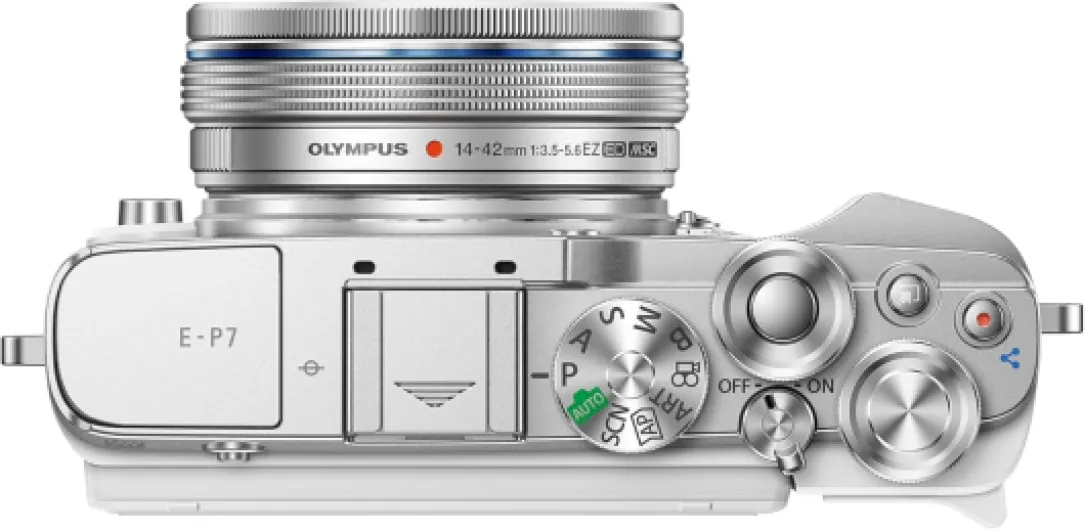
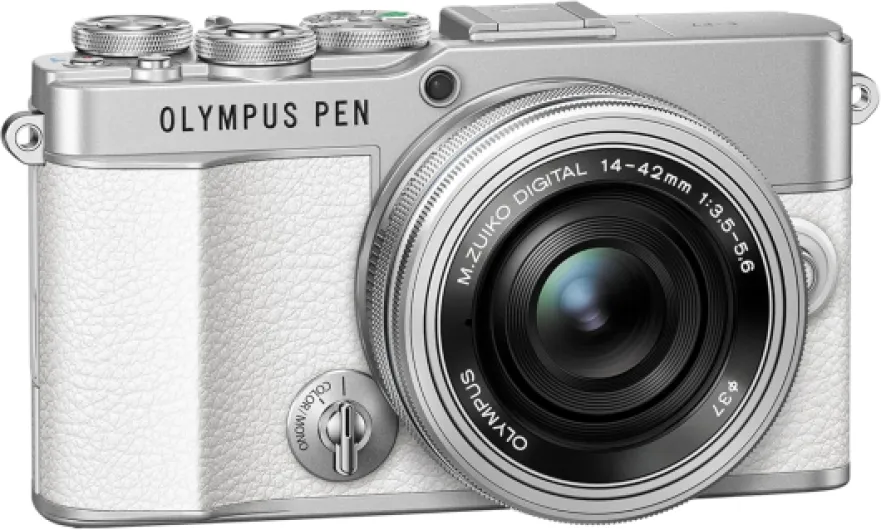
The button layout is mostly logical. You get two control dials on the top, a mode dial, and a few customisable buttons. The Profile Control switch on the front is actually handy; you flick it and you’re straight into colour/mono tweaking without digging through menus. The flip‑down screen works for selfies and low angles, but because it flips under the body, it’s useless on a tripod for vlogging – the tripod plate blocks it. A side‑hinged screen would have been more practical, but I get that this design keeps the body slimmer.
One obvious design trade‑off: no built‑in viewfinder. You compose everything on the back screen. Indoors and in shade that’s fine, but in bright sun it can get annoying, even with the brightness up. If you’re used to shooting with a viewfinder and bracing the camera to your face, you’ll miss it. The camera does have a small pop‑up flash, which is nice for fill light at night or indoors, but don’t expect miracles; it’s mostly just to avoid raccoon eyes and harsh shadows at close range.
Overall, from a design point of view, it hits the "small, good‑looking, take‑everywhere" goal pretty well. The trade‑offs are clear: screen‑only shooting, no weather sealing, and that slightly awkward flip‑down screen for tripod work. If you value compact size and style over maximum practicality, you’ll probably like it. If you’re very functional and don’t care how your camera looks, a slightly bigger body with a viewfinder might make more sense.
Battery life and charging: ok, but stuck in the micro‑USB era
The E‑P7 uses the BLS‑50 battery, which is fairly small. In practice, shooting a mix of stills and a bit of 4K video, screen on most of the time, I was getting roughly a day of casual use – somewhere around 250–350 shots depending on how much I chimped and used Wi‑Fi. That lines up with typical mirrorless CIPA ratings, but don’t expect DSLR‑style endurance. If you’re travelling or shooting all day, a spare battery is almost mandatory.
The camera charges over micro‑USB, which feels dated in 2026. It does work with power banks, so I ended up topping it up in my backpack between locations. That part is convenient: no need for a separate charger if you don’t want one, and you can just plug into the same power bank you use for your phone. Charge speed is not blazing; this is "leave it for a couple of hours" rather than "quick top‑up in 20 minutes". If you’re used to USB‑C fast charging on other gear, this will feel a bit slow and old‑school.
One thing to keep in mind: because there’s no viewfinder, you’re always using the rear LCD, which eats more power. If you’re heavily reviewing images, using Wi‑Fi to transfer to your phone, and playing with Art Filters, the battery drops faster. For a heavy shooting day (tourist mode, hundreds of shots, some video), I’d want two batteries minimum, maybe three to be safe. For light weekend use, one battery and a power bank is fine.
So, battery and charging are acceptable but nothing special. The positive point is USB charging via power bank, which makes travel easier. The downside is micro‑USB and modest capacity. If Olympus had put USB‑C and a slightly bigger battery in here, it would have felt much more up‑to‑date. As it stands, plan on buying at least one extra battery if you actually use the camera regularly.
Build quality and how tough it feels in daily use
Build quality on the E‑P7 is better than I expected for the size and weight, but it’s clearly not a rugged, throw‑it‑anywhere body. The top plate and dials feel solid, and there’s no creaking when you twist the body a bit. The buttons have a decent click, the mode dial stays put in a bag, and the lens mount feels secure even with slightly heavier lenses. The 14–42mm EZ kit lens is very light and collapses down nicely, but it does feel more plastic‑y – which is normal for a compact kit zoom.
The weak spots are the usual ones: the flip‑down screen, the small pop‑up flash, and the lack of weather sealing. The screen mechanism feels okay, but I wouldn’t push on it or let it dangle off a tripod. I slapped a cheap screen protector on it right away; the stock surface will scratch if you’re not careful. The pop‑up flash is fine as long as you don’t whack it, but again, this is not a camera I’d want to use in heavy rain or dusty conditions. There’s no official weather sealing, so I treated it like any basic electronics: jacket pocket in drizzle, back in the bag if it really starts pouring.
After some time taking it in and out of small bags, using it with a wrist strap, and generally not babying it too much, there were no rattles or issues. The white finish didn’t pick up colour transfer from jeans or bags, but I can see it getting dirty around the grip area over months. A quick wipe fixes that, but if you hate visible wear, the white version might annoy you more than a black one.
Overall durability impression: fine for normal city and travel use, but not a camera I’d throw into harsh conditions. It feels like a well‑made consumer device, not a pro brick. If you treat your gear decently, it should hold up. If you’re rough on your cameras or want something for mountains in bad weather, you’ll probably want a chunkier, sealed body instead.
Image quality, autofocus and stabilisation in real use
In terms of image quality, the 20 MP Micro Four Thirds sensor holds up well for everyday use. In good light, the JPEGs are sharp, colours are pleasant, and dynamic range is enough to recover a fair bit in RAW if you shoot that way. Coming from an older 16 MP Olympus body, I did notice a slight bump in detail and a bit more flexibility in the shadows. Compared to a modern phone, the E‑P7 gives cleaner files, better colour control, and less noise once the light drops. Up to ISO 1600 I’m comfortable; 3200 is usable with some noise reduction; above that it starts to look rough if you zoom in.
The autofocus is contrast‑detect only, with 121 points. For normal stuff – street, kids walking around, still subjects – it’s fine. It locks reasonably quickly and is accurate most of the time. Where it starts to show its limits is fast, erratic motion and low light. It’s not a sports camera. If you’re used to modern phase‑detect systems with eye‑AF tracking everything, this feels more basic. Continuous AF works, but it’s not the camera I’d pick for fast indoor action or dogs sprinting towards you. For my use (travel, city walks, casual portraits), it was good enough.
The 5‑axis in‑body stabilisation is the part that impressed me most. With the kit lens at the wide end, I was getting sharp shots at 1/5s, sometimes slower if I braced against a wall or railing. For static scenes at night, that’s really handy – you can leave the tripod at home most of the time. For video, it smooths handheld clips nicely if you’re not running or doing wild moves. It’s not gimbal‑level, but for simple B‑roll or family clips it works well. Combined with the 4K recording, you can get decent video as long as you accept the built‑in mic and lack of ports.
Overall performance: solid for casual stills, average for video, and not aimed at sports. The camera feels responsive enough, menus are typical Olympus (a bit dense but fast once set up), and start‑up time is okay. If your expectations match what this body is built for – everyday shooting and travel – you’ll probably be satisfied. If you want cutting‑edge AF or serious video features, you’ll hit its limits pretty quickly.
What you actually get in the box and what this thing can do
Out of the box you get the white Olympus PEN E-P7 body, the silver M.Zuiko 14–42mm F3.5–5.6 EZ motorised pancake zoom, a battery (BLS‑50), USB power adapter and cable, strap, and a body cap. So it’s a complete starter kit – you don’t need to buy anything extra to start shooting, apart from an SD card. The camera uses standard SD/SDHC/SDXC cards; a basic U1 V10/V30 card is fine for 4K video in normal use.
Spec‑wise, the basics are: 20 MP Micro Four Thirds sensor, 5‑axis in‑body stabilisation, 4K video, flip‑down 3" touchscreen (720×480, about 1M dots), 121 contrast‑detect AF points, up to 15 fps burst, built‑in flash, Wi‑Fi and Bluetooth. There’s no external mic input, no weather sealing, and no viewfinder. It charges over micro‑USB (not USB‑C), but you can use a power bank, which is handy on trips. It uses the Micro Four Thirds mount, so you can use a ton of lenses from Olympus/OM, Panasonic, Sigma, etc.
The body has a Profile Control switch on the front that flips you straight into colour or monochrome profile modes. That’s basically Olympus’ way of making picture styles quick and fun to use; you can tweak colour, contrast, grain, etc. It also has the usual Olympus Art Filters if you like baked‑in looks. For beginners or lazy days, the JPEGs are easily usable straight from camera, and you can still shoot RAW+JPEG if you want the option to edit later.
In practice, I’d describe the E‑P7 as a compact mirrorless mainly aimed at: travel, casual street, family shots, and social content. It’s not really built for sports or serious video production. If you set your expectations there, the feature set lines up well: quick enough autofocus for daily life, stabilisation that helps a lot, simple connectivity, and a lens that covers basic wide to short telephoto (28–84mm equivalent).
Pros
- Compact, lightweight body with in‑body 5‑axis stabilisation that really helps in low light
- 20 MP sensor and JPEG engine deliver good image quality for everyday and travel use
- Flip‑down touchscreen and Wi‑Fi/Bluetooth make selfies and phone transfers straightforward
Cons
- No built‑in viewfinder and screen can be hard to see in bright sunlight
- No microphone jack or weather sealing, and still using micro‑USB charging
Conclusion
Editor's rating
Overall, the Olympus PEN E‑P7 is a nice little everyday and travel camera if you know what you’re getting into. The 20 MP Micro Four Thirds sensor, 5‑axis stabilisation, and compact 14–42mm kit lens give you clean, sharp photos in most normal situations. The body is light, looks good, and is small enough that you actually bring it instead of leaving it at home. The flip‑down screen and built‑in Wi‑Fi/Bluetooth make it easy to grab selfies, low‑angle shots, and push images to your phone for quick sharing.
It’s not a perfect package. You don’t get a viewfinder, there’s no mic jack, battery life is just okay, and the micro‑USB port feels dated. Autofocus is fine for everyday life but not on the same level as newer phase‑detect systems if you’re chasing fast action. If you’re expecting a pro tool or heavy video rig, you’ll hit those limits fast. But if what you want is a compact camera that beats your phone, lets you play with lenses and profiles, and keeps things simple, it does that well.
I’d recommend it to: people who travel a lot and want something light, beginners who want to step up from a phone without carrying a brick, and Micro Four Thirds fans who value size and style. I’d skip it if: you absolutely need a viewfinder, you’re serious about video with external audio, or you mostly shoot in tough weather. In the right hands and with the right expectations, it’s a good, no‑nonsense everyday camera.