
Summary
Editor's rating
Value for money: where it makes sense, and where it doesn’t
Design: compact, slightly dated, but practical
Battery life and practical usability on a day out
Build quality and durability: feels solid, but it’s still a compact
Performance: strong zoom, decent image quality, some weak spots
What this camera actually offers (beyond the spec sheet)
Pros
- 30x optical zoom with effective stabilisation in a genuinely compact body
- Good daylight image quality for casual travel and family photos
- Renewed pricing makes it a budget-friendly dedicated travel camera
Cons
- Small 1/2.3" sensor with no RAW support limits image quality and editing potential
- Dated features: fixed screen, basic video, micro-USB, and average autofocus speed
- Battery life is only moderate; heavy users will likely need a spare battery

Specifications
View full product page →| Brand | Sony |
A pocket zoom camera in a smartphone world
I picked up the Sony DSC-HX60 recently because I was tired of draining my phone battery every time I went on a day trip. I wanted something small, with a proper zoom, that I wouldn’t be scared to throw in a backpack. This model is not new, and the one I got is a renewed/refurbished unit, which matches what you see on Amazon. So I went into it with realistic expectations: compact travel camera, not a pro workhorse.
Over a couple of weekends, I used it for walks in the city, a short hike, and some family shots indoors. I mainly shot in auto, with some zoomed shots and a bit of video. My reference point is my phone (a mid-range recent Android) and an older Canon compact I still have lying around. I’m not a pixel-peeper, but I do notice noise, slow autofocus, and clunky menus pretty quickly.
Right away, the big selling point is clear: 30x optical zoom in a body that actually fits in a jacket pocket. That’s the thing that makes this camera interesting in 2026. Phones just can’t match that optical reach unless you pay a lot for a flagship with a periscope lens, and even then, it’s not quite the same level of zoom. If you like shooting birds, buildings far away, or details on landscapes, this is where the HX60 starts to make sense.
It’s not perfect, and you can feel its age in a few places: menu system, low-light performance, and video specs that look nicer on paper than in practice. But after using it in real situations, I’d say it still has a place if you want a dedicated travel camera and you’re okay with some compromises. I’ll break down what worked for me and what felt dated or slightly annoying in daily use.
Value for money: where it makes sense, and where it doesn’t
In terms of value, the Sony DSC-HX60 sits in a weird spot in 2026. On one side, you’ve got phones that are getting better every year, especially in low light and computational tricks. On the other side, you’ve got entry-level mirrorless cameras that give you much better image quality and room to grow, but they cost more and are bulkier once you add lenses. The HX60 basically says: “I’m small, I zoom far, I’m not too expensive, take me on holiday.” And in that specific use case, it makes decent sense.
The Amazon reviews (4.7/5) line up with my experience: people who buy this as a renewed travel camera seem happy. The common theme is value: you get a compact body, a long zoom, stabilisation, Wi‑Fi, and a known brand (Sony) for a reasonable price. If you compare it to buying a new high-end phone just for the camera, this is cheaper and gives you way more optical reach. If you compare it to a used entry-level mirrorless kit, the price might not be hugely different, but the HX60 wins on compactness and loses on image quality and flexibility.
Where the value drops a bit is if you’re looking for something to grow your photography skills. No RAW, small sensor, and limited controls make it more of a point-and-shoot than a learning tool. Also, the tech is clearly from an older generation: no USB-C, no modern autofocus tracking, no proper 4K workflow. If you’re okay with that and just want a pocket camera that zooms a lot and takes decent photos in good light, the price you pay for a renewed unit is fair.
So for me, the value is good but very context-dependent. If you want a dedicated travel zoom camera, don’t care about RAW, and like the idea of not using your phone for every single shot, the HX60 is a solid budget-friendly option. If you’re even slightly serious about photography or video and see this as an “investment”, I’d say save a bit more and go for a used mirrorless instead.

Design: compact, slightly dated, but practical
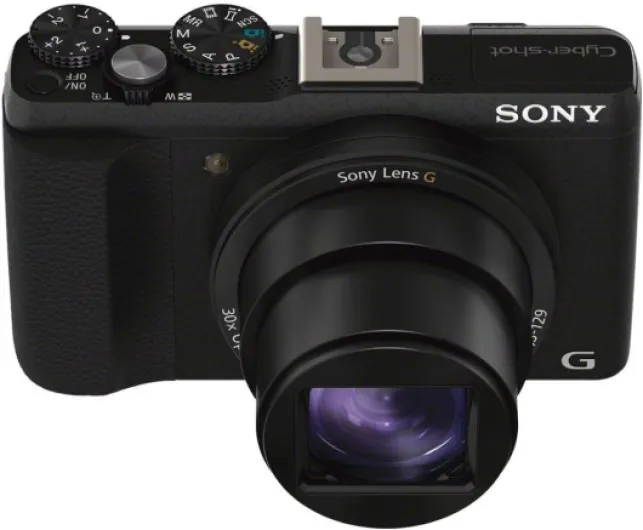
Design-wise, the DSC-HX60 feels like a typical mid-2010s Sony compact. It’s all black, a bit boxy, and not flashy at all. Personally, I like that: it doesn’t scream “expensive camera” when you walk around the city. At around 272 grams, it’s light enough to carry all day without thinking about it. It fits in a jacket pocket or a small crossbody bag, but not really in tight jeans pockets unless you’re okay with a noticeable bulge.
The grip is actually better than I expected. There’s a small rubberised front grip and a thumb rest on the back, so you can hold it securely with one hand. It’s still a compact, so your pinky will probably hang under the body, but I never felt like I was about to drop it. The buttons are small but logically placed: mode dial on top, zoom rocker around the shutter, a customizable function button, and a standard directional pad on the back. It’s not fancy, but once you’ve used it for a day, you know where everything is.
The screen is a fixed 3" LCD. No tilt, no flip, no selfie tricks. In 2026 that feels a bit old-fashioned, especially if you’re used to tilting screens for low-angle shots or vlogging. Outdoors in bright sun, the screen is usable but not great; you sometimes have to shade it with your hand to see composition properly. There’s no big chunky viewfinder hump either; it’s just a compact rectangle with a small pop-up flash.
In daily use, I’d say the design is functional and discreet. It’s not pretty in a stylish way, but it’s practical. The only thing that really shows its age is the lack of any kind of tilting screen and the pretty basic on-screen interface. If you’re okay with that and just want something that feels like a classic point-and-shoot with a big zoom, the design does the job. If you’re used to modern mirrorless ergonomics, this will feel cramped and a bit toy-like.
Battery life and practical usability on a day out
Battery life on the Sony DSC-HX60 is what I’d call “fine but not generous”. On a typical weekend day out, I took around 150–200 photos, a few short video clips, and used the zoom quite a bit. By the time I got home, the battery icon was definitely not full anymore, but I didn’t actually run out during the day. So for casual use, one battery is okay, but if you’re shooting heavily, especially with lots of zooming and video, I’d seriously consider a spare.
One thing I liked is that charging is done via micro-USB, and the box includes a cable and AC adapter. It’s not USB-C, which is a bit annoying in 2026, but at least it’s a common cable that many people still have lying around. I charged it overnight; from nearly empty to full took around a few hours, which lines up with the user review mentioning about four hours. It’s not fast charging by any stretch, so you do need to plan ahead and plug it in the night before a trip.
There’s no fancy battery percentage indicator; you just get a basic icon that slowly empties. In practice, that means you can’t be super precise about how much juice is left. I noticed that the last bar drops faster when you use the zoom and flash a lot. If you’re on holiday and shooting from morning to night, I’d say a second battery is almost mandatory if you don’t want to stress about it. For short city walks or day trips with moderate use, one battery is usually enough.
In short, the battery situation is acceptable but not impressive. It’s better than constantly killing your phone battery with camera use, but it’s not at the level where you can forget about it. If you treat it like an older compact—charge every night, maybe pack a spare—then it’s manageable. If you expect mirrorless-level endurance or modern power management, you’ll be a bit disappointed.
Build quality and durability: feels solid, but it’s still a compact
Because I bought a renewed unit, I paid close attention to how it felt in the hand and whether anything seemed loose or worn. The body itself feels pretty solid for a compact. No creaks when you grip it, the zoom barrel extends smoothly, and the buttons have a clear click. It doesn’t feel like a premium metal body, more like a dense plastic with some metal parts, but nothing about it felt cheap or fragile in normal use.
Over two weeks, I carried it in a small bag without a dedicated case, just using the included hand strap. It bumped into keys and other stuff a few times, and I didn’t see any new marks or issues. The lens mechanism still extended and retracted fine, and the pop-up flash worked every time I tested it. The review mentioning that the flash on their old model had died but this one was “mint” matches my experience: for a refurb, it felt almost new. Obviously, long-term reliability is hard to judge in a short test, but nothing raised a red flag.
There are some limits though. The camera is not weather-sealed. No water resistance, no dust sealing. I got caught in a light drizzle once and just kept it under my jacket; I wouldn’t push my luck using it in heavy rain or on a beach with lots of sand blowing around. The small moving parts around the lens and flash would probably not enjoy that. Also, the fixed screen means there are fewer moving parts to break, which is a plus, but if you scratch it, that’s it—you can’t just flip it inwards like some newer cameras.
Overall, I’d say durability is fine for normal travel and daily use if you’re not reckless. Throw it in a basic case, don’t drop it, don’t soak it, and it should hold up. It feels more robust than some ultra-cheap compacts I’ve tried, but obviously nowhere near the tank-like feel of higher-end mirrorless bodies. For the price and the category, the build quality seems well-balanced.
Performance: strong zoom, decent image quality, some weak spots
Let’s talk about how it actually performs, because that’s what matters. The 30x optical zoom is the star of the show. In practice, it lets you go from a fairly wide view for street scenes or groups, all the way to pulling details off distant buildings, signs, or even birds in trees. At full zoom, you really feel the stabilisation working hard; the image jumps around less than I expected, and I managed plenty of usable shots handheld. You still need a steady hand, but it’s much better than trying the same thing with a phone.
Image quality is good enough for travel and family use, but you have to respect the limits of the small 1/2.3" sensor. In daylight, up to mid-zoom, the photos are sharp, with decent colour and contrast. Zoomed all the way in, you can see more noise reduction and a slightly mushy look when you zoom in on a computer, but for prints and social media it’s fine. Indoors and at night, it starts to struggle: you get more noise, slower shutter speeds, and more chances of blur if your subject is moving. It’s still better than many older compacts, but no match for a modern APS‑C or full-frame camera.
Autofocus is okay but not fast. For static subjects, buildings, landscapes, and people who are not running around, it locks focus reliably. For kids running or fast-moving action, it hunts more and misses sometimes. The lock-on autofocus feature is nice in theory, but in real-world use I found it a bit hit and miss, especially in low light or at longer focal lengths. Continuous shooting is advertised at up to 30 fps, but that’s under very specific conditions; in normal use you’re not going to machine-gun at that speed for long bursts.
Video is where the camera feels more dated. The listing says 4K, but my experience is that this is more of a 1080p travel video camera. Quality is okay for casual clips, but nothing special. Stabilisation helps, but there’s still some wobble when walking, and the autofocus can be a bit slow to adjust when you pan or move closer to subjects. If your main goal is vlogging or serious video, I’d look elsewhere. As a bonus feature for occasional clips, it’s perfectly serviceable.
What this camera actually offers (beyond the spec sheet)
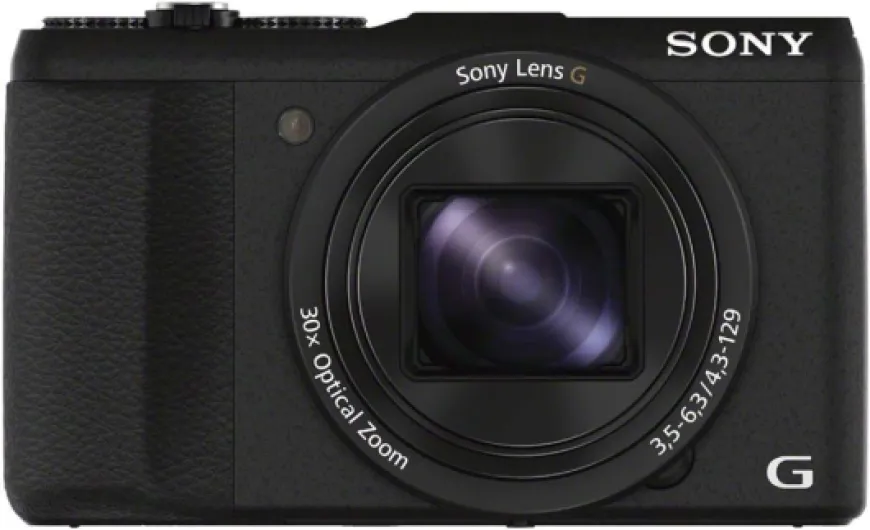
On paper, the Sony DSC-HX60 packs quite a lot: 20.4 MP 1/2.3" Exmor R CMOS sensor, 30x optical zoom (4.3–129mm), optical stabilisation, BIONZ X processor, Wi‑Fi and NFC, and a 3" LCD. It shoots stills in JPEG only, up to 5184 x 3888, and video in MP4. The listing mentions 4K, but in real life this camera is more about solid 1080p-style use than modern 4K vlog gear. It’s clearly built as a travel zoom compact: throw it in a bag, use it on holidays, don’t overthink it.
Actual use matches that idea. Turn it on, leave it on intelligent auto, and it does most of the work. The image stabilisation helps a lot at long focal lengths; handheld 30x shots are definitely possible if you’re not shaking like crazy. Autofocus is not instant like a high-end mirrorless, but for static subjects, buildings, and normal travel stuff, it gets the job done. The camera also has some Sony apps support (PlayMemories), but in 2026 that’s honestly more of a curiosity than something I’d rely on daily.
One important thing: this is a JPEG-only camera. No RAW, no fancy flat profiles. If you like heavy editing, this will frustrate you. For casual shooting and quick sharing, though, it’s fine. The JPEG engine does a decent job of sharpening and noise reduction, even if it can go a bit overboard when you zoom in on a computer. For prints and social media, it’s okay. Just don’t expect miracles in dim bars or at night.
Overall, I’d describe the HX60 as a practical travel tool rather than a creative playground. It’s for people who want reach and convenience more than full control and maximum image quality. The spec sheet looks busy, but in daily use, you’re mostly using the zoom, the stabilisation, and the auto mode. If that’s what you’re after, the feature set makes sense. If you’re hoping to grow into serious photography with manual everything, this isn’t really the best starting point.
Pros
- 30x optical zoom with effective stabilisation in a genuinely compact body
- Good daylight image quality for casual travel and family photos
- Renewed pricing makes it a budget-friendly dedicated travel camera
Cons
- Small 1/2.3" sensor with no RAW support limits image quality and editing potential
- Dated features: fixed screen, basic video, micro-USB, and average autofocus speed
- Battery life is only moderate; heavy users will likely need a spare battery
Conclusion
Editor's rating
The Sony DSC-HX60 is basically a no-nonsense travel zoom camera. It’s compact, has a 30x optical zoom, and delivers decent JPEGs in good light. For walks, city trips, zoo visits, and holidays where you just want to zoom in on distant stuff without lugging a big camera, it does the job. The stabilisation helps a lot at full zoom, and the overall handling is straightforward enough that you can hand it to a non-techy friend and they’ll manage.
On the flip side, you can clearly feel the camera’s age. No RAW, small 1/2.3" sensor, a fixed screen, and video that’s fine for clips but not for serious content. Low-light performance is only okay, autofocus isn’t quick by modern standards, and battery life is just average. If you’re looking to really get into photography or want strong video features, this is not the right tool. But if you just want a compact zoom camera that’s good value as a renewed unit, doesn’t cost a fortune, and lets you save your phone battery, it’s a sensible pick.
I’d recommend it to travellers, casual shooters, and anyone who just wants more zoom than their phone can offer without carrying a big camera. I’d skip it if you care a lot about low-light quality, advanced editing, or future-proof features. In short: pretty solid little travel companion, as long as you know its limits and accept them.