
Summary
Editor's rating
Value for money: makes sense if you don’t want to risk your phone
Chunky, bright, and easy to spot in the water
Battery life: just okay, but the second battery saves the day
Waterproof and shockproof… as long as you respect the seals
Image quality: closer to an older phone than a modern camera
What you actually get with the Pixpro WPZ2
Pros
- Properly waterproof and shock‑resistant for casual pool and beach use
- Comes with two batteries and a 16 GB SD card, so you’re ready to shoot
- Simple controls and bright body that’s easy to spot and handle, even for kids
Cons
- Image and video quality are only average, especially compared to modern smartphones
- Battery life on a single battery is short, and Wi‑Fi transfers drain it faster
- Screen is hard to see in bright sun and long‑term waterproofing depends heavily on careful sealing

Specifications
View full product page →| Brand | KODAK |
A cheap waterproof camera I wasn’t afraid to throw in the pool
I bought the Kodak Pixpro WPZ2 because I was tired of risking my phone every time we went to the pool or to the sea. I didn’t want anything fancy, just something I could hand to kids, dunk in the water, and not panic if it got dropped in the sand. On paper, this one ticks all the boxes: waterproof to 15 m, shockproof, 16 MP, Wi‑Fi, and it comes with two batteries and a 16 GB SD card. Basically, ready to go out of the box.
I used it over two weekends at the pool and one short trip to the coast. It got splashed, dunked, dropped on tiles once, and spent a lot of time in wet hands. I shot mostly photos, a bit of 720p video, and transferred everything to my phone over Wi‑Fi. My main goal: see if this is a realistic low-cost alternative to risking a smartphone or buying a GoPro.
In practice, it behaves like a very simple point‑and‑shoot. You turn it on, half‑press the shutter, it focuses, you shoot. No fancy modes, no RAW, no 4K, nothing like that. The quality is closer to an older compact camera or a basic phone than a modern smartphone. That’s not shocking at this price, but you need to know what you’re getting into.
Overall, it did what I wanted: it survived water and kids. But there are some clear limits: image quality is just okay, the screen is hard to see in bright sun, and the battery life is not great. Also, based on one of the Amazon reviews and my paranoia, I’d say water‑sealing depends a lot on how carefully you close the battery door. It’s a decent little tool if you manage your expectations.
Value for money: makes sense if you don’t want to risk your phone
In terms of value, I see this camera as a cheap insurance policy. You’re not paying for top image quality or fancy features; you’re paying for something you can throw in the water and hand to kids without sweating. Compared to an action cam like a GoPro, it’s usually much cheaper, but you also lose 4K, better stabilization, and the wide‑angle video look. Compared to a waterproof phone case, this is simpler: no fiddling, no fear of a leak killing your main phone.
You also have to factor in what the bundle includes: two batteries and a 16 GB SD card. If you tried to assemble a similar kit with some other cameras, you’d easily add extra cost. So even if the camera itself is basic, the full pack is pretty decent value. The 3‑year warranty from Kodak is also reassuring, especially with the whole waterproof issue. Just keep in mind that water damage can be a gray area with warranties, depending on how they judge user error.
Where the value feels weaker is image quality and video resolution. At this price, I didn’t expect miracles, but the 720p video and average low‑light performance put it behind most modern smartphones. If your phone is already water‑resistant and you’re just worried about occasional splashes, buying this might be overkill. On the other hand, if your phone is not waterproof at all, or you’re going somewhere with sand, salt, and kids, it starts to make more sense.
So for me, the value is good if you’re realistic: it’s a simple, rugged holiday camera, not a serious photography tool. If that’s what you need, the price and the included extras are pretty solid. If you’re chasing perfect image quality, you’ll be disappointed and should save up for something higher‑end.
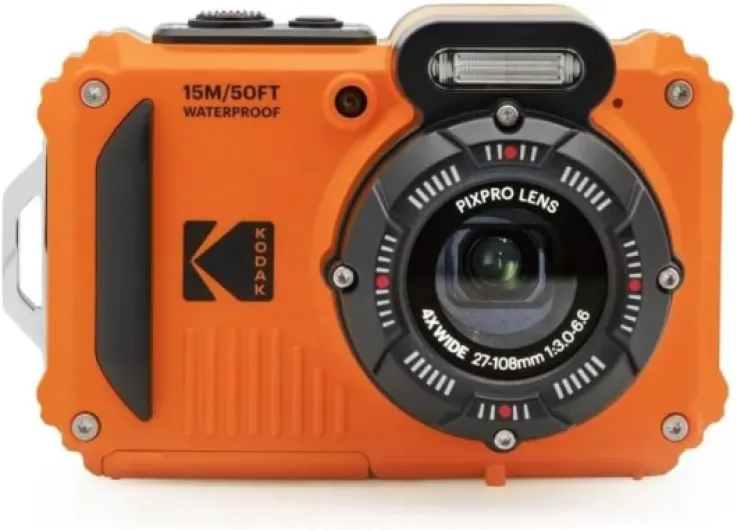
Chunky, bright, and easy to spot in the water
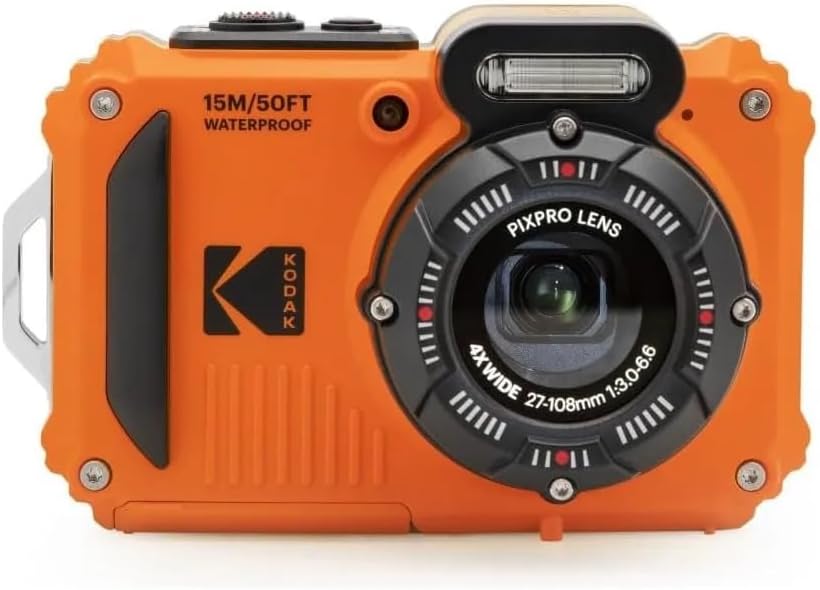
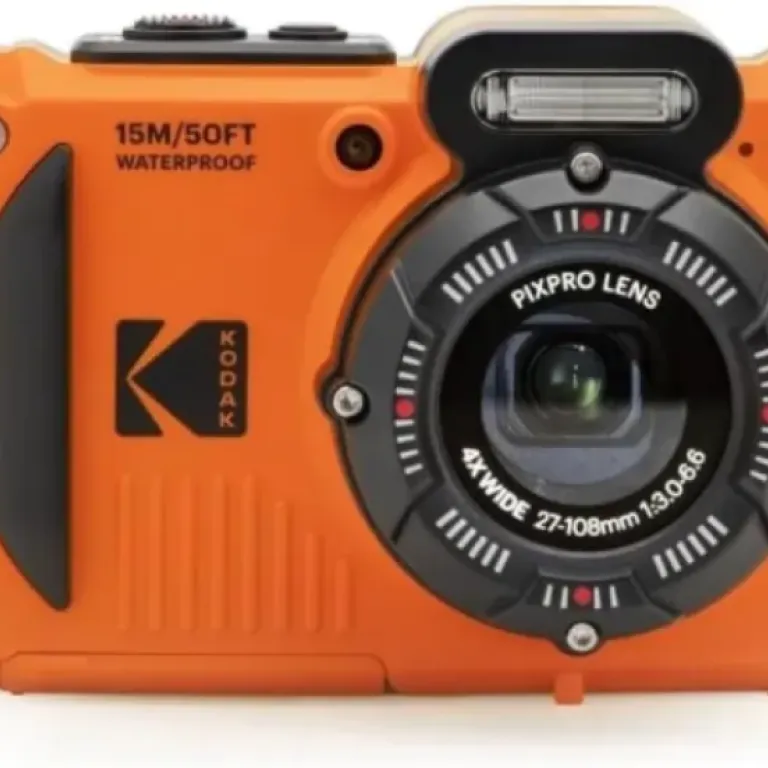
Design‑wise, the WPZ2 is very straightforward. Mine is the yellow/orange style, which is actually pretty handy: you can see it easily in a pool or on the beach towel. The body is a bit chunky, with a rubberized grip on one side and a lens that doesn’t protrude too much. It feels more like a toy camera than a delicate device, which is exactly what I wanted for kids and water use. It’s not pretty in a sleek way, but it’s practical.
The buttons are big enough to use with wet hands, and they give a clear click when pressed. That matters underwater or when your fingers are cold. The power button is slightly recessed, which is probably to avoid accidental presses, but one Amazon review mentions it jamming after a few snorkeling sessions. I didn’t have that problem in my short test, but I can see that sand or salt could eventually cause issues if you don’t rinse it well.
The 2.7" LCD is on the small side by today’s standards, and it’s not very bright. In the shade or indoors it’s fine, but in direct sunlight or on the water with reflections, it’s hard to judge focus and exposure. You can still frame your shot, but don’t expect to see fine details or check sharpness on the spot. There is no optical viewfinder, only the screen.
Overall, the design is clearly focused on practicality: big buttons, bright color, rubber grip, sealed doors. It’s not going to win any design awards, but it’s easy to grab, easy to spot, and you’re not scared to drop it. For a holiday camera that lives in a backpack or in kids’ hands, that’s honestly more important than looking sleek.
Battery life: just okay, but the second battery saves the day
The specs say about 1 hour of battery life, and honestly, that feels about right if you shoot a mix of photos and some video with the screen on the whole time. On my pool days, I got roughly one afternoon of casual use per battery: taking bursts of photos, some short videos, and then quickly reviewing them. If you start recording longer video clips, you see the battery bar drop a lot faster.
The good point is the bundle includes two batteries. That changes the story quite a bit. With both charged, I never ran out during a day. I’d swap them at lunch or when the first one got low, and that was it. Charging is done inside the camera with the cable, which is a bit slower and less practical than a separate charger, but for this price range I can live with it. You just need to remember to charge both batteries the night before.
Wi‑Fi transfer also eats into the battery. If you spend 20–30 minutes copying a bunch of photos to your phone, you’ll notice it. I ended up doing transfers only once a day instead of after every swim. That kept the camera alive longer. Another tip: turn it off between shots instead of leaving it on in your pocket; the startup is not instant, but it’s fast enough for casual use and it saves a lot of power.
Overall, battery life on a single cell is nothing special, but the fact that you get two in the pack compensates. For a full beach or pool day with normal use, the combo of both batteries is enough. If you plan on recording a lot of video or using Wi‑Fi heavily, just be aware you’ll chew through them faster and you’ll be charging every night for sure.
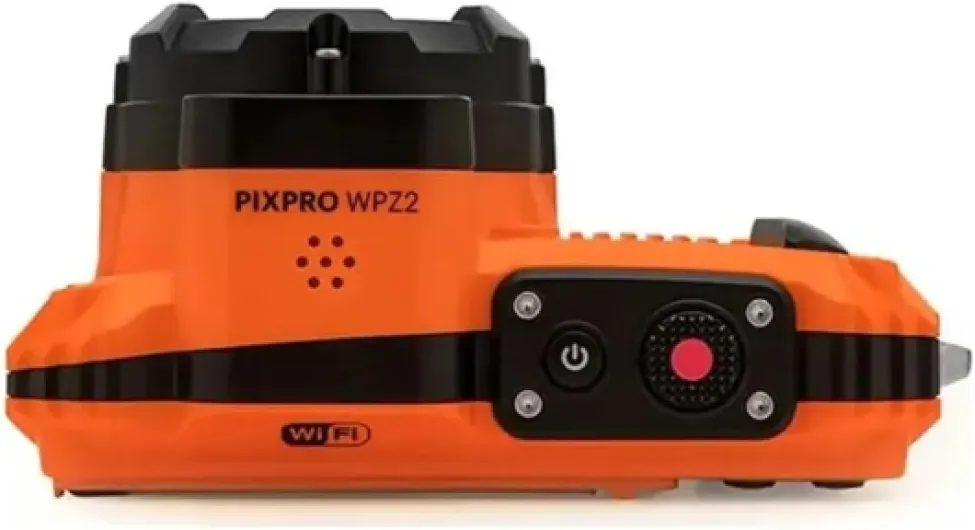
Waterproof and shockproof… as long as you respect the seals
This is the main reason to buy this camera, so I paid close attention here. I used the WPZ2 in the pool multiple times, fully submerged, and it handled splashes, dives, and being passed around by wet hands without any obvious trouble. I always checked the battery/port door twice before going in, making sure the latch was fully locked and the rubber seal looked clean. After each session, I rinsed it under fresh water and dried it with a towel, especially around the door and buttons.
So far, I’ve had no leaks, no fogging in the lens or screen, and no issues with the buttons. But one Amazon review clearly mentions the lens and screen fogging after a few snorkeling trips, and the power button jamming. That tells me the waterproofing is probably fine on paper, but it’s not bulletproof if you’re careless with the door or if some sand or hair gets caught in the seal. It’s the usual story with cheaper waterproof cameras: the weak point is almost always the door and how the user handles it.
Shock resistance is decent. I dropped it once from about waist height onto hard tiles by the pool, and it just bounced. No cracks, no functional issues after that. The outer shell feels solid and the rubber grip helps absorb some impact. I still wouldn’t throw it on concrete for fun, but for normal holiday accidents it seems tough enough. The lens is recessed, so it’s less likely to take a direct hit.
My take: durability is pretty solid for casual use—pool, beach, light snorkeling, kids’ hands—if you treat it with a minimum of care. Always double‑check the door, rinse it after salt water, and don’t expect pro dive‑camera reliability. If you want something for frequent deep diving or harsh conditions, I’d look at more expensive brands. For normal family adventures, it holds up reasonably well.
Image quality: closer to an older phone than a modern camera
Let’s be clear: if you’re used to a recent smartphone camera, the WPZ2 will feel like a downgrade in terms of pure image quality. The 16 MP sensor with a fixed f/3 lens and 4x optical zoom is okay in bright light, but it starts to struggle as soon as the light drops. Outdoors at the pool or beach during the day, photos are decent: colors are a bit on the cool side, and details are fine as long as you don’t zoom in too much. For casual memories and social media, it’s good enough.
Underwater, the camera does what you’d expect: you lose some contrast and sharpness, but you still get usable shots of kids swimming or fish close by. The autofocus is not super fast, and there’s only one AF point, so you sometimes end up with slightly soft images if the subject is moving. Face detection helps a bit on land, but underwater it’s hit or miss. Digital image stabilization is basic; it smooths out small shakes but won’t fix big movements or quick pans in video.
The 720p video is what it is: serviceable but not impressive. Compared to 1080p or 4K from a modern phone or an action cam, it looks soft and a bit noisy, especially in lower light. For short clips in the pool or on a boat, it’s fine, but it’s not something you’ll want to project on a big TV and admire. The audio is also average, with a lot of background noise and muffling when there’s wind or splashing.
In practice, I used it like this: photos for quick memories and some short clips to capture moments where I didn’t want my phone anywhere near the water. For that, it gets the job done. Just don’t buy it expecting GoPro‑level video or smartphone‑level night performance. It’s more like a simple compact camera that happens to be waterproof.
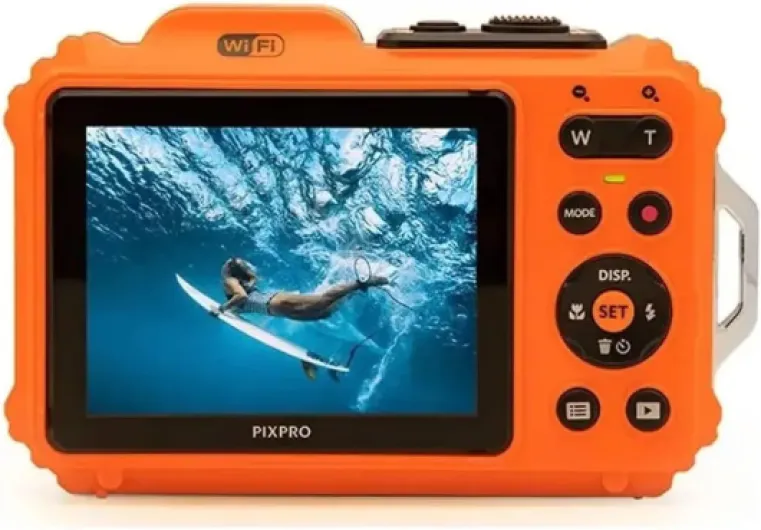
What you actually get with the Pixpro WPZ2
Out of the box, you get the camera, a battery, the extra battery from the bundle, a 16 GB SD card, and the usual cables and paperwork. So you really can start shooting right away, which is nice if you don’t want to fuss with buying separate cards and batteries. The camera is small and light (around 176 g), roughly the size of a chunky compact, so it fits easily in a pocket or a small pouch. It’s a 16 MP sensor with a 4x optical zoom (16–19.6 mm equivalent range listed), and it records 720p video at 30 fps in MP4.
The interface is basic. You’ve got a 2.7" LCD, a zoom rocker, a shutter button, and a few buttons for mode, playback, and menu. Shooting modes are mostly automatic: normal Auto plus things like Landscape, Night, and a Waterproof mode. No manual settings in the real sense: you can’t seriously control aperture or shutter, it’s all done by the camera. White balance is basically Auto, and that’s it. This is clearly aimed at people who just want to press a button and get a picture.
On the tech side, it has digital image stabilization, face detection, noise reduction, and burst capture. Don’t expect miracles from the stabilization; it helps a bit, but it won’t fix fast movement or shaky hands under water. Wi‑Fi is there to connect to your phone or tablet and pull the photos off, but it’s not super fast. The camera also has tripod mounting if you want to set it up for group shots or fixed video.
So in short, the package is pretty complete for the price: camera, memory card, two batteries, waterproof and shockproof body, and simple controls. The trade‑off is that it’s clearly not meant for enthusiasts who want control or high‑end image quality. It’s more like a point‑and‑shoot that can get wet and be thrown around without too much stress.
Pros
- Properly waterproof and shock‑resistant for casual pool and beach use
- Comes with two batteries and a 16 GB SD card, so you’re ready to shoot
- Simple controls and bright body that’s easy to spot and handle, even for kids
Cons
- Image and video quality are only average, especially compared to modern smartphones
- Battery life on a single battery is short, and Wi‑Fi transfers drain it faster
- Screen is hard to see in bright sun and long‑term waterproofing depends heavily on careful sealing
Conclusion
Editor's rating
The Kodak Pixpro WPZ2 is basically a rough‑and‑ready pool and beach camera. It’s light, bright‑colored, simple to use, and you don’t panic if it gets dropped or soaked. In bright outdoor light, photos are decent, and the 720p video is fine for quick memories. The fact that the pack includes two batteries and a 16 GB SD card is a real plus, because it means you’re ready to go from day one and you can cover a full day out without stressing about power.
On the downside, the image quality is nothing special, especially compared to modern smartphones. The screen is hard to see in strong sunlight, low‑light shots are noisy and soft, and the video looks dated next to 1080p or 4K gear. Battery life on a single cell is short, though the second battery compensates. Durability seems good in normal use, but you really have to be careful with the battery/port door and rinse it after salt water if you want to avoid fogging or leaks.
I’d recommend this camera to families, casual users, and anyone who wants a cheap, dedicated device for water and rough conditions so they can keep their main phone safe. It’s also a good fit for kids who want their own camera for holidays. If you’re a photography enthusiast, care a lot about image quality, or want serious underwater footage, this is not the right tool; you should look at a better action cam or a higher‑end waterproof compact. Used for what it is—a basic rugged point‑and‑shoot—it gets the job done at a reasonable price.