
Summary
Editor's rating
Value for money: decent for beginners, not for camera snobs
Design and handling: feels like a light compact, not a tank
Battery life: just okay, plan for short sessions
Build and durability: feels cheap, so treat it gently
Image and video performance: fine in daylight, rough in low light
What this camera actually offers on paper vs in real life
Pros
- Simple to use with a 3-inch flip screen that’s handy for selfies and vlogging
- Decent photo and video quality in good daylight for casual use
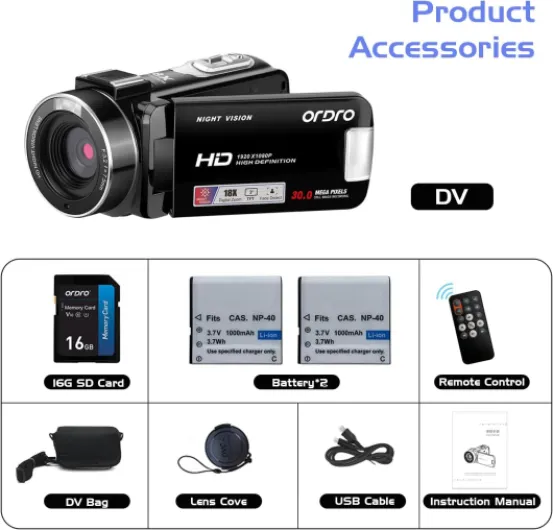
- Comes with SD card and usually two batteries, so you can start shooting right away
Cons
- Weak low-light performance; night and indoor shots get noisy and soft quickly
- Battery life is short, especially when recording video, so you need spares
- Plasticky build and basic digital zoom make it feel more like a gadget than a serious camera

Specifications
View full product page →| Brand | Toiauaha |
A cheap 4K camera that’s not quite a toy, not quite “real gear”
I’ve been playing with this Toiauaha DC062 4K digital camera for a bit, mostly for casual photos, some indoor family stuff and a bit of vlogging-style video. I went in knowing it’s a budget camera from a brand I’d never heard of, so I didn’t expect DSLR quality. I treated it as a step above a kid’s camera or using an old phone. With that mindset, it kind of makes sense, but it’s far from perfect.
The camera is clearly aimed at beginners and kids: simple menus, flip screen, built-in flash, 4K video on the box, and everything runs off one small lens with only digital zoom. If you’re coming from a proper camera (Canon, Sony, Nikon, whatever), you’ll notice the limits right away: low-light is rough, autofocus is hit-or-miss, and the body feels pretty lightweight. But if you’re used to only shooting with your phone, this can feel like a fun gadget that gives you more “camera-like” controls.
In practice, I used it for: filming short clips for social media, taking photos at home with normal indoor lighting, and a few outdoor walks. I also let a teenager in the family mess around with it to see how someone with zero camera background would handle it. The general feeling: it’s simple to use, fine in daylight, but you need to manage your expectations hard, especially for night shots and serious photography.
So this review is from that angle: not as a professional photographer judging every pixel, but as a regular user asking, “Is this good enough for casual photos and beginner vlogging?” I’ll be blunt where it falls short and where it’s actually pretty decent for the price.
Value for money: decent for beginners, not for camera snobs
For the price this camera usually sells at, you have to look at it in context. You’re not paying for a big brand, interchangeable lenses, or pro-level performance. You’re paying for a compact body with a flip screen, basic 4K video, a 32 GB card, and usually two batteries in the box. If you compare that to what a used DSLR or a better compact from Canon/Sony would cost, this is clearly in the low-budget segment.
In that context, I’d say the value is decent if you know what you’re buying. For a kid, a teen, or a complete beginner who wants to learn basic photography settings without risking expensive gear, it’s not a bad deal. They get a real camera interface (ISO, shutter, etc.), a flip screen for vlogging, and okay image quality in good light. You also avoid filling up your phone with photos and videos, which is exactly what one reviewer mentioned they were trying to avoid.
On the other hand, if you’re a bit more serious about image quality, or you already own a mid-range smartphone from the last few years, the value drops. Many modern phones will give you better low-light performance, smarter HDR, and more reliable autofocus. You also get better apps and sharing options. In that case, this camera feels more like a side toy than a real upgrade. The 3.9/5 average rating on Amazon reflects that: some people are happy because it matches their expectations, others are disappointed because they expected more.
So, is it good value? I’d say: yes for casual users and kids who want a “real” camera to play with, no for anyone looking for serious image quality or long-term gear. If you keep your expectations in the “better than a toy, worse than a proper camera” zone, the price makes sense.
Design and handling: feels like a light compact, not a tank
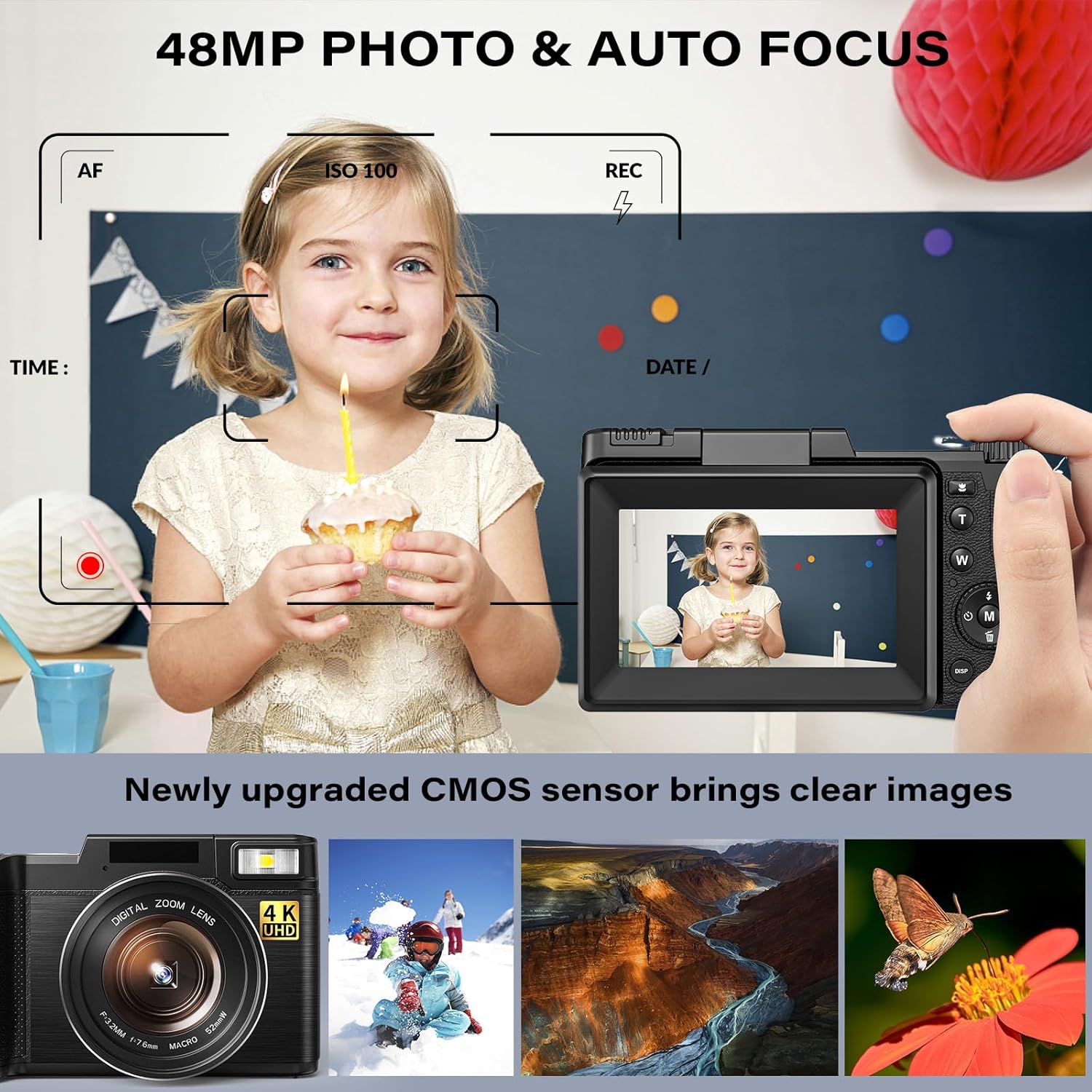
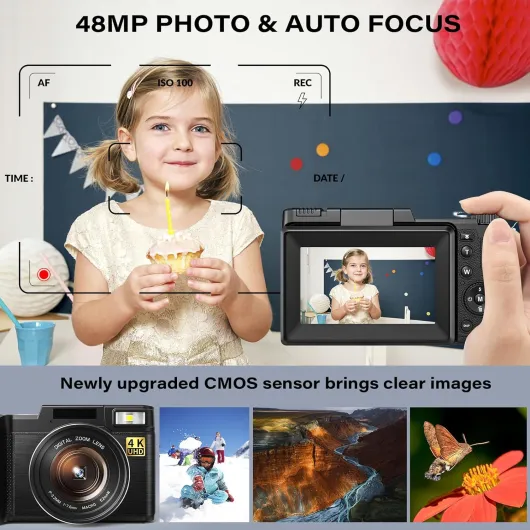
The design is pretty straightforward: a small black compact body, a fixed lens, a 3-inch flip screen, and a pop-up style flash. It’s light enough to toss in a jacket pocket or a small bag without thinking about it. For me, that’s actually one of the strong points: you don’t feel like you’re dragging around “gear”. Compared to carrying a DSLR or mirrorless with a lens, this thing is nothing. Even compared to some bigger smartphones, it feels lighter.
The buttons and layout are basic but clear: power, shutter, zoom rocker, mode button, and a simple directional pad on the back for menu navigation. If you’ve ever used a compact camera from the early 2010s, you’ll feel at home. Menus are not fancy, but they’re not buried in 40 layers either. A complete beginner in my family figured out how to switch between video/photo and play back images without asking me anything, which is a good sign.
The flip screen is the highlight of the design. Being able to flip it up 180° for vlogging or selfies makes a big difference. When I recorded some clips talking to the camera, it was easy to see if I was in frame and if the exposure looked okay. The hinge doesn’t feel premium, but it also doesn’t feel like it’s going to break immediately as long as you’re not rough with it. For kids or teens, I’d still tell them not to yank it around.
On the downside, the camera feels plasticky. That’s expected at this price, but don’t expect a rugged device. It doesn’t feel like it would survive a hard drop on concrete. There’s no weather sealing, obviously, so rain, sand, or beach use needs extra care. The grip is minimal; it’s okay for small to medium hands, but someone with big hands might find it a bit cramped. In short, the design is practical and light, but clearly budget. It’s fine for casual use, just don’t treat it like professional equipment.
Battery life: just okay, plan for short sessions
Battery life is one of the weak spots, and the Amazon reviews back that up. One French reviewer basically says the camera is good but the battery life is poor, and recommends having a spare. Another positive review mentions that they appreciated having two batteries included. So clearly, even the happy customers agree: the power situation isn’t great.
In my use, I’d describe the battery as “short but manageable”. If you’re just taking occasional photos here and there, you can get through a small outing or a family gathering. But if you start recording lots of 4K video or chimping (reviewing images) a lot on the screen, you’ll see the battery bar drop pretty fast. Think more in terms of a compact toy-like camera than a serious travel camera that lasts all day. This is not something you’d want to rely on for an entire event without a backup.
The good news is that the package usually comes with two batteries, which helps a lot. One stays in the camera, one in your pocket or bag. Swapping them is quick enough, and for casual home use it’s not a big deal. For a kid or teen, you’ll probably just have to remind them to charge both batteries if they’re going on a trip. It’s also powered via USB, so you can hook it to a power bank in a pinch, but that’s not the most convenient setup if you’re trying to move around and film.
So, battery verdict: not a disaster, but clearly not a strong point. If you’re okay with short sessions and remember to charge and carry the second battery, it’s workable. If you want something that lasts hours of constant shooting without thinking about it, you’ll be annoyed pretty quickly.
Build and durability: feels cheap, so treat it gently
Durability-wise, this camera feels like what it is: a budget compact from a lesser-known brand, made in China, with a mostly plastic body. When you pick it up, you don’t get that dense, solid feel you get from mid-range cameras. It’s light, which is nice for carrying, but it also makes you think twice about dropping it. I didn’t abuse it, but even just handling it, you can tell it’s not built like a tank.
The flip screen hinge is the main thing I was cautious with. It works fine, flips 180° and stays in place, but the plastic around it doesn’t inspire total confidence. I wouldn’t let a very young kid flip it back and forth constantly without supervision. If you’re careful and don’t twist it sideways, it should be okay, but I wouldn’t bet on it surviving rough handling or being tossed around in a backpack with heavy stuff.
The buttons and ports feel basic but functional. The USB and HDMI ports are there, but there’s no rubberized weather sealing or anything like that, so I wouldn’t use it in rain or dusty environments without protecting it. The sliding battery/SD card door also feels like the usual cheap compact camera door: fine if you open and close it carefully, but it’s probably the first thing that will break if you’re rough.
Overall, I’d say durability is acceptable for light, careful use at home, on trips, or for kids/teens who are not super clumsy. If you need something robust that can handle drops, bad weather, or daily heavy use, this is not it. Treat it more like an electronic gadget than a long-term investment piece of camera gear, and you’ll have more realistic expectations.
Image and video performance: fine in daylight, rough in low light
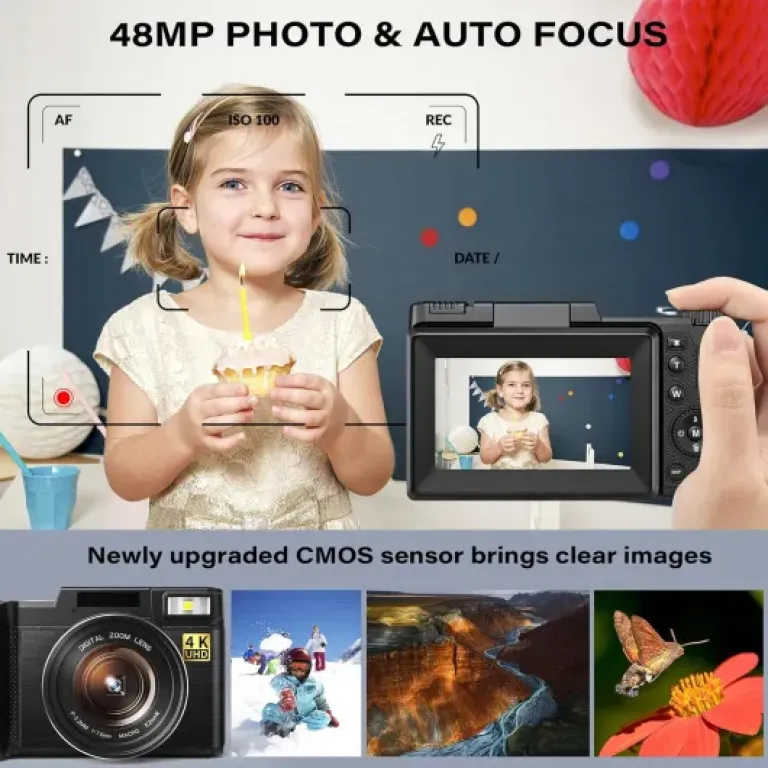
Let’s talk about what really matters: how the photos and videos look. In good daylight, the camera is actually decent. Colors are okay, exposure is usually in the ballpark, and for casual shots of people, pets, or scenery, it’s perfectly usable. On a phone screen or shared on social media, the pictures look fine. You can see that the lens and sensor are basic if you zoom in on a big monitor, but for normal everyday use, it gets the job done.
Where it starts to struggle is indoors and at night. Several Amazon reviews mention this, and I saw the same thing: as soon as the light drops, noise goes up, details get mushy, and the autofocus can hunt or miss. A user mentioned taking a photo in the living room with just lamp light and calling it a “catastrophe” – I don’t think it’s that dramatic, but I get what they mean. Without flash, the images get grainy fast. With the pop-up flash, you can freeze subjects better, but you get that classic compact-camera “flashy” look: harsh light and flat shadows.
For video, the story is similar. In good light, 4K clips are okay and definitely usable for YouTube or TikTok if you’re not obsessed with image quality. One reviewer even said the video looked better than their Canon (probably an older model), and I can see how someone coming from older tech or phones would feel that way. Autofocus is not lightning-fast like on modern mirrorless cameras, but for talking-head vlogs at a fixed distance, it’s fine. Once the light drops, though, the noise and softness creep in and the image starts to look cheap.
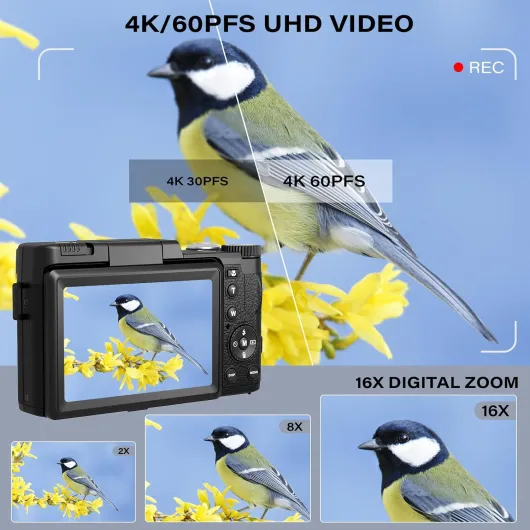
The 16x digital zoom is another area where you need realistic expectations. Up close or at moderate zoom, things are okay. Push the zoom to the max and it looks like cropped, noisy phone footage. It’s usable if you really need it, but I wouldn’t rely on it for anything important. Overall, performance is perfectly acceptable for casual daytime use and beginner vlogging, but if you’re hoping to shoot clean night photos or cinematic low-light video, this isn’t the camera for that.

What this camera actually offers on paper vs in real life
On paper, the spec sheet is trying very hard: “4K” video, 30 MP photos, 16x digital zoom, 3-inch flip screen that rotates 180°, autofocus, liftable flash, Wi‑Fi, and a 32 GB card included. It also claims ISO up to 51200, 30 fps continuous shooting, and things like anti-shake, smile capture, slow motion, etc. Basically, every buzzword you can cram into a low-cost compact camera is there.
In real life, you quickly see what’s real and what’s mostly marketing. The 4K video is there, but it looks more like upscaled footage from a small sensor than clean, detailed 4K from a more serious camera. It’s fine for YouTube or TikTok if you’re not picky, but don’t expect super crisp quality. The 30 MP stills are also a bit of a numbers game: the files are 30 MP, but the sensor and lens limit how much real detail you get. Photos look okay on a phone screen or laptop, but if you zoom in, they’re not as sharp as the megapixel count suggests.
The 16x zoom is digital only, which means it’s basically cropping the image. Up to around 4–5x, it’s usable; beyond that, you lose detail fast and it starts to look like a phone zoom from a few years ago. The flip screen, though, is actually useful: it rotates up for selfies and vlogging, and for that use it’s pretty handy. It’s not touch-screen in any advanced way, but it does the job for framing yourself and checking focus.
Overall, the camera is sold as a beginner/vlogging tool, and that’s where it makes the most sense. If you buy it thinking it’s a cheap substitute for a DSLR or a modern mid-range smartphone camera, you’ll probably be disappointed. If you treat it as a simple, separate little camera you can give to a kid or use just for casual content, the specs are “good enough” to play with, as long as you don’t take the 4K/30MP marketing too literally.
Pros
- Simple to use with a 3-inch flip screen that’s handy for selfies and vlogging
- Decent photo and video quality in good daylight for casual use
- Comes with SD card and usually two batteries, so you can start shooting right away
Cons
- Weak low-light performance; night and indoor shots get noisy and soft quickly
- Battery life is short, especially when recording video, so you need spares
- Plasticky build and basic digital zoom make it feel more like a gadget than a serious camera
Conclusion
Editor's rating
Overall, the Toiauaha DC062 is a small, budget 4K camera that sits in a middle ground: it’s clearly better than those plastic toy cameras, but it’s also clearly below a decent DSLR, mirrorless, or even a good recent smartphone in many situations. In daylight and for simple vlogging, it does the job: colors are okay, the flip screen is handy, and the controls are simple enough for beginners and kids. The included SD card and extra battery are a nice touch and let you start shooting right away.
Where it falls short is exactly where a lot of cheap cameras struggle: low-light photos, noise, autofocus in dim conditions, and battery life. Some users on Amazon were really disappointed with night shots, and I understand why. If you mostly shoot indoors with only lamp light or expect clean evening photos without flash, you’ll likely be annoyed. The body also feels cheap and plasticky, so you have to treat it gently. It’s not something I’d use for paid work or important events.
So who is this for? It’s fine for kids, teens, and casual users who want a cheap camera to learn on, record basic vlogs, or keep their phone storage free. It’s also okay as a light backup camera you don’t care too much about. Who should skip it? Anyone who is picky about image quality, shoots a lot in low light, or wants something durable and long-term. In that case, you’re better off saving a bit more for a used camera from a known brand or just sticking with a good smartphone.