
Summary
Editor's rating
Value: pricey for a fixed lens, fair if you actually use the size advantage
Design: compact, discreet, and a bit barebones
Battery life: carry at least one spare, maybe two
Build and durability: solid feel, but no weather sealing and dust worries
Image quality and autofocus: strong files, AF slightly behind modern mirrorless
What this thing actually is (and isn’t)
Pros
- Genuinely pocketable body with a 24MP APS‑C sensor and sharp 40mm equivalent f/2.8 lens
- Strong stills image quality and useful JPEG profiles/recipes straight out of camera
- HDF filter and quick ON/OFF button give you both crisp and soft looks in one camera
Cons
- No viewfinder or weather sealing, and some long‑term concern about dust
- Battery life is short; you really need at least one spare for a full day
- Autofocus and video performance lag behind similarly priced modern mirrorless cameras

Specifications
View full product page →| Brand | Ricoh |
A pocket camera for people who are actually going to use it
I’ve been using the Ricoh GR IIIx HDF as my “always with me” camera for a few weeks, mainly for street, family outings, and short trips. I usually shoot with Fujifilm bodies (XT4 / X-T5) and a couple of primes, so I’m used to good APS‑C image quality but I’m also tired of carrying a full bag for casual stuff. I wanted something I could actually put in a jeans pocket and forget about until I see a shot. That’s the gap I hoped this thing would fill.
First reaction: this camera is tiny for what it does. It’s closer to a chunky smartphone than to a normal APS‑C camera. You pay for that with a few compromises: no viewfinder, battery that drains faster than you’d like, and no weather sealing. But in exchange you get a 24MP APS‑C sensor and a 40mm equivalent lens that is genuinely sharp and usable in low light. It’s not a toy, it’s a real camera that just happens to fit in your pocket.
The HDF (Highlight Diffusion Filter) is the big difference versus the regular GR IIIx. I was skeptical at first, I thought it would be a cheesy built‑in “mist” effect I’d never touch. In practice, I actually used it more than I expected for portraits and night scenes. It’s not subtle when it’s on, but the fact you can toggle it with a button makes it more like having two looks in one camera: a normal crisp GR, and a softer, glowy version.
Overall, my feeling after a few weeks is pretty clear: this camera is very good at one main job—being with you and ready to shoot with strong image quality. It’s not an all‑rounder, it’s not a video tool, and it’s not for people who love zooms and viewfinders. If you’re fine with a fixed 40mm and you value size over features, it makes sense. If you want a do‑everything camera, you’ll probably be annoyed pretty fast.
Value: pricey for a fixed lens, fair if you actually use the size advantage
Price‑wise, the GR IIIx HDF sits in that awkward zone where you could also buy an entry‑level mirrorless body with a kit lens, or a used mid‑range body with a small prime. On paper, a fixed‑lens compact with no viewfinder and basic video looks a bit expensive. If you just compare spec sheets, it doesn’t look like a bargain at all, especially when you remember you’ll probably need extra batteries and maybe a lens cap or case.
But in real life, the value depends heavily on whether you’ll actually carry it. I have a good mirrorless setup at home, but half the time I’d leave it because it’s bulky. With the Ricoh, I actually took a camera out on random grocery runs, walks, and commutes. I got photos I simply wouldn’t have taken with a bigger setup. For me, that alone justifies a good chunk of the price. A camera that stays on a shelf has perfect specs and zero value; a camera that lives in your pocket and gets used is a different story.
Compared to the regular GR IIIx, the HDF model adds the built‑in highlight diffusion filter and a couple of firmware features that can also be added to older models by update. The HDF itself is a bit niche: when it works, it gives portraits and night shots a nice soft glow; when it doesn’t, it just looks hazy. If you hate that look, you’re probably better off saving some money and going for the non‑HDF version. If you like having that look at the press of a button instead of carrying a physical filter, it might be worth the extra cash.
So in terms of value, I’d say: it’s not cheap, but it makes sense for a specific type of user. If you want one small camera that you truly carry everywhere and you’re fine with a fixed 40mm, it’s a solid investment. If you’re budget‑conscious, need a zoom, or care a lot about video, you can get more for your money elsewhere. Personally, I don’t regret the price, but I also wouldn’t call it a bargain.
Design: compact, discreet, and a bit barebones
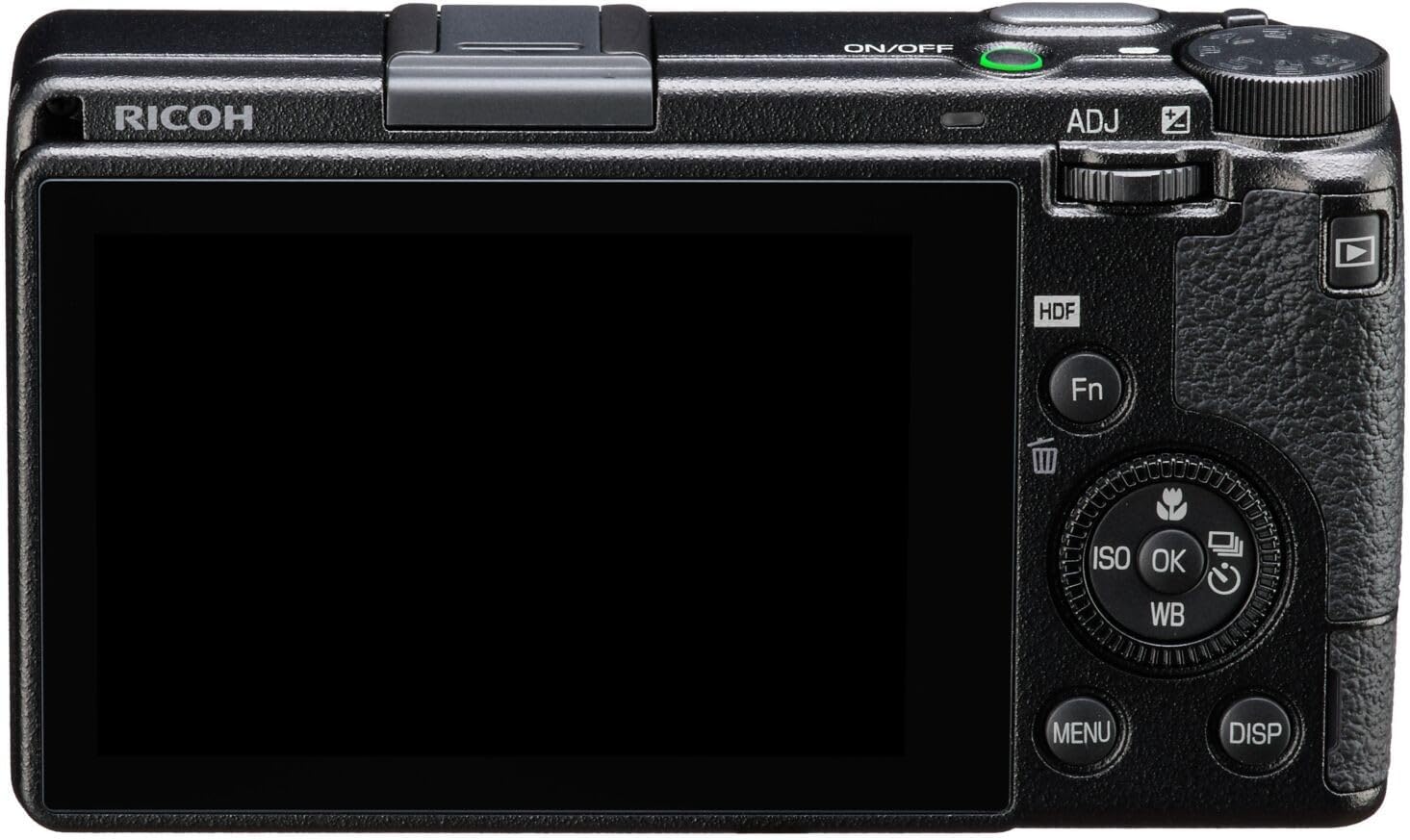
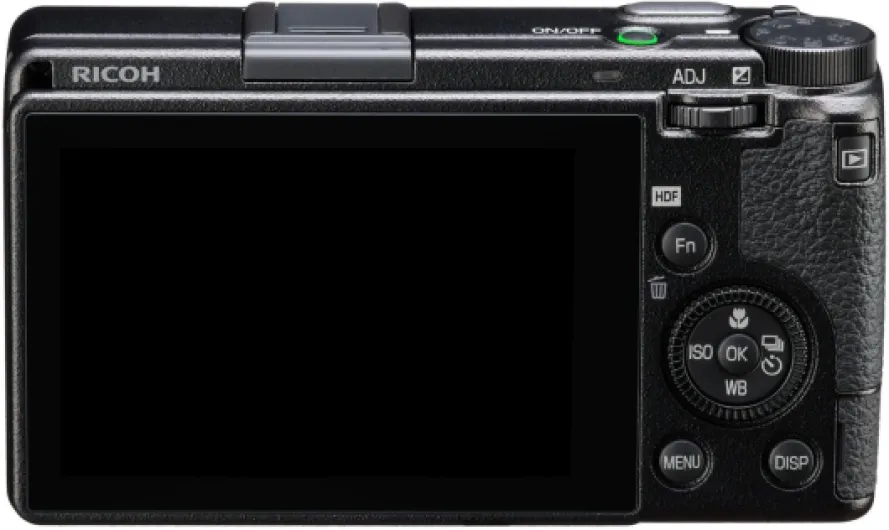
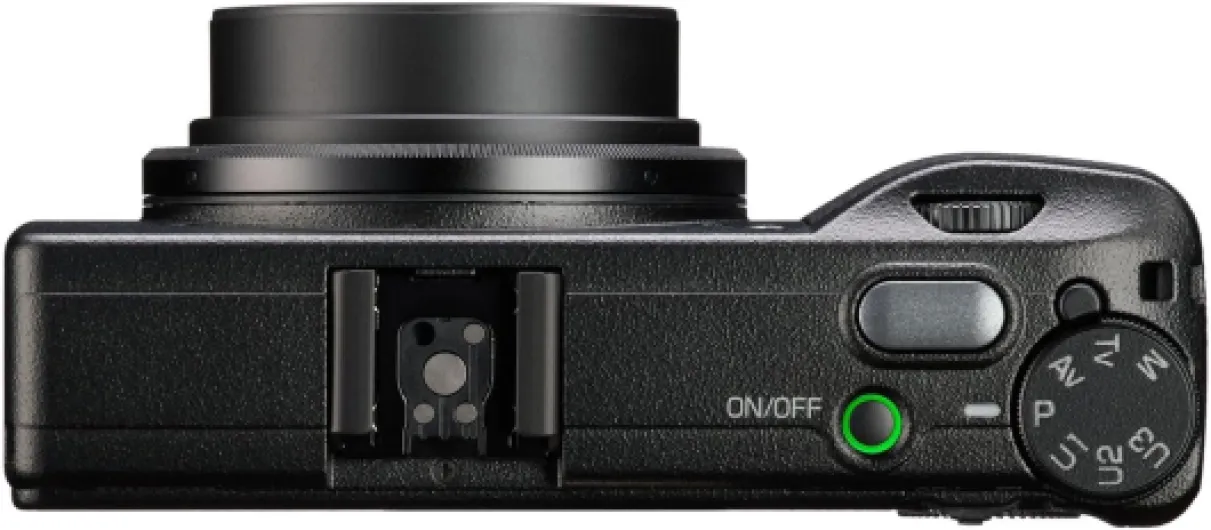
The design is very straightforward: a small black rectangle with a slightly rubberised grip and minimal branding. It looks low‑key, which is good for street shooting. Nobody really notices it, and it doesn’t scream “expensive camera.” The GR IIIx HDF version has a dark silver shutter button and a small “HDF” marking near the Fn button on the back, but otherwise it’s almost identical to the regular GR IIIx. I like that it doesn’t try to look flashy or retro; it just looks like a tool.
Button layout is mostly good. You get a mode dial, a front and rear control wheel, and a few customisable buttons. The Fn button for HDF is in a handy spot near your thumb, so switching the diffusion effect on and off is quick. The touchscreen helps for AF point selection and menu navigation, but you can also control most things with buttons if you prefer. I set mine up so I rarely had to dive into menus once my basic config was done.
On the downside, there’s no viewfinder, no articulated screen (it’s fixed), and no dedicated exposure compensation dial. You can assign exposure comp to a wheel, which works, but if you’re used to Fuji or Nikon dials, you’ll miss that physical control. The LCD is fine but not bright or sharp by 2026 smartphone standards; in harsh sunlight you sometimes end up guessing a bit, though it’s still usable. The body also heats up if you shoot a lot or use Wi‑Fi, especially with custom JPEG recipes—noticeable but not dangerous, just a bit worrying the first time.
In the hand, the camera feels better than it looks on paper. The grip is small but shaped well enough that I could shoot one‑handed without feeling like I’d drop it. The texture on the body gives decent traction. This is not a camera you baby; it’s clearly made to be thrown in a pocket or small pouch and taken everywhere. I just wish Ricoh had managed to add basic weather sealing without making it bigger, but I get that it’s a trade‑off.
Battery life: carry at least one spare, maybe two
Battery life is probably the weakest point for me. The battery is tiny, which is part of why the camera is so compact, but you feel it in real use. On days when I walked around and shot casually—say 150–200 photos, some chimping, a bit of Wi‑Fi to transfer a few shots to my phone—the battery was usually close to empty by the evening. If I pushed it harder, using the screen a lot, reviewing shots, and trying different recipes, I could drain a battery in half a day.
Compared to my Fujifilm X‑T4, which can often last a full day of heavy use on one battery, the Ricoh feels short. I quickly got into the habit of carrying at least one spare, often two if I knew I’d be out from morning to night. The good news is that the batteries are small and light, so tossing a couple into a pocket is easy. Charging over USB‑C from a power bank works fine too, so you can top up on the go if you remember to bring a cable.
One thing I noticed: using Wi‑Fi and custom JPEG recipes seems to heat the camera and drain the battery faster. Also, playing with menus and reviewing images a lot kills it quicker than just shooting and putting it back in your pocket. If you treat it more like a film camera—compose, shoot, don’t check every frame—you get better life. Still, even with careful use, I wouldn’t trust a single battery for a full tourist day.
So in practice, battery life is acceptable but clearly not a strong point. It’s the price you pay for the small body. If you’re okay with carrying spares and maybe a small power bank, it’s manageable. If you hate thinking about battery levels and you’re used to big DSLR batteries that last forever, this will feel like a step back. For me it’s a trade‑off I can live with, but I wouldn’t go on a trip with just one battery in the bag.
Build and durability: solid feel, but no weather sealing and dust worries
The GR IIIx HDF feels sturdier than it looks. The body has a dense, solid feel in the hand, and there are no obvious creaks or loose parts. After a few weeks of being tossed into pockets, bags, and a jacket with keys, there were no serious marks—just the usual light scuffs you’d expect on a compact camera that actually gets used. The rubber grip hasn’t peeled or loosened, and the buttons still feel clicky and responsive.
The weak spot is lack of weather sealing. Officially, it’s not sealed, and you can tell Ricoh expects you to be careful. I used it in light drizzle a couple of times, shielding it with my hand or jacket, and it survived fine, but I would not be comfortable shooting in heavy rain or dusty environments. The GR series has a bit of a reputation for dust getting into the lens/sensor area over time. I haven’t had that issue yet, but I was cautious: I kept a metal lens cover on it when in my pocket, and I tried not to change environments too quickly from very dusty to very clean.
The lens mechanism itself feels okay. It extends slightly when powered on, and retracts on power off. It’s not as fragile as some cheap compacts I’ve used, but I still wouldn’t want to drop it while it’s powered on. The USB‑C port and SD card slot are behind a small door that doesn’t feel especially robust, but also not flimsy. Just don’t yank it open every 5 minutes. Internally, the camera does get warm with extended use, but I didn’t see any performance throttling or shutdowns, just a warm back plate.
Long term, my guess is: if you treat it as a daily carry but don’t abuse it (no beach sand, no heavy rain, no pocket full of coins scratching the lens), it should hold up fine. If you’re the type who throws gear into the back of a dusty car or shoots in storms, it’s probably not the right tool. I’d call the durability pretty solid for urban and travel use, but definitely not built for harsh conditions.
Image quality and autofocus: strong files, AF slightly behind modern mirrorless
Image quality is where the GR IIIx HDF earns its keep. The 24MP APS‑C sensor and the 40mm equivalent f/2.8 lens produce very sharp, detailed shots with good contrast. Compared to my Fujifilm X‑T4 with a 35mm f/2, the GR holds up surprisingly well. In good light, I honestly don’t see a big difference once the files are processed. The lens is sharp across most of the frame, even wide open, and the colours from the default profiles are quite pleasant. If you shoot RAW, the files are flexible enough for normal editing—highlight recovery and shadow lifting are on par with other 24MP APS‑C sensors I’ve used.
Low light is decent for the size. f/2.8 isn’t super fast, but the sensor‑shift stabilisation helps a lot. I was comfortable shooting at ISO 6400 for indoor scenes and night street shots. Noise is there but manageable, and the grain looks fine in black and white. You can push higher, but it starts to look rough. For a pocket camera, I’d say it’s more than good enough, and definitely ahead of any phone in tricky lighting, especially when you want to keep motion blur under control.
Autofocus is where you feel this is not a brand‑new mirrorless system body. It’s fine for normal shooting, but it’s not on the same level as something like a Sony a6700 or a Fuji X‑S20. Single AF is accurate most of the time, and the new Zone Select AF (3×3 grid you can move around) is actually useful for composing off‑center. Face detection works, but it can miss or hunt in low light or busy backgrounds. For street and casual portraits it’s okay, but if you’re chasing kids running around or fast action, you’ll hit its limits.
Continuous shooting is not really this camera’s strength either. The buffer fills quickly with RAW, and it’s clearly designed around deliberate, one‑shot‑at‑a‑time shooting rather than spray‑and‑pray bursts. That said, for how I used it—walk, see something, lift, shoot once or twice—it did the job. I’d summarise it like this: image quality is very strong, AF is acceptable but not class‑leading, and overall performance is tuned for thoughtful shooting, not sports or fast events. If you treat it like a fast phone with a real sensor and lens, you’ll be happy. If you expect DSLR‑level AF tracking, you’ll be annoyed.
What this thing actually is (and isn’t)
The Ricoh GR IIIx HDF is a compact camera with a 24MP APS‑C sensor and a fixed 40mm equivalent f/2.8 lens. So no zoom, no interchangeable lenses, just one focal length and a body that’s roughly the size of a chunky smartphone. Compared to a typical mirrorless with a small prime, this is way more pocketable. I’ve carried it in a front jeans pocket and a hoodie pocket without it being annoying, which is exactly the point of this camera.
Spec‑wise, it’s pretty straightforward: 24.2MP APS‑C CMOS, sensor‑shift image stabilisation, ISO up to 102400 (usable much lower, obviously), 3‑inch touchscreen, 1080p video (no 4K), Wi‑Fi, and a built‑in ND‑like HDF effect you can turn on and off. Autofocus is contrast/phase hybrid with 49 points, plus the new Zone Select AF mode. It shoots RAW and JPEG, and Ricoh’s colour profiles plus film “recipes” are a big part of the appeal if you like shooting JPEGs straight out of camera.
Important reality check: this is a stills‑first camera. The video mode is there, but it’s very basic—1080p, no fancy profiles, and it’s clearly not Ricoh’s focus. If you’re thinking of using it as a vlogging camera or a hybrid body for serious video, I’d say forget it. Also, there’s no viewfinder of any kind, just the rear LCD. You compose like with a phone, which some people hate and others get used to fast. I adapted in a couple of days, but bright sun can be annoying.
In practice, the GR IIIx HDF sits in a weird but useful spot: it’s more serious than any phone, more convenient than most mirrorless kits, but more limited in flexibility. If you accept that it’s basically a high‑end fixed‑lens pocket camera for people who like to walk and shoot, the feature set makes sense. If you’re expecting an all‑round travel camera with zoom, EVF and strong video, you’ll feel like half the usual features are missing.
Pros
- Genuinely pocketable body with a 24MP APS‑C sensor and sharp 40mm equivalent f/2.8 lens
- Strong stills image quality and useful JPEG profiles/recipes straight out of camera
- HDF filter and quick ON/OFF button give you both crisp and soft looks in one camera
Cons
- No viewfinder or weather sealing, and some long‑term concern about dust
- Battery life is short; you really need at least one spare for a full day
- Autofocus and video performance lag behind similarly priced modern mirrorless cameras
Conclusion
Editor's rating
The Ricoh GR IIIx HDF is a very focused camera: 24MP APS‑C sensor, fixed 40mm equivalent lens, compact body, and a built‑in highlight diffusion filter you can toggle with one button. It’s clearly designed for people who want a serious stills camera that fits in a pocket and is ready for street, travel, and everyday life. The image quality is strong, the lens is sharp, and the files hold up well against bigger mirrorless setups. The HDF effect is not subtle, but it’s fun and useful for portraits and night scenes if you like that soft, glowy look.
On the downside, you live with some clear compromises: no viewfinder, no weather sealing, mediocre battery life, and autofocus that’s fine but not at the level of modern hybrid cameras. Video is basic 1080p and feels like an afterthought. If you only look at specs, you can definitely find more “camera” for the same money. But the GR IIIx HDF wins on something that’s harder to measure: you actually take it with you. If you’re the kind of person who values portability and is happy working with a single 40mm focal length, this camera makes a lot of sense. If you want zoom, strong video, or you hate composing off the rear screen, you should skip it and look at a small mirrorless with a compact prime instead.