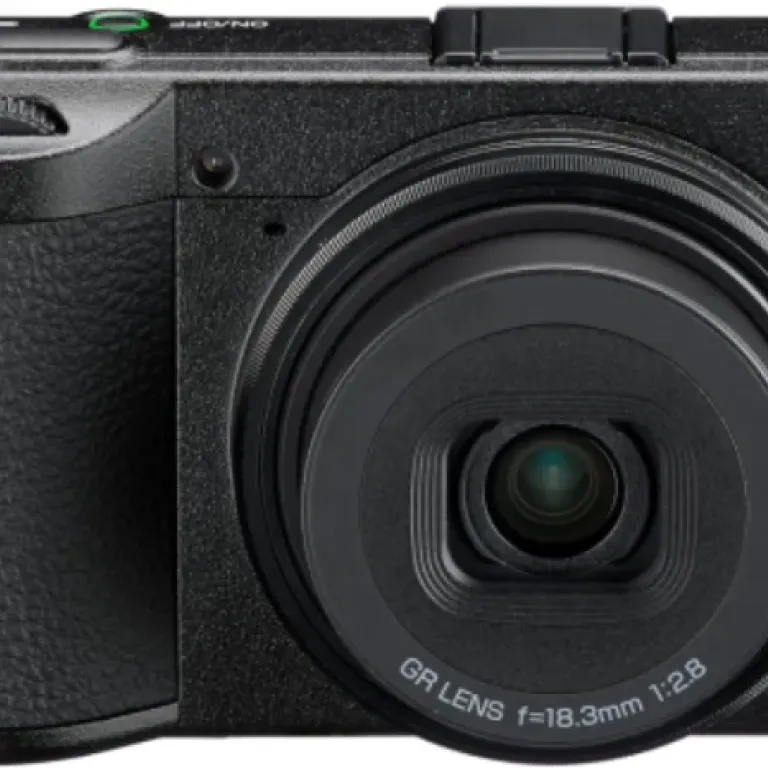

Summary
Editor's rating
Is the Ricoh GR IV worth the money?
Design and handling: boring to look at, great to use
Battery life and connectivity: good enough, but bring a spare
Build quality and issues: solid feel, but some QC worries
Speed, autofocus and image quality in real life
What this camera actually is (and what it isn’t)
Pros
- Genuinely pocketable body with APS‑C image quality and a sharp 28mm-equivalent f/2.8 lens
- Fast startup and straightforward controls make it great for quick street and everyday shots
- Natural-looking JPEGs, DNG support, and useful stabilisation for low-light stills
Cons
- Fixed 28mm lens, basic 1080p video and no built‑in flash limit versatility
- Battery life is only moderate and some users report quality control issues like barrel misalignment

Specifications
View full product page →| Brand | Ricoh |
A pocket camera that actually replaces my phone (most of the time)
I’ve been using the Ricoh GR IV as my everyday carry camera for a few weeks now. I already own a bigger mirrorless kit, and like most people I also use my phone a lot. I wanted something that actually fits in a pocket, but still gives proper APS‑C image quality, not the over-processed phone look. The GR IV is exactly that type of camera: small, simple, and focused on stills.
In practice, this is the camera I grab for walks, family days, and just going into town. It slides into a jacket pocket or a sling bag with no drama. Compared to dragging a body plus lens, it’s a relief. I end up taking more photos because I actually bring it, which for me is the whole point of a compact camera.
The 28mm-equivalent lens is fixed, so you need to be okay with that. If you like to zoom in on everything, you’ll be frustrated. But for street, travel, family, food, and general daily life, 28mm works pretty well. It forces you to move your feet and think a bit more, which I actually liked after a few days. It feels more like “real” photography than just pinching a screen.
It’s not perfect: there’s no built‑in flash, the video is basic 1080p, and you can find cheaper cameras if you just want snapshots. But as a stills camera that you can always have on you, it’s pretty solid. If you’re tired of your phone photos looking over-sharpened and noisy in low light, this is a noticeable step up without becoming a full camera bag project every time you leave the house.
Is the Ricoh GR IV worth the money?
Value-wise, the GR IV sits in a slightly awkward spot. It’s not cheap, especially if you compare it to entry-level mirrorless kits with a kit lens, or even some used full-frame bodies. But those alternatives are bigger and heavier, and you’re less likely to carry them daily. This camera is clearly priced for people who care about having APS‑C quality in a genuinely pocketable body and are willing to pay for that convenience.
Compared to just using your phone, the GR IV gives you cleaner low‑light shots, nicer depth of field, more natural colours, and RAW files that are easier to work with. If you never edit and only post quick snaps to social, you might not fully benefit from what this camera offers. In that case, it might feel like an expensive toy. But if you actually enjoy photography and want something small that doesn’t feel like a compromise, it starts to make more sense.
Against other compacts, the main rival is basically older GR models or some premium compacts from other brands. The GR IV adds better stabilisation, a newer sensor, and improved connectivity. If you already own a GR III and you’re happy, I wouldn’t say this is a huge jump unless those specific upgrades matter to you. If you’re coming from scratch, the GR IV is the more future‑proof option, but you pay for it.
Overall, I’d say the value is good if you actually use it as an everyday camera. If it becomes another gadget that lives in a drawer, then no, it’s not worth the price. But if it replaces a lot of your phone shooting and saves you from lugging a big camera most days, the cost starts to feel more reasonable. There are cheaper ways to get photos, but not many that hit this mix of size, speed, and image quality.
Design and handling: boring to look at, great to use
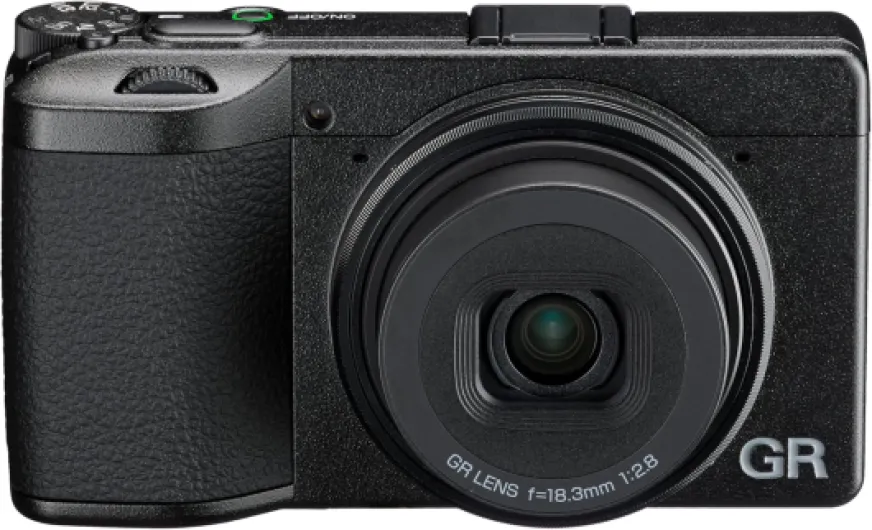
Visually, the GR IV is pretty plain. Black rectangle, no flashy branding, no retro chrome nonsense. Honestly, I prefer it that way. On the street or in a café it doesn’t attract attention, which is ideal if you like candid shots or just don’t want to look like “camera guy” all the time. It looks more like a chunky point-and-shoot than a serious camera, even though what’s inside is closer to a mirrorless body.
The big thing with the design is the grip. For such a small body, the front grip and the thumb rest on the back are actually well thought out. I can hold it with one hand securely, and I don’t feel like I’m going to drop it every time I shoot one‑handed. The dials fall under your fingers nicely: front for aperture, rear for shutter, or you can use the Program Auto Ex trick and switch between modes quickly. It’s practical, not fancy.
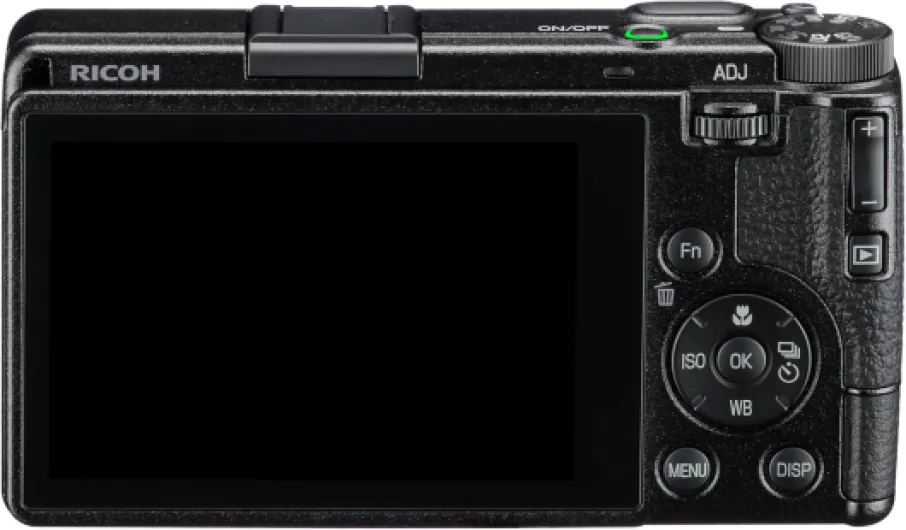
The touchscreen is decent. It’s not the sharpest or brightest screen I’ve ever seen, but with the Outdoor Viewing Mode cranked up it stays usable in sunlight, which is what matters. Touch to focus and menu navigation are straightforward. It doesn’t flip, so if you’re thinking of using this for selfies or vlogging, that’s not what it’s made for. For stills, I didn’t miss a tilting screen as much as I thought, but low‑angle shots do require some guesswork.
Buttons are a good balance: enough to have direct control, not so many that it feels like a cockpit. There’s no mode dial cluttered with a million scene modes; you get the basics and some customisation. The body feels slim but not fragile. It’s not weather‑sealed like some high‑end bodies, so I wouldn’t push it in a downpour, but for everyday city use it’s fine. Overall, the design is low-key but very practical in the hand, which matters more to me than looks.
Battery life and connectivity: good enough, but bring a spare
Battery life on the GR IV is better than older GR models, but it’s still a compact camera, not a DSLR tank. In my use (mixed shooting, Wi‑Fi off most of the time, screen at medium brightness), I was getting through a full afternoon of casual shooting without killing the battery, roughly 250–300 shots. If you chimp a lot or use the wireless features heavily, that number drops. For a full day of travel or a theme park, I’d definitely bring a spare battery just to be safe.
The battery itself is small and light (around 33 grams), so carrying one or two extras isn’t a big deal. Charging is via USB, which is handy because you can plug it into a power bank, laptop, or wall adapter. That’s convenient when you’re travelling and don’t want to lug a separate charger. I do wish the battery life was a bit stronger, but for a pocket camera with a big sensor and a bright screen, it’s acceptable.
On the connectivity side, you’ve got Wi‑Fi and Bluetooth. Once paired with the app, you can transfer JPEGs to your phone without too much hassle. It’s not the fastest transfer in the world, but for sharing a few shots to social media or sending a thumbnail for YouTube, it’s totally fine. Bluetooth keeps the connection more stable and can help with quick pairing. It’s not as seamless as using AirDrop or Google Photos from a phone, but it’s workable once you’ve set it up.
There’s no fancy remote included, and to be honest I didn’t really miss it for this kind of camera. For tripod work or self‑portraits, you can use the app as a remote if needed. Overall, battery and connectivity are decent but not standout. They support the main use case (shoot, move files to phone, keep going) without being the star of the show. Just budget for at least one extra battery if you shoot a lot in a single day.
Build quality and issues: solid feel, but some QC worries
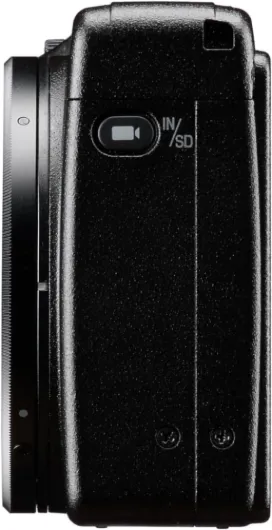
In the hand, the GR IV feels sturdier than its size suggests. The body doesn’t creak, the dials turn with a clear click, and the buttons don’t feel mushy. It’s clearly not a metal brick like some old film cameras, but it doesn’t feel like a toy either. I’ve tossed it in a sling bag with keys and other junk (not recommended, but it happens) and it hasn’t picked up any major marks so far. The lens mechanism extends smoothly when powered on and retracts cleanly every time.
However, looking at other user reviews, there are some quality control concerns. One buyer mentioned a barrel alignment defect out of the box: the top left of the lens barrel was rubbing and the bottom right had a gap and stuck out a bit. That kind of issue is annoying on a camera at this price. Another review mentioned receiving a used item sold as new on Amazon, with dust and a noticeable shutter count. That’s more on the seller than Ricoh, but it’s still something to keep in mind: check your copy when it arrives.
The camera has an ultrasonic Dust Removal II system, which is supposed to shake dust off the sensor. That’s important because fixed-lens compacts can be dust magnets over time. So far, I haven’t noticed any dust spots on my images, but I also haven’t abused it in sandstorms or anything like that. It’s reassuring to know the feature is there, especially if you plan to keep the camera for several years.
There’s no official weather sealing here, so I wouldn’t push it in heavy rain or dusty environments. Light drizzle and everyday city use are probably fine, but I’d still be cautious. Overall, the build feels solid for a compact, but the occasional QC issue means you should inspect yours carefully at first: check the lens barrel alignment, test the zoom movement, and look for dust on the sensor. If it’s all clean, you’re likely good to go.
Speed, autofocus and image quality in real life
Performance-wise, the GR IV is built around fast stills, not fancy features. Startup is genuinely quick: Ricoh claims about 0.6 seconds, and in practice it does feel like that. You pull it out, hit the power button, and it’s basically ready by the time you raise it. That’s a big deal compared to phones that sometimes lag or bigger cameras that take a second or two to wake up from sleep. For street and family moments, that speed matters.
Autofocus is solid but not magic. It’s a hybrid AF system, and for normal daylight and indoor lighting it locks on quickly. Kids running around in a park? Mostly fine, as long as you don’t expect sports camera tracking. In lower light, it slows down a bit and can hunt, but the stabilisation and f/2.8 aperture help keep shutter speeds usable. It’s not a sports camera, but for everyday life and travel it gets the job done. There are only 11 AF points, so don’t expect fancy eye‑AF tracking like on high-end mirrorless bodies.
Image quality is where this thing earns its keep. The 25.7MP APS‑C sensor plus the GR lens combo gives sharp, clean files with good dynamic range. Compared to my phone, shadows hold up much better and highlights don’t blow out so easily. At ISO 3200–6400, shots are still very usable, especially in RAW. Above that, noise creeps in fast; yes, it goes up to ISO 204800, but those extreme values are more for emergency use than anything else. JPEGs out of camera look natural: colours aren’t overly punchy, skin tones look realistic, and the new “Image Control” options and grain settings are fun to play with if you like a film‑like look.
Continuous shooting is not its party trick, and video is basic 1080p MP4. It’s fine for a quick clip, but if you care about video quality or frame rates, you’ll want something else. Still, as a photo-first camera focused on fast startup, decent AF, and consistent files, it performs well. It’s not the fastest or most advanced camera on the market, but for the size and purpose, it’s pretty solid.
What this camera actually is (and what it isn’t)
The Ricoh GR IV is a compact APS‑C camera with a fixed 18.3mm f/2.8 lens, which gives you a 28mm equivalent field of view. So think wide-ish, like the main camera on many phones, but with much better control over noise and depth of field. It’s clearly built for still photography: there’s no fancy 4K, only 1080p video, and the whole design is built around quick snaps, not vlogging or cinematic stuff.
On paper, you get a 25.7MP APS‑C CMOS sensor, 5‑axis image stabilisation, ISO up to 204800, and a fast startup time of about 0.6 seconds. It shoots DNG and JPEG, which is nice if you want to edit later. It has Wi‑Fi and Bluetooth for sending photos to your phone, and a 3.0" touchscreen on the back that’s fixed (no flip-out). There’s a bunch of exposure modes (P, A, some scenes), but the vibe is more “set it up once and shoot” than “endless menu diving”.
Compared to a phone, the biggest difference you feel is the sensor size and the handling. The APS‑C sensor gives cleaner files in low light, and you actually get some background blur at f/2.8 without having to fake it. Compared to a typical mirrorless camera, the GR IV wins on size and speed of use, but you obviously lose lens flexibility and viewfinder options. This is not your only camera if you’re into wildlife, sports from a distance, or anything that needs long lenses.
So in short: this is a dedicated stills camera for people who want a pocketable street/travel shooter. If you want to do serious video or need zoom, look elsewhere. If your main priority is good photos with minimal fuss, it lines up well with that use case.
Pros
- Genuinely pocketable body with APS‑C image quality and a sharp 28mm-equivalent f/2.8 lens
- Fast startup and straightforward controls make it great for quick street and everyday shots
- Natural-looking JPEGs, DNG support, and useful stabilisation for low-light stills
Cons
- Fixed 28mm lens, basic 1080p video and no built‑in flash limit versatility
- Battery life is only moderate and some users report quality control issues like barrel misalignment
Conclusion
Editor's rating
The Ricoh GR IV is a niche camera that makes a lot of sense if you fit that niche. It’s a pocketable APS‑C stills camera with a fixed 28mm-equivalent lens, quick startup, decent autofocus, and image quality that’s clearly ahead of any phone. The files look clean, the colours are natural, and the stabilisation plus f/2.8 lens make it usable in a lot of everyday situations. The low-key design and small size mean you actually take it with you, which is probably its biggest strength.
On the flip side, it’s not a do‑everything device. There’s no zoom, video is basic 1080p, there’s no built‑in flash, and battery life is okay but not great. Some users have reported quality control issues like lens barrel misalignment or receiving used units, so it’s worth checking your copy carefully and buying from a reliable seller. It’s also not cheap, so if you just want casual snapshots and don’t care about editing or low‑light quality, your phone will be enough.
If you like street, travel, everyday family moments, and want a camera that feels serious without dragging a whole kit, the GR IV is a strong option. If you need zoom, advanced video, or weather sealing, you should probably look elsewhere. Personally, I’d recommend it to people who already know they enjoy photography and want a simple, always‑with‑you camera that gets the job done without fuss.
![GR IV Premium Compact Digital Camera [Focal Length 28mm] [25.7MP APS-C Size CMOS Sensor ] [~ 0.6s High-Speed Startup] [Fast Autofocusing] [ISO 204800] [The Ultimate Snap Shooter]](https://www.digital-camera-guru.com/storage/897207/81584b1O-DL._AC_SL1500_.jpg)