
Summary
Editor's rating
Is this bundle good value for money?
Cute pastel look, chunky toy vibe
Battery life and day‑to‑day practicality
Build quality, case, and how it holds up
Image quality and real‑world use
What you actually get in this bundle
Pros
- Very easy to use with automatic exposure and simple controls
- Bundle is complete: camera, 40 films, case, strap, and album included
- Fun for parties, kids, and scrapbooking with instant physical prints
Cons
- Film is pricey, so cost per photo adds up quickly
- Limited control over exposure and flash; image quality is just decent
- Bulky toy‑like design, not very pocket‑friendly

Specifications
View full product page →| Brand | Fujifilm |
A simple instant camera that’s mainly about the fun
I’ve been using this Fujifilm Instax Mini 12 Pastel Blue bundle for a few weeks, mostly at family get‑togethers and a birthday party, and I’ll be straight: it’s not a serious camera, it’s a toy for memories. And that’s fine, as long as you go in with that mindset. The bundle I tried had the camera, 40 shots of film, the matching case, and the little album with the quicksand beads. So basically, you’re ready to shoot right out of the box.
The first thing I noticed is how brain‑dead simple it is to use. You twist the lens to turn it on, point, and press the shutter. No menus, no settings, the camera handles exposure on its own. That’s nice for kids or anyone who doesn’t want to think about ISO or shutter speed. On the flip side, if you like to control your photos, you don’t get much say here.
Most of the time I used it indoors in normal house lighting and outside in the garden. Indoors, the flash fires almost every time, so you get that typical instant camera look: bright subject, darker background. Outside on a cloudy day, photos look better, more balanced. Sharpness is okay for this type of camera, but you’re not hanging these in a gallery. They’re fridge‑door shots and scrapbook material, and for that, it’s fine.
Overall, my first impression is that this bundle is mainly about the experience: taking a picture, hearing it whirr out, and watching it appear. If that sounds fun to you or to a kid you’re buying for, it works. If you want high‑quality images or cheap shooting, this is not it. Film cost and lack of control are the two things that hit you pretty fast once the initial excitement passes.
Is this bundle good value for money?
In terms of value, you have to look at two things: the bundle price vs buying items separately, and the ongoing cost of film. As a bundle, it’s actually pretty decent. You get the camera, a matching case, strap, the little album, and 40 shots of film. If you bought the camera and film alone, you’d already be close in price, and then you’d still need a case if you want to keep it safe. So for a gift, this pack makes sense and saves some hassle.
Where it hurts a bit is the cost per photo. Instax Mini film is not cheap. Depending on where you buy it, each shot ends up costing a fair bit compared to just snapping on a phone. So you naturally start to think more before pressing the button. For kids, that’s not all bad; it teaches them that each photo counts. But if you’re trigger‑happy, the cost will add up quickly. I burned through 40 shots in a few gatherings without trying that hard.
That said, the whole point of this system is the physical print you can hold right away. If that appeals to you—like for party guestbooks, sticking photos on a wall, or making little memory albums—then the cost is easier to swallow. I used it at a family event and people really liked leaving with a small print in their pocket. Compared to printing phone photos later, this is more spontaneous, even if the quality is lower.
So in my opinion, value is good if you accept the running cost. The camera itself is simple but does its job, and the accessories are useful, not just filler. If you’re very price‑sensitive or plan to shoot hundreds of photos, I’d look at digital options instead. But for occasional events, gifts, and small memory moments, this bundle lands in a reasonable spot for what it offers.
Cute pastel look, chunky toy vibe
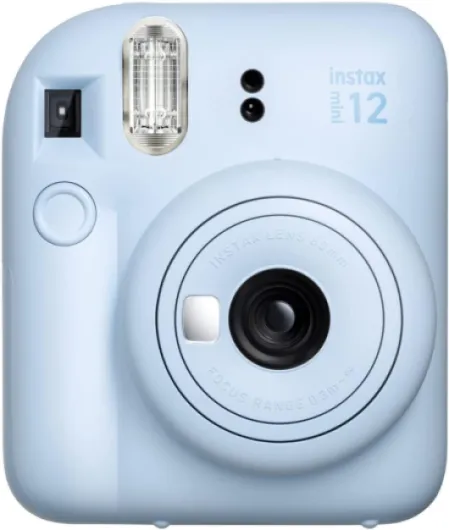
The design is clearly aimed at kids, teens, or adults who like playful gadgets. The Pastel Blue color is soft and looks good in real life, not cheap or neon. The body is chunky and rounded, very toy‑like, which has pros and cons. On the plus side, it feels friendly and not fragile. On the downside, it’s not exactly pocketable. It fits in a small bag, but not in jeans pockets unless you’re wearing cargo pants.
Controls are minimal: you twist the lens barrel to turn it on and twist again to go into Selfie Mode. There’s a button for the shutter and that’s basically it. The viewfinder is a small optical window on the left side. It’s simple, but framing is a bit approximate; what you see is roughly what you get, but not exact, especially at close range. After a few shots, I learned to leave a little extra room around people’s heads so I don’t cut off hair in the print.
The built‑in selfie mirror next to the lens is actually quite handy. It’s small but you can at least see if your face is in the frame. In Selfie Mode, the focus distance is around 30–50 cm, which works fine for arm’s‑length shots with one or two people. I did notice that if you get too close, faces start to look a bit soft, so keeping some distance helps.
In daily use, the design is straightforward: twist, point, click. The flash is always there and you can’t disable it, which can be annoying in some situations (like through glass or in very bright sun where you don’t want reflections). But that’s part of the simplicity trade‑off. Overall, the design is not subtle, but it’s friendly and practical for what this camera is supposed to do.
Battery life and day‑to‑day practicality
The camera runs on two AA batteries, which is both good and a bit old‑school. Good because if it dies during a trip, you can buy AA batteries in pretty much any corner shop. Slight downside if you prefer built‑in rechargeable batteries and hate dealing with disposables. During my use, I ran through the full 40 shots included in the bundle and the original batteries were still going strong, no sign of slowing down.
According to Fujifilm’s usual numbers on similar models, two AAs can handle several film packs, and that matches my experience so far. I did a mix of shooting and occasional on/off switching and never had the camera fail to fire the flash or spit out a print. No lag, no weird half‑developed photos. So for a normal user, especially a kid, you’re not burning through batteries in a weekend.
In practice, I’d just throw an extra pair of AAs in the case and forget about it. If you use rechargeable AA batteries (like Eneloops or similar), it’s even better because you keep the flexibility without wasting disposables. The camera doesn’t give you a detailed battery indicator, so you don’t really know when it’s about to die; it’s more like it works until it doesn’t. That’s not ideal, but it’s common on these simple instant cameras.
Day‑to‑day, the battery system is basically a non‑issue as long as you’re a bit prepared. For a kid using it occasionally on weekends, a single pair will probably last a good while. For events like weddings or big parties where you’re shooting a lot, I’d just have spare AAs in your bag and you’re covered.
Build quality, case, and how it holds up
The camera itself is made of hard plastic and feels pretty solid for what it is. It’s not heavy, but it doesn’t feel hollow either. I didn’t throw it on the floor on purpose, but it did get bumped around a bit, handed between kids, and knocked against a chair. No cracks, no loose parts, everything still lines up fine. The lens mechanism (twist to turn on and for Selfie Mode) feels reasonably firm, not wobbly.
The included pastel blue case is more important than it looks. It’s a vegan leather style material with light padding. It’s not real protection like a hard shell, but it does help against scratches, minor bumps, and dust. I used the camera mostly inside the case with the flap open, since you can shoot without taking it out. The snap buttons and strap anchors held up fine. Stitching is okay, not luxury‑level, but I didn’t see any threads coming loose after a few weeks.
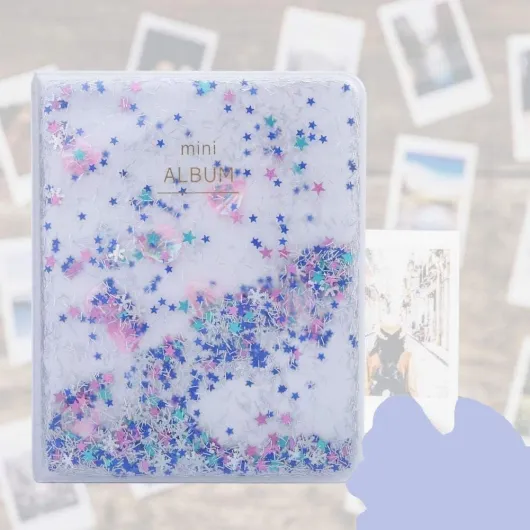
The weakest part in terms of durability is probably the photo album. The plastic sleeves are thin, and if you yank prints in and out all the time, I can see them tearing eventually. For normal use—sliding in photos and leaving them there—it should be fine. The quicksand beads are purely visual; they don’t affect durability, but they do make the cover slightly bulkier.
Overall, I’d say durability is pretty solid for casual use
Image quality and real‑world use
Let’s talk about how it actually shoots. Image quality is decent for an instant camera, but nothing more. The automatic exposure does a pretty solid job most of the time. Indoors at a birthday party with standard ceiling lights, faces were correctly exposed, no one came out pitch black or blown out. The flash is strong enough for people at normal room distance, say 1–2 meters. Backgrounds do get darker, so you get that classic flash look.
Outdoors, I got the best results on cloudy days or in the shade. Colors look nice and punchy without going too crazy. On bright sunny days, if the person is in direct sun, highlights can blow out a bit, especially on pale skin. You can’t adjust exposure manually, so you just have to live with that. For group shots at a barbecue, it did the job: everyone recognizable, decent color, nothing artistic but fun to look at.
Sharpness is okay in the center and drops off slightly at the edges, but for this print size it doesn’t matter much. What matters more is distance. This is not a close‑up camera unless you’re using Selfie Mode at the right range. I tried shooting some objects too close in normal mode and they came out soft and slightly out of focus. Once I respected the rough distance (about 60 cm and up in normal mode), results were more consistent.
Speed‑wise, it spits the photo out in a second or two after you press the shutter. The actual development takes around 90 seconds to a couple of minutes before the image fully appears. You don’t need to shake it or anything; just leave it on a flat surface. Overall, performance is stable and predictable once you understand its limits: it’s fine for casual portraits, parties, and little moments, but not for low‑light scenes without flash, distant landscapes, or anything that needs detail or dynamic range.
What you actually get in this bundle
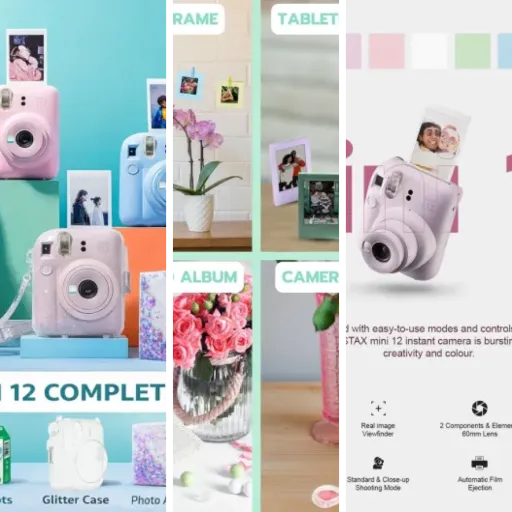
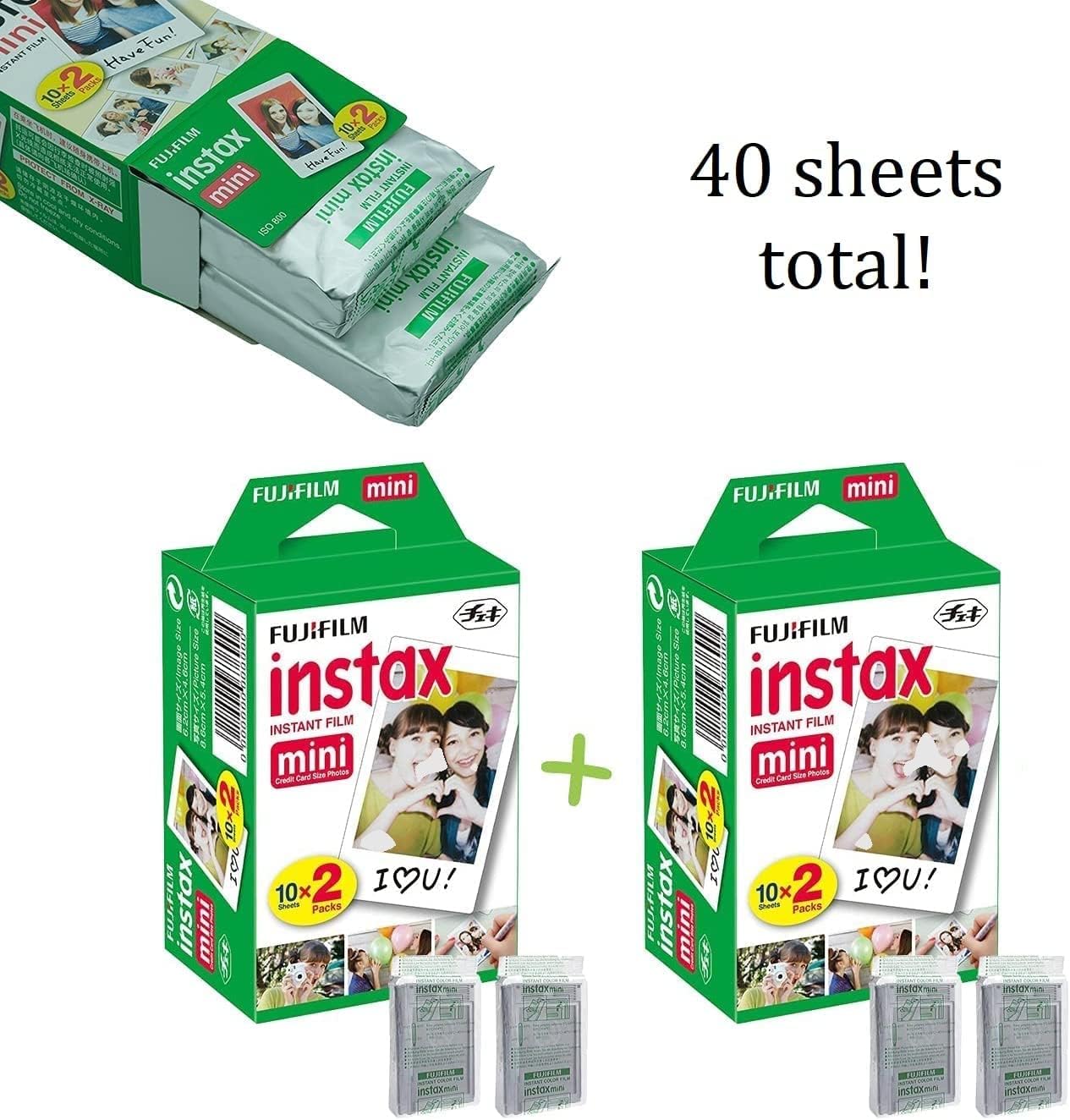
In the box you get quite a bit: the Instax Mini 12 camera in Pastel Blue, 40 sheets of Instax Mini film (two twin packs of 20), a matching pastel blue case, a strap, a small quicksand beads photo album with 64 pockets, and two AA batteries. So from day one, you don’t need to buy anything extra to start shooting, which is handy, especially if it’s a gift. I loaded the film in less than a minute; the door is clearly marked, and you just match the yellow lines.
The film is the standard Instax Mini size, basically credit‑card sized photos. I measured one: roughly 8.5 x 5.4 cm including the white border, with a smaller image area in the middle. So yes, the photos are small. People expecting classic big Polaroid‑style prints might be a bit surprised. For teens to stick on mirrors, laptops, or in a little album, it makes sense. For displaying on walls, you’ll probably want a bunch of them together.
The album is honestly a bit gimmicky with the quicksand beads, but kids like it. It holds 64 prints, two per side in a simple plastic sleeve layout. I filled the first few pages during one family barbecue and it was actually nice to have a place to put the photos right away instead of leaving them lying around. Build quality of the album is nothing special but fine for what it is: thin plastic, flexible cover, but it doesn’t feel like it’s going to fall apart in a week.
Overall, the bundle feels thought‑through: camera, protection, film, and a way to store the shots. No single item feels premium, but you’re not paying for luxury materials here. If you bought all pieces separately, you’d probably end up paying more or at least spending more time choosing, so having it all together is practical if you just want to plug and play.
Pros
- Very easy to use with automatic exposure and simple controls
- Bundle is complete: camera, 40 films, case, strap, and album included
- Fun for parties, kids, and scrapbooking with instant physical prints
Cons
- Film is pricey, so cost per photo adds up quickly
- Limited control over exposure and flash; image quality is just decent
- Bulky toy‑like design, not very pocket‑friendly
Conclusion
Editor's rating
This Fujifilm Instax Mini 12 Pastel Blue bundle is basically a fun instant camera kit that does exactly what you expect: simple shooting, small physical prints, and a cute look. The camera is easy to use, the automatic exposure works reliably most of the time, and the selfie mode with the little mirror is actually handy for quick shots with friends. The included case and album aren’t fancy, but they’re practical and make it a ready‑to‑go gift straight out of the box.
On the downside, image quality is just okay, and you have almost no control over settings. If you care a lot about sharpness, dynamic range, or big prints, you’re better off with your phone and a photo printer. The biggest real drawback is the cost of film: each press of the shutter costs money, so this is not something you burn through casually without thinking. You also have to accept the toy‑like design and the always‑on flash.
I’d say this bundle is well suited for teens, kids around 10–15, casual users who want a fun party camera, and anyone who likes tangible photos and scrapbooking. It’s also a solid gift idea because everything needed is in the box. People who should probably skip it are those who want serious photography features, very budget‑conscious users, or anyone who hates ongoing consumable costs. If you go in knowing it’s mainly about the experience and not about perfect photos, it’s a pretty solid little kit.