
Summary
Editor's rating
Value for money: niche but makes sense if you really need rugged
Design: tough little brick with one really dumb tripod choice
Battery life and everyday usability
Durability and rugged use: strong body, questionable tripod mount
Performance and image quality: decent in daylight, weak in bad light
What the Ricoh WG-80 actually offers (on paper vs in real life)
Pros
- Genuinely rugged and waterproof to 14 m, handles sand, splashes and bumps well
- Simple point‑and‑shoot operation with useful underwater and macro modes
- Zoom lens and LED ring lights make it more versatile than a basic action cam for stills
Cons
- Image quality drops fast in low light; photos can look soft and noisy
- Off‑center, not‑so‑solid tripod mount is a clear design weak point
- No 4K video and dated screen make it feel behind more modern options

Specifications
View full product page →| Brand | Ricoh |
A rugged compact in 2026: still worth buying?
I picked up the Ricoh WG-80 mainly because I wanted something I could throw in a bag, take to the beach, use in the rain, and not panic every time a kid with wet hands grabbed it. Phones are great, but I’m not keen on dunking an £800 smartphone in seawater just to film a few waves or fish in a rock pool. I’ve used older rugged compacts before (Olympus Tough, a Nikon AW), so I had a rough idea what to expect: decent photos in good light, nothing special in low light, but strong on durability.
With the WG-80, I used it for a few weeks around water: a couple of beach days, some puddle-level shots after rain, and a bit of garden macro on insects and flowers. I didn’t baby it. It went in sand, got rinsed under the tap, bumped around in a backpack with keys and a power bank. So this isn’t a lab test; it’s more "does it survive normal abuse and give photos that don’t look like they were shot on a potato?"
Overall, I’d say the camera is pretty solid for what it’s designed for, but it’s not magic. The Amazon rating around 4/5 lines up with my experience: it does the job, but you need to go in with the right expectations. This is not a replacement for a modern mid‑range phone camera in terms of sharpness and dynamic range. It’s a tool for situations where you either can’t or don’t want to risk your phone.
If you mostly shoot in daylight, want underwater or rough‑use photos, and don’t care about fancy manual controls or RAW, it makes sense. If you’re picky about image crispness and often shoot indoors or at night, you’ll probably be underwhelmed and start to notice the same complaints some reviewers had about soft images and "dreadful photos" when the light isn’t ideal.
Value for money: niche but makes sense if you really need rugged
Price‑wise, the WG-80 usually sits in that middle zone where you start asking yourself: why not just buy a cheap action cam or a used GoPro? And that’s a fair question. For roughly the same money, you can get an older GoPro with better stabilisation and 4K video. On the other hand, the WG-80 gives you a zoom lens, proper still photo controls, and easier handling for people who prefer a classic camera layout. So it’s really about what you actually need.
If your main goal is underwater video with smooth stabilisation, I’d honestly lean more towards an action cam. The WG-80’s digital stabilisation just can’t match a GoPro in that area. But if you want a camera that kids, parents, or less tech‑savvy people can pick up and use like a simple point‑and‑shoot, with the bonus that it can go underwater and handle drops, then the WG-80 starts to look more sensible. There’s no touch screen, no complex menus, just buttons and a zoom rocker.
Compared to a modern mid‑range smartphone, the value question is different. Image quality on land is usually better on a good phone, especially in low light. Where the WG-80 wins is in situations where you’d be scared to use your phone: underwater, in heavy rain, on a dusty construction site, or in places where it might get knocked around. So you’re paying for peace of mind and a specific use case more than for raw image quality.
Overall, I’d say the value is decent but not outstanding. If you really need waterproofing and ruggedness and you like having a dedicated camera you don’t worry about, the price is justified. If you’re just chasing better photos for normal travel, I’d spend the money on a better phone, a non‑rugged compact with a larger sensor, or a basic mirrorless. The WG-80 is worth it for that fairly narrow group of users who care more about surviving sand, water, and kids than about pixel‑peeping.
Design: tough little brick with one really dumb tripod choice
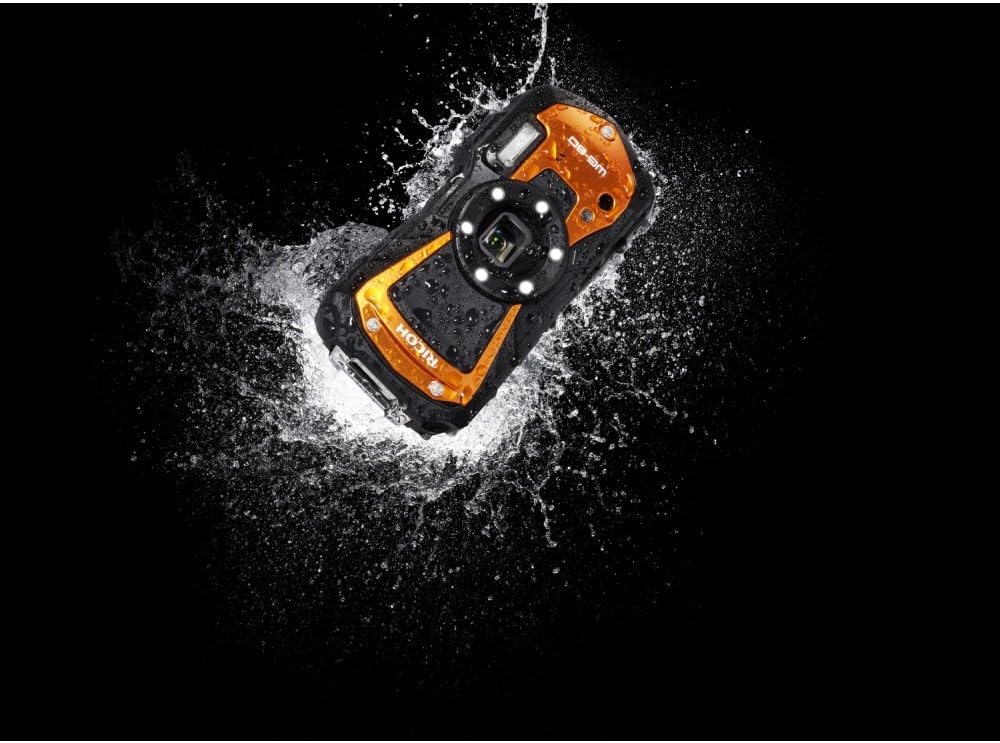
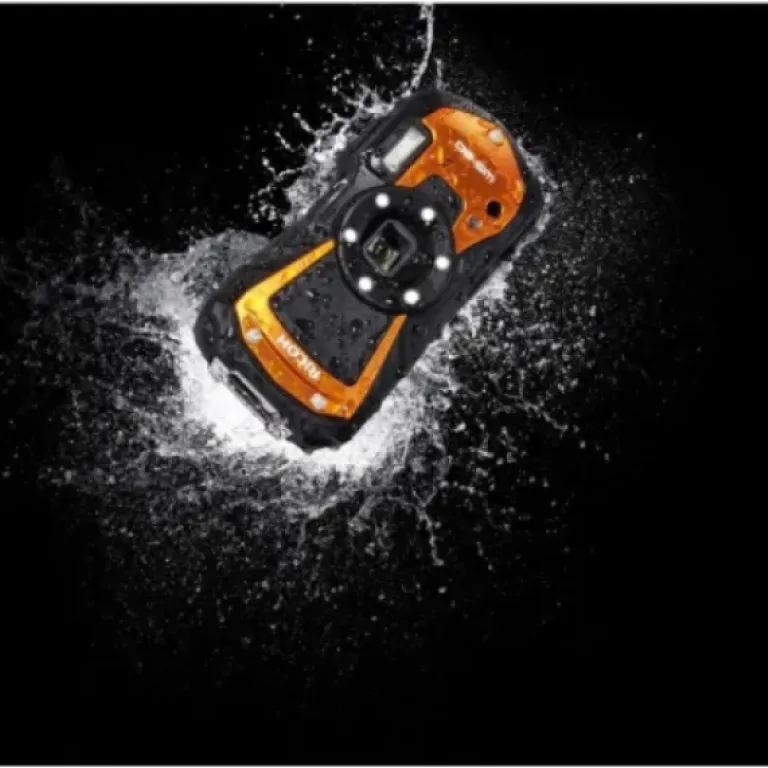
Design‑wise, the WG-80 is very obviously a "rugged compact". The orange version stands out in a bag or on the sand, which is actually practical because it’s harder to lose. The body has a mix of hard plastic and rubberized areas, with quite a few ridges and screws on show. It’s not pretty, but it looks like something you can drop without having a heart attack. The buttons are on the small side but raised enough to find by touch, even with slightly wet fingers. The doors for the battery and ports have thick seals and a firm latch, which is what you want if you’re going underwater.
The 2.7" screen is honestly nothing special. Resolution is low by today’s standards (around 230k dots), and if you’re used to a phone screen it feels grainy. That said, outdoors it’s usable, especially with the "Outdoor View" brightness settings. I often had it on a brighter mode at the beach, and I could still frame shots in sunlight. Don’t expect to judge fine focus from the screen; you mostly just check framing and trust the autofocus.
The big design downside, and this matches one of the Amazon reviews, is the tripod mount. It’s shoved off to one side instead of being more central, and that’s just awkward. On a small table tripod or a grip, the camera hangs off to one side and feels unbalanced. In my case, the mount hasn’t broken, but I can see why someone managed to destroy it: you’re putting a lot of stress on one edge of the body. Also, the insert feels more plasticky than metal. For a camera that sells itself as rugged, this is a weak point, and it’s a weird design call.
Day to day, the overall design is practical but a bit dated. Lots of small buttons, basic menus, fixed screen, no viewfinder. It’s clearly built for being thrown around more than for fast adjustments. Once you set it up how you like it, it’s fine, but if you’re the type who loves quick manual tweaks, this interface will annoy you. For someone who just wants to turn it on, zoom, and press the shutter, it’s simple enough and the orange body helps you not lose it in the sand or grass.
Battery life and everyday usability
The official specs don’t shout much about the battery, and in practice it’s acceptable but not great. On a full charge, mixing stills and some short 1080p clips, I was getting roughly a day of casual use: around 150–200 photos and a handful of short videos before the battery indicator dropped to low. If you hammer the video, especially underwater where you’re leaving it on more, you’ll drain it faster. It’s not terrible, but if you’re on a full‑day excursion with no charging, I’d definitely pack a spare battery.
Charging is done through the camera via USB. It works, but it’s slower than I’d like, and I personally prefer cameras where you can charge the battery in an external charger while still using the camera. Here, if the battery is dead, the whole camera is stuck by a cable. For travel, that’s a bit of a pain. On the upside, the USB port is standard enough that any basic power bank will do if you’re stuck on a boat or a bus.
One thing I noticed is that leaving the camera on in your pocket or bag by accident will chew battery quicker than you think. There’s a self‑timer option but not a very smart auto‑off system beyond the usual sleep. So you really need to get into the habit of turning it off properly after each use. The small screen and the fact that it’s not super bright actually help a bit with battery life compared to a big, high‑res display, but video and macro LED lights still add up.
In short, battery life is fine for a light user, borderline for heavy use. For a beach holiday with a few swims per day and casual shooting, one battery per day is manageable. For a full day of hiking and lots of video, budget for at least one spare. It’s not a dealbreaker, but it’s not a strong point either, especially considering this is meant for outdoor adventures where power isn’t always handy.
Durability and rugged use: strong body, questionable tripod mount
This is the whole point of the WG-80, so I pushed it a bit. I used it in the sea, in a chlorinated pool, dropped it from about waist height onto grass and once onto a tiled floor (by accident). It came out of all that without any cracks, only a few light scuffs. The seals held up: no fogging behind the lens or screen, no moisture in the battery compartment. After each saltwater session I rinsed it under the tap, as Ricoh recommends. That’s one habit you really need with any waterproof camera if you want the seals and buttons to last.
The waterproof rating to 14 m is more than enough for snorkeling, swimming pools, and shallow diving. I only went a couple of meters deep, but the buttons still worked fine underwater. The underwater mode did help with color, so you don’t end up with that washed‑out cyan look. The body also handled sand and grit pretty well; some grains get around the buttons, but a quick rinse usually clears it. The doors feel solid when locked, and you really have to push the latch to open them, which is reassuring.
Where things are less convincing is the tripod mount and some of the external materials. As one Amazon reviewer said, the tripod insert seems to be partly plastic, and being off‑center means any grip or tripod puts torque on that area. Mine hasn’t broken, but I can see how over time, especially with heavier accessories or frequent mounting, it could fail. For a camera that sells itself as crushproof and rugged, this is a bit of a design flaw. If you rely on tripods a lot – say, for macro or time‑lapse – that’s a concern.
Overall, as a "throw it in a bag and don’t worry" camera, the durability is pretty solid. It shrugs off splashes, dust, and bumps better than any normal compact or phone. Just don’t expect it to be indestructible, and be careful with the tripod socket. If you mainly handhold it or use a wrist strap, you’re likely fine. If you’re planning to mount it constantly to accessories, I’d be a bit more cautious and maybe look for a cage or a different setup.
Performance and image quality: decent in daylight, weak in bad light
Let’s be blunt: image quality is fine in good light and pretty meh in low light. In bright outdoor conditions, the WG-80 gives you clean, usable 16 MP photos. Colors are a bit on the punchy side, which most people like for holiday shots. Detail is OK up to about mid‑zoom; at full zoom you start to see softness, especially in grass, leaves, fur, and distant textures. It’s in line with other small‑sensor rugged compacts I’ve used, not better, not much worse. If you print small or just post online, it’s acceptable.
As soon as the light drops – indoors, cloudy late afternoon, shade – noise and smudgy details show up quickly. The back‑illuminated sensor helps a bit, but the camera still relies heavily on noise reduction, which smooths out fine textures. That’s probably what some reviewers meant by "images are just not crisp at all" and "dreadful photos". If you’re used to a modern phone that stacks multiple exposures and uses heavy computational tricks, the WG-80 will look flat and noisy in comparison at night.
The autofocus is single‑shot contrast detect with 9 points, and in practice it’s relatively quick in daylight and a bit sluggish in dim light. For kids running around, dogs, or moving subjects, you’ll get some misses. Continuous shooting can go up to 30 fps in certain modes, but that’s often at lower resolution or with some caveats. For normal use, the burst performance is OK for catching a short action moment, but it’s not a sports camera. The digital "triple anti‑shake" is basically a mix of high ISO, fast shutter, and electronic stabilisation; it helps a bit but doesn’t save very shaky hands.
Video is 1080p only, and the quality is acceptable for casual clips. Autofocus during video hunts a bit if subjects move towards or away from you, and panning can look a little jerky. Underwater modes do help with color: instead of everything going blue‑green, you get more balanced tones, especially for skin and fish. Compared to a GoPro, the WG-80 loses on stabilisation and wide angle, but wins on having a zoom and more classic camera ergonomics. In short: performance is fine if you treat it as a rugged snapshot tool, not a cinematic camera.
What the Ricoh WG-80 actually offers (on paper vs in real life)
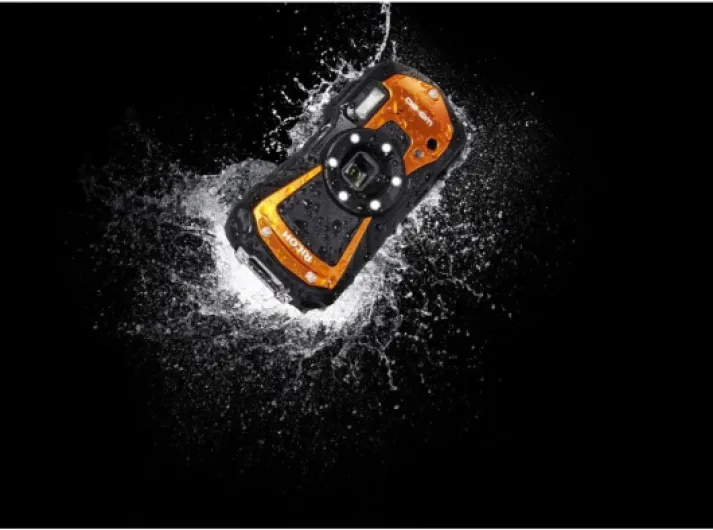
On paper, the Ricoh WG-80 tries to tick a bunch of boxes: waterproof to 14 m, shockproof, crushproof, freezeproof, 16 MP back‑illuminated CMOS sensor, 5x optical zoom (28–140mm equivalent), Full HD video, and those six LED ring lights around the lens for macro work. It’s clearly aimed at people who want a tough travel or work camera: construction sites, boats, hiking, beach holidays, snorkeling, that sort of thing. The spec sheet sounds decent, but the key thing is remembering it’s still a small 1/2.3" sensor, so there’s a hard limit on image quality.
In use, the 5x zoom range is handy. 28mm wide is enough for landscapes and group shots, and 140mm is just enough reach to zoom in on wildlife in the garden or a person on the other side of the pool. Don’t expect pin‑sharp detail at the long end, but for social photos and casual clips, it’s fine. The camera sticks to JPEG only, no RAW, and the processing is clearly tuned to keep things simple for non‑experts: strong sharpening, fairly punchy colors, and not much room to rescue blown highlights.
The video side is 1080p (Full HD) in MP4 (H.264). There’s no 4K, which in 2026 feels a bit dated, but for sharing on social media or watching on a laptop, it’s OK. The footage looks acceptable in good light, less so in dim or mixed light. The anti‑shake is digital, not optical, so if you walk while filming it can look a bit jittery, but for handheld clips around the pool or from a kayak, it’s workable if you keep your movements smooth.
Overall, the advertised feature set is honest but basic: rugged build and underwater modes first, image quality second. If you come from a DSLR or a recent flagship phone, you’ll instantly see the difference in sharpness and dynamic range. If you come from an old compact or a cheap action cam, you’ll probably find it decent and easier to use, especially with the zoom and proper stills controls. It’s a simple, do‑it‑all outdoor camera, not a creative photography tool.
Pros
- Genuinely rugged and waterproof to 14 m, handles sand, splashes and bumps well
- Simple point‑and‑shoot operation with useful underwater and macro modes
- Zoom lens and LED ring lights make it more versatile than a basic action cam for stills
Cons
- Image quality drops fast in low light; photos can look soft and noisy
- Off‑center, not‑so‑solid tripod mount is a clear design weak point
- No 4K video and dated screen make it feel behind more modern options
Conclusion
Editor's rating
After using the Ricoh WG-80 in real conditions – beach, pool, rain, and general rough handling – my conclusion is pretty straightforward: it’s a tough, practical little camera with very average image quality. If you go in expecting DSLR‑level sharpness or modern phone‑style low‑light performance, you’ll end up like the 1‑star reviewers calling the photos dreadful. But if you just want something you can dunk in water, hand to a kid, or throw in a backpack without stress, it gets the job done.
The strong points are the rugged build, the underwater modes, and the macro lights, plus the simple operation that even a non‑techy person can figure out. The weak spots are the low‑res screen, the so‑so image quality in anything but good light, lack of 4K video, and that questionable tripod mount design. Battery life is OK but not impressive, and the whole user experience feels a bit dated compared to newer devices.
I’d recommend the WG-80 to people who genuinely need a dedicated rough‑use camera: families on beach holidays, anglers, sailors, workers on dusty or wet sites, or anyone who wants a backup camera they don’t mind abusing. If you mostly shoot on land, care a lot about crisp detail, or love using tripods and doing more serious photography, I’d skip this and put the money into a better sensor or a good waterproof case for a higher‑end camera. It’s a niche product, but in that niche, it’s a reasonable choice as long as you accept its limits.