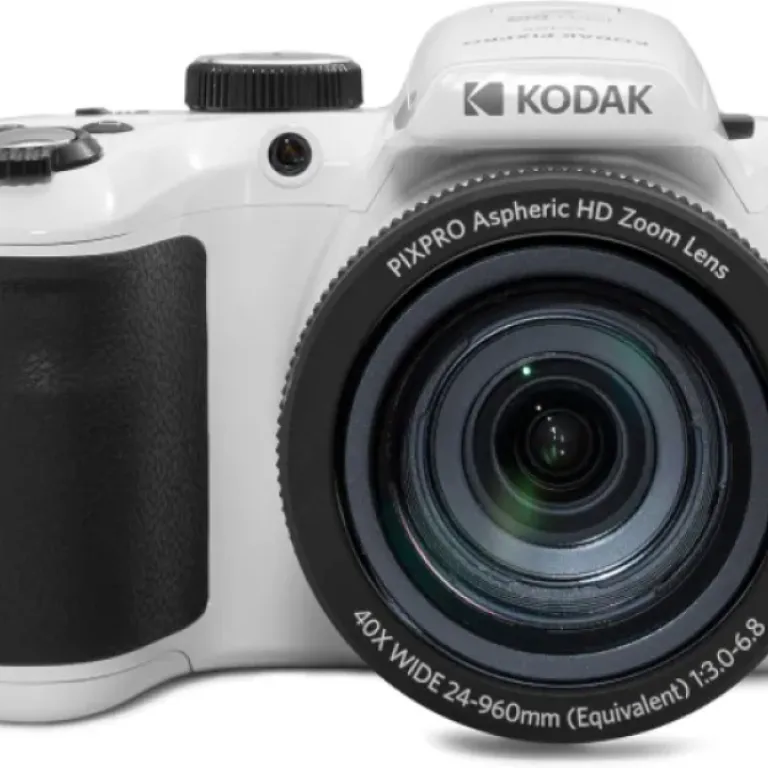

Summary
Editor's rating
Value for money: lots of zoom for not much cash
Design and handling: feels like a small DSLR, with a few irritations
AA batteries: handy for travel, but you need to plan ahead
Build quality and reliability: mostly fine, but clearly budget
Image quality and zoom performance: strong reach, average everything else
What this camera actually offers (beyond the marketing text)
Pros
- Huge 40x optical zoom that’s genuinely useful for planes, wildlife, and distant subjects
- Runs on AA batteries, which you can find anywhere and easily swap on the go
- Simple to use with auto modes, decent grip, and straightforward controls for beginners
Cons
- Weak low-light performance and very limited depth of field control due to small sensor
- Basic build quality with annoying details like a loose lens cap and smudge-prone screen
- No RAW support, average screen, and overall image quality not much better than a good phone except for the zoom

Specifications
View full product page →| Brand | KODAK |
A long zoom camera for people who don’t want to mess with lenses
I’ve been using the Kodak Pixpro Astro Zoom AZ405 for a little while now, mainly for weekends, walks, and a couple of local events. I went for it because I wanted a big zoom without paying DSLR money or carrying separate lenses. On paper, 40x zoom and 20 MP for this price looks pretty solid, and the Amazon reviews are fairly positive, so I was curious to see if it actually holds up in real use.
In practice, this is very much a "point-and-shoot with a big lens". If you’re expecting pro-level stuff, you’ll be disappointed, but if you just want something better than a basic compact and you don’t care about changing lenses, it does the job. I used it for planes, birds in the park, and some family shots indoors and outdoors. It’s clearly designed for beginners or casual users, not photo nerds who want to fine-tune everything.
What stood out to me first was the zoom. 40x really lets you pull in distant subjects, like planes or stuff across a river, and the optical stabilization helps a bit when you’re fully zoomed in. But you do feel the limitations of the small sensor and basic build: low light isn’t great, the screen isn’t very sharp, and the camera feels more like a decent toy than serious gear. That’s not necessarily a bad thing, just something to be aware of.
If you’re thinking of it as an affordable travel or hobby camera, it starts to make sense. It’s the kind of device you throw in a bag, use all day on AA batteries, and you don’t stress too much if it gets a bit knocked around. Just don’t expect miracles in the dark or super precise controls. Overall, it’s a budget bridge camera with clear strengths (zoom, simplicity) and just as clear weaknesses (low light, build details, and some ergonomic annoyances).
Value for money: lots of zoom for not much cash
Price-wise, the Kodak Pixpro AZ405 sits in that lower mid-range where you’re not paying a fortune, but you still expect something clearly better than a bargain-bin compact. For the money, the 40x optical zoom is the main value point. If you specifically want reach for things like aviation, wildlife in decent light, or just being able to grab distant details on trips, it delivers that without forcing you into the world of interchangeable lenses and expensive glass.
Where the value is more debatable is in the overall experience. The image quality is fine in good light but not really better than what a decent smartphone can do, except for the zoom. The screen is low-res, the build is basic, there’s no RAW, and low-light performance is pretty meh. If you mainly shoot indoor events, parties at night, or want strong background blur, this camera doesn’t really give you an upgrade over a good phone. In that case, the money might be better put towards a camera with a bigger sensor or a newer phone.
On the other hand, if you’re the type who likes a "real camera" with a grip, physical zoom, and buttons, and you don’t want to spend much, the AZ405 starts to make sense. It’s simple, easy to hand to someone else, and not scary for beginners. Paired with a decent SD card and a set of rechargeable AA batteries, you get a full kit without breaking the bank. The Amazon rating around 4/5 lines up with my feeling: good value if you know what you’re getting, just don’t expect miracles.
So in terms of value, I’d say it’s good for casual shooters who want zoom and simplicity, average for everyone else. If you already own a solid smartphone and don’t care about a big zoom, this won’t change your life. But if your phone’s zoom is rubbish and you like the idea of a dedicated camera for trips and hobbies, the AZ405 is a decent, budget-friendly entry point.
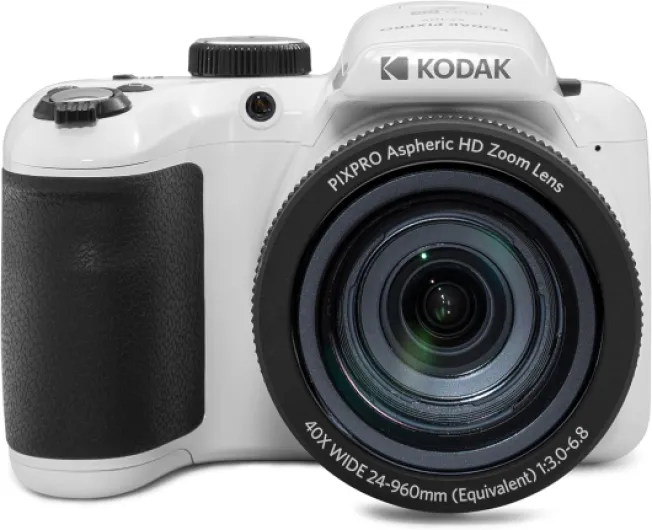
Design and handling: feels like a small DSLR, with a few irritations
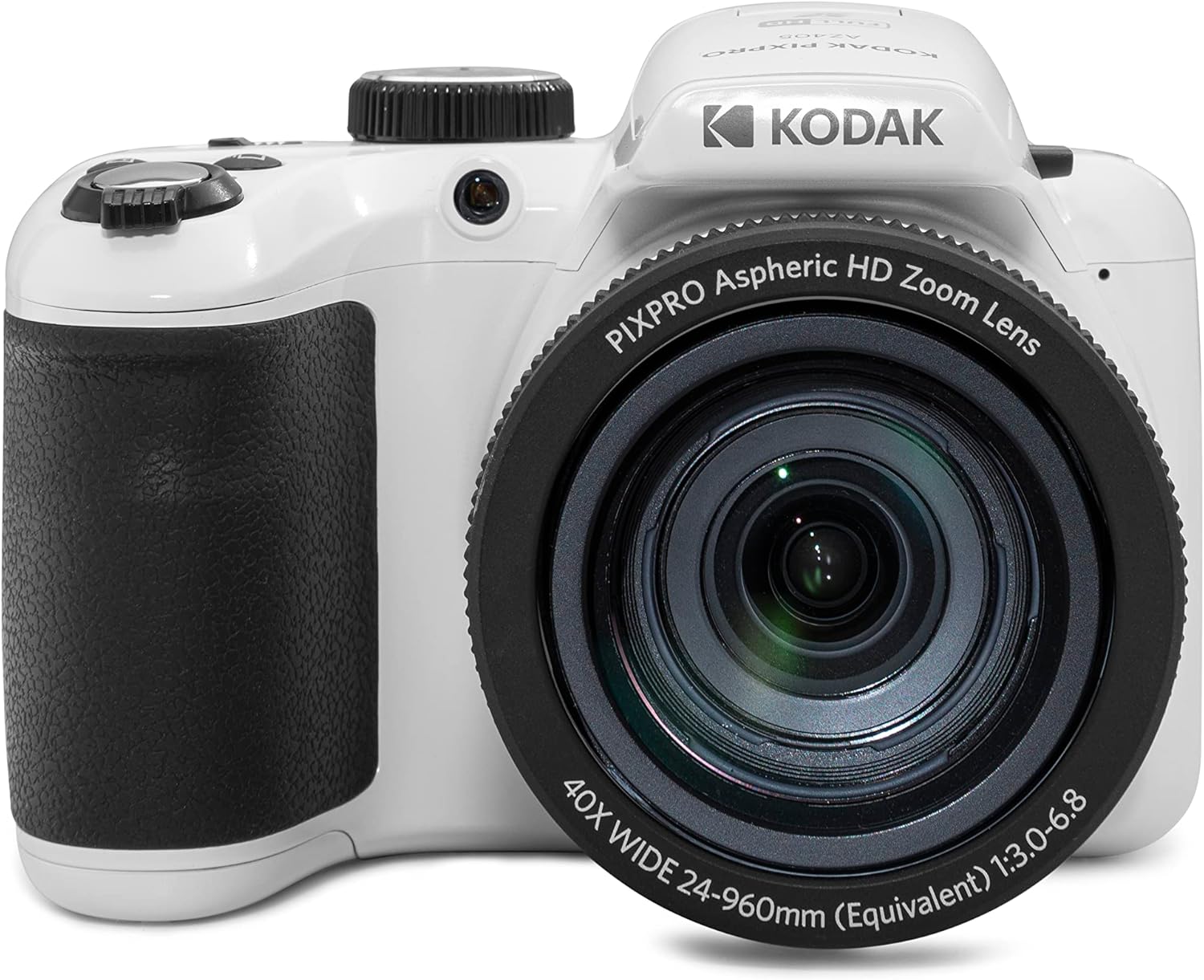
Design-wise, the AZ405 looks like a shrunken DSLR: a chunky grip on the right, a big lens barrel at the front, and a 3-inch screen on the back. I tested the white version, which actually looks pretty nice at first, but it does show dirt and smudges more than a black body would. It’s not super compact, but it’s light enough (around 435 g) to carry all day in a small bag or around your neck. The size is good if you hate tiny point-and-shoots that feel like toys.
The grip is one of the better parts: it’s thick enough to hold properly, even with bigger hands. It gives a bit of confidence when you’re zoomed in at 40x and need a stable hold. However, like one Amazon reviewer mentioned, it’s very easy to touch the rear screen with your thumb or fingers when you grab it quickly. I ended up with fingerprints on the screen constantly, which makes framing and reviewing shots annoying until you wipe it again. It’s not a deal-breaker, but it’s a small ergonomic flaw that you notice after a few outings.
The lens cap is another weak point. It doesn’t grip very firmly, so it comes off easily if you brush it against something in your bag or jacket. The included tether is basically mandatory, otherwise you’ll lose it within a week. This is the kind of detail that reminds you it’s a budget camera: functionally fine, but the little things feel a bit cheap. Buttons are okay but not very tactile; you sometimes have to double-check you actually pressed something.
Navigation through the menus is fairly straightforward, but not especially fast or modern. The icons and fonts look dated, and the screen resolution isn’t great, so everything looks a bit fuzzy compared to a smartphone. There’s no proper viewfinder (despite the spec text saying "optical"; in practice you’re using the LCD), so in bright sunlight you’ll sometimes struggle to see what you’re shooting. Overall, the design is practical enough but clearly budget: it handles better than a flat compact camera, but don’t expect the solid feel or clean ergonomics of more expensive models.
AA batteries: handy for travel, but you need to plan ahead
One of the main quirks of this camera is the power setup: it runs on AA batteries instead of a built-in rechargeable pack. That can be a plus or a minus depending on how you use it. For travel or long days out, I actually like the idea: if you run out of power, you can just grab AA batteries from any supermarket or petrol station and keep shooting. You’re not stuck hunting for a plug or power bank to recharge a proprietary battery.
The flip side is that AA batteries don’t all perform the same. With cheap alkaline AAs, the camera burns through them pretty fast, especially if you use the screen a lot and shoot video. After a couple of photo-heavy outings, I switched to decent NiMH rechargeables, and that made a big difference. You still need a separate charger and at least one spare set if you’re going out for a full day and shooting a lot, but it becomes manageable and cheaper long term. One Amazon reviewer also mentioned this: it’s worth investing in good rechargeables rather than relying on disposables.
There’s no fancy battery indicator that gives you a precise percentage; it’s more of a basic icon that drops fairly quickly once it starts going down. So you learn to just assume you’ll need a backup set, especially if you’re using the zoom heavily or recording video. The camera itself doesn’t seem to be super optimized for power saving: the screen is always on when you’re using it, and that obviously eats into your battery life.
In short, the AA system is practical but old-school. If you’re used to modern cameras with USB charging and big lithium batteries, this feels a bit dated. But for some people, especially those who travel to places with limited access to power or don’t want to deal with proprietary batteries, it can actually be an advantage. You just have to be disciplined about carrying spares and not expecting smartphone-level stamina from a random set of AAs.
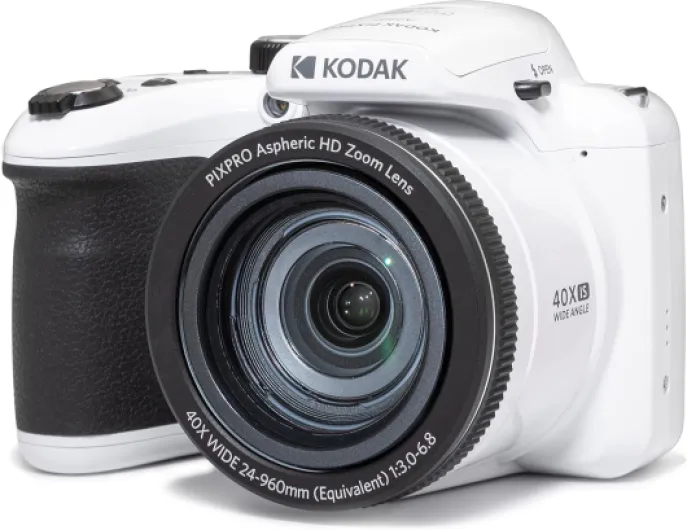
Build quality and reliability: mostly fine, but clearly budget
In terms of durability, the AZ405 feels like a typical budget plastic camera. The body is light, the plastics are fairly hard, and there’s not much in the way of weather sealing. I wouldn’t take it out in a heavy downpour or throw it loosely in a backpack with keys and metal stuff. Treated with normal care (strap around your neck or wrist, lens cap on, kept in a small pouch), it should survive regular use just fine.
The buttons and dials don’t feel very premium, but they haven’t given me any real trouble so far. The zoom mechanism extends smoothly enough, though it’s not super fast. You do hear the small motor working when you zoom, which is expected at this level. The hinged battery/SD door is one of those parts that feels like it could break if you’re rough with it, so I’d be gentle there. Same for the USB and HDMI ports: they’re fine, but I wouldn’t be yanking cables in and out constantly.
One Amazon reviewer mentioned getting a unit with a lens defect and a black arch in the image, which is obviously annoying. That sounds like a quality control issue rather than a design flaw, but it’s something to keep in mind: at this price point, you can get the occasional dud. If you see weird vignetting or a dark arc in your photos from day one, I’d return or exchange it right away. That’s not normal behavior, and it’s not something you’ll fix with settings.
Overall, I’d say the durability is acceptable for casual use, but this is not a rugged camera. It’s for everyday outings, trips, and events, not for hardcore hiking in the rain or rough handling. If you treat your electronics reasonably well, it should last. If you’re rough on your gear or plan to use it in harsh conditions, you might want something tougher or at least a good padded case and some extra caution.
Image quality and zoom performance: strong reach, average everything else
The main reason to buy this camera is the 40x optical zoom, and on that front it does what it promises. You can go from a fairly wide 24mm view to a 960mm equivalent, which is a huge range. For planes, birds, or distant buildings, it’s genuinely handy. I used it at a small airfield and could comfortably frame planes in the sky that were just dots with the naked eye. One of the Amazon reviewers using it for aviation photography is right: for that kind of hobby, the zoom is the star of the show.
Image quality is decent but not mind-blowing. In good light, the 20 MP sensor produces clear, usable photos with enough detail for prints and social media. Colors are okay out of the box, maybe a bit on the punchy side, but nothing crazy. Dynamic range is limited: bright skies can blow out easily, and shadows can get muddy if you’re not careful. You can tweak some settings, but this is not a camera where you’ll rescue a lot in post, especially since it only shoots JPEG. If you’re coming from a modern smartphone, you’ll get more zoom here, but your phone might actually do better in tricky light.
In low light or indoors without flash, the weaknesses show. The small sensor and modest lens aperture mean the camera quickly bumps up ISO, and you start to see noise and smearing. Don’t expect clean, sharp night shots handheld at long zoom. The optical stabilization helps a bit, but it can’t fix motion blur from your hands or from moving subjects. Also, depth of field control is basically minimal. As one reviewer pointed out, you can’t really play with background blur like on a bigger-sensor camera; everything tends to be in focus unless you’re very close to the subject.
Video performance is fine for casual use. It records in 1080p MP4, and the quality is okay for clips of trips, family events, or planes taking off. Autofocus during video is not super fast, and you can sometimes see it hunting a bit, especially when zooming. For serious video work, it’s not ideal, but for basic recording it gets the job done. Overall, performance is good for the price if your expectations are realistic: strong zoom reach, decent daytime photos, but nothing special in low light or for creative depth-of-field shots.
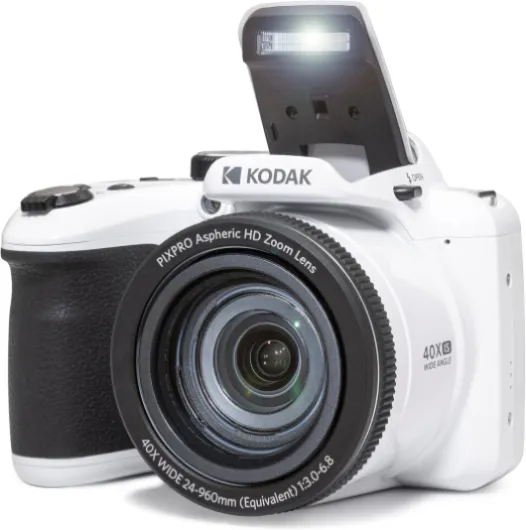
What this camera actually offers (beyond the marketing text)
On paper, the Kodak Pixpro AZ405 is a 20 MP bridge camera with a 40x optical zoom and a 24mm wide-angle equivalent at the shortest end. It shoots 1080p video, has a 3-inch LCD, optical image stabilization, and runs on AA batteries. It takes SD cards up to 512 GB, though in practice I used a 32 GB card and never came close to filling it during a normal day out. It’s clearly targeted at novices: automatic modes, scene modes, basic PASM modes, and a bunch of built-in effects.
In use, it behaves like a typical bridge camera: you hold it like a small DSLR, but there’s no interchangeable lens. The zoom range is the main selling point: going from fairly wide (good for landscapes and group shots) to very tight telephoto (planes, birds, distant buildings). The optical stabilization does help, but at full zoom you still want to brace yourself or lean on something, otherwise you’ll get some blur, especially in weaker light. The sensor is small (1/4" according to the specs), so don’t expect miracles with background blur or night shots.
The camera records JPEG only, no RAW, and the menus are pretty basic. It has a few modes like object tracking, auto scene selection, self-timer, and some post-editing tools right in the camera. They work, but they feel more like nice extras than something you’ll rely on a lot. The video is MP4 in 1080p, which looks fine for casual use or YouTube, but nothing that will blow you away on a big 4K TV.
Overall, the AZ405 is basically a simple long-zoom camera for everyday users. If you’re used to smartphones, this gives you more reach and a more traditional camera feel. If you’re used to mid-range mirrorless or DSLR gear, you’ll probably find it a bit limited and plasticky, but that’s expected at this price. It’s not pretending to be pro gear; it’s just trying to give you a lot of zoom and a familiar camera shape for relatively little money.
Pros
- Huge 40x optical zoom that’s genuinely useful for planes, wildlife, and distant subjects
- Runs on AA batteries, which you can find anywhere and easily swap on the go
- Simple to use with auto modes, decent grip, and straightforward controls for beginners
Cons
- Weak low-light performance and very limited depth of field control due to small sensor
- Basic build quality with annoying details like a loose lens cap and smudge-prone screen
- No RAW support, average screen, and overall image quality not much better than a good phone except for the zoom
Conclusion
Editor's rating
The Kodak Pixpro Astro Zoom AZ405 is basically a budget long-zoom camera for casual users. It gives you a big 40x optical zoom, a comfortable DSLR-style grip, and simple controls that almost anyone can handle. In good daylight, you can get nice, sharp shots of distant subjects, and for stuff like aviation or basic wildlife watching it does the job. The AA battery system is old-school but practical if you’re travelling or don’t want to deal with proprietary chargers.
On the flip side, it’s clearly limited by its small sensor and budget build. Low-light photos are noisy and soft, depth of field control is very limited, and the screen and interface feel dated. Little annoyances like the loose lens cap, easy-to-smudge screen, and basic build quality remind you where the price sits. If you already have a good smartphone and you don’t care about crazy zoom, this camera doesn’t bring a huge upgrade. But if what you really want is a cheap, simple way to get a lot more reach than your phone, without diving into expensive interchangeable-lens systems, the AZ405 is a decent option that gets the job done.