
Summary
Editor's rating
Value for money: strong lens, tougher sell
Big for MFT, but built like it means business
Comfort and handling: great in the hand, less great in the bag
Durability and weather resistance: built to be used, not babied
Image quality and autofocus: where it actually earns its price
What you actually get with this 17mm f/1.2
Pros
- Very sharp already at f/1.2 with smooth, clean bokeh for MFT
- Solid, weather‑sealed construction with handy focus clutch and L-Fn button
- Fast and quiet autofocus that works well in low light and with Eye AF
Cons
- Large and fairly heavy for a Micro Four Thirds prime, less discreet for street
- High price compared to the 17mm f/1.8 and other alternatives

Specifications
View full product page →| Brand | Olympus |
A lens I wanted but didn’t really need… until I used it
I’ve been using Micro Four Thirds for a while (Olympus bodies mostly, one Panasonic G as backup), and I’ve gone through the usual primes: 17mm f/1.8, 25mm f/1.8, a couple of cheap Chinese manual lenses. The 17mm f/1.2 PRO always felt like overkill to me: big, heavy, and not exactly cheap. I finally grabbed it second‑hand and used it for about a month for street, indoor events, and a short trip. So this is coming from someone who actually paid for it, not someone unboxing it for five minutes.
In day‑to‑day use, this lens sits in that awkward space between “wow, this is really good” and “do I really need this, or is the 17mm f/1.8 enough?” The main thing you notice is the f/1.2 aperture and how it behaves in low light and for background blur. On a Micro Four Thirds body, getting decent separation between subject and background can be tricky, and this lens helps a lot with that, especially at closer distances.
I shot it mostly on an OM-D E‑M1 Mark II and a PEN-F. On both bodies, the autofocus was quick and quiet, and the Eye AF worked well for portraits. I took it to a birthday party in a dim restaurant, a couple of evening walks in the city, and some early-morning street photography. It handled all of that without any real drama. The images straight out of camera looked clean and sharp enough that I didn’t need to fix much in post.
So overall, after a few weeks, I’d say it’s a very capable lens that clearly sits in the “pro” category, but it comes with the usual trade-offs: size, weight, and cost. If you’re already happy with the smaller primes, this won’t magically change your life, but if you often shoot indoors or like that shallow depth of field look on MFT, it starts to make sense.
Value for money: strong lens, tougher sell
This is where things get more subjective. The Olympus 17mm f/1.2 PRO is not cheap, especially when you compare it to the 17mm f/1.8 or other third‑party options. You’re paying for the fast aperture, better build, weather sealing, and slightly better optics. If you regularly shoot portraits, events, or low‑light scenes at this focal length, you’ll probably appreciate those extras. If you only occasionally shoot in difficult light, the price feels harder to justify.
Compared to the 17mm f/1.8, the main gains are: more background blur, slightly better sharpness wide open, nicer bokeh, and pro‑level construction. In real‑world use, the difference is noticeable but not night-and-day for every shot. On social media or small prints, many people wouldn’t see the gap unless they zoom in or look closely. Where it stands out is in tricky lighting and when you really push the files in post, for example lifting shadows or cropping heavily.
If you already own a body like the E‑M1 series or GH series from Panasonic and you shoot often, the value is more reasonable. It fits the rest of the kit and holds up well over time. On the other hand, if you’re using a smaller PEN or basic Panasonic body mainly for travel and casual photos, this lens is frankly overkill. You’re paying for performance and robustness that you might not fully use, while carrying more weight than needed.
So in terms of value, I’d call it good but not cheap. It makes sense for people who know exactly why they want f/1.2 at 17mm and actually use it. For everyone else, the cheaper 17mm or even a zoom like the 12–40mm f/2.8 might be a more balanced choice for the money. I’m glad I bought it used; at full retail, I would have hesitated a lot more.
Big for MFT, but built like it means business
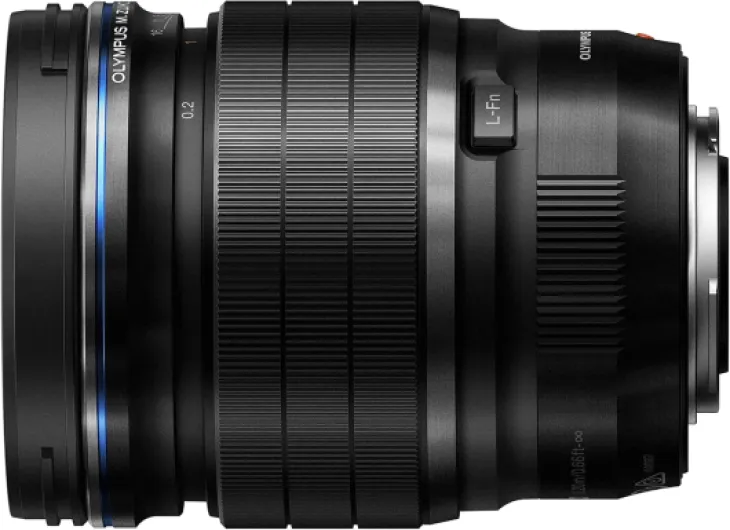
Design‑wise, this lens is clearly not in the compact prime category. It’s around 390 grams, which on a small PEN body feels a bit front‑heavy. On an E‑M1 or similar larger body, the balance is much better. Compared to the tiny 17mm f/1.8, this thing looks and feels like a different system. If you’re used to the whole “small and light Micro Four Thirds” idea, this lens bends that concept a bit. It’s still lighter than full‑frame f/1.4 or f/1.2 lenses, but it’s not a pocket setup anymore.
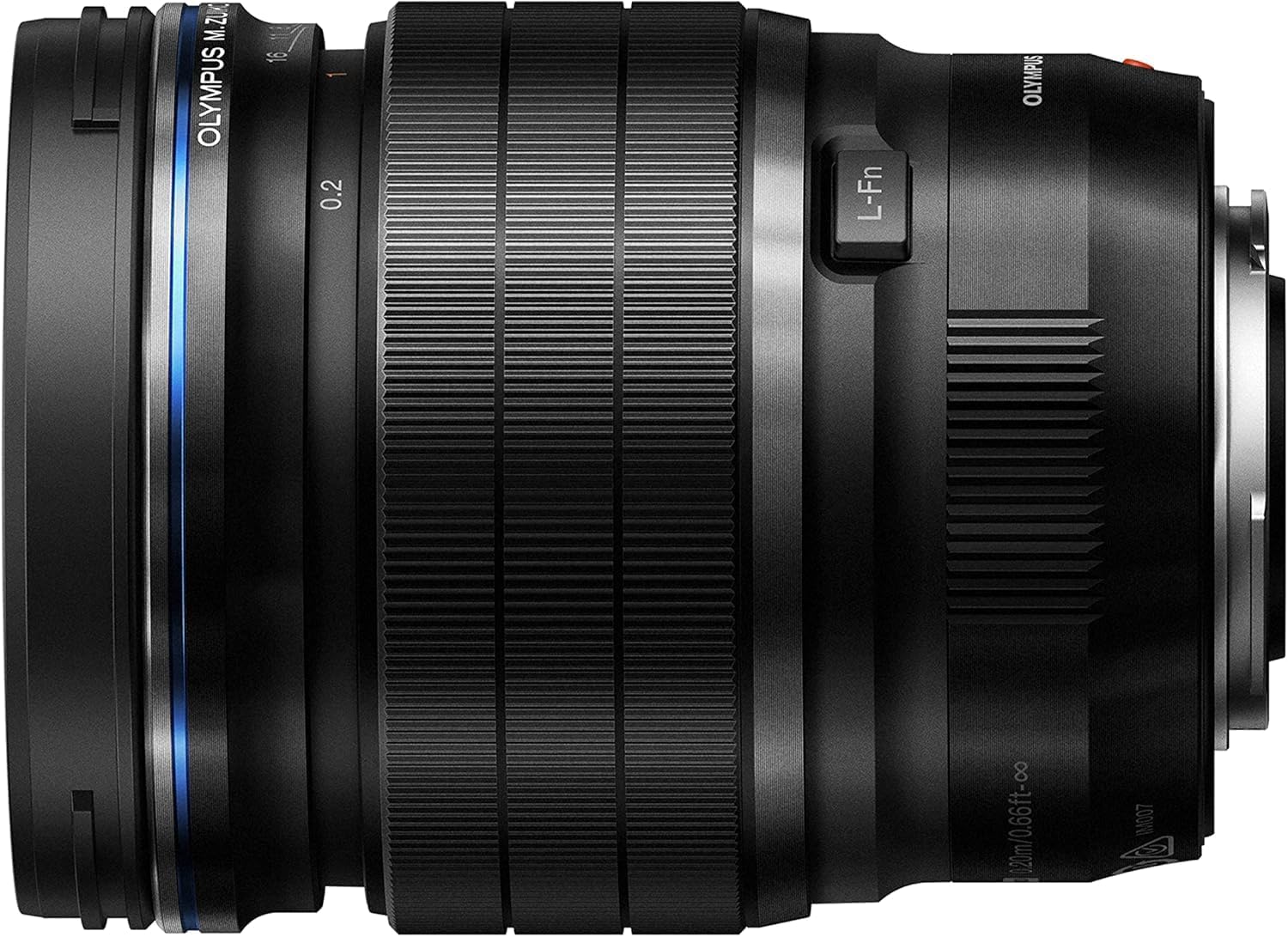
The external design is pretty straightforward: black barrel, ribbed focus ring, L-Fn button on the side, and the clutch mechanism for manual focus. The focus clutch is actually very handy. Pull it back and you instantly get manual focus with a clear distance scale; push it forward and you’re back to autofocus. I used that a lot for pre‑focusing in the street or zone focusing indoors. It’s one of those details you don’t think you need until you actually use it.
The weather sealing is another design point that matters if you shoot outdoors. Olympus claims it’s dust‑, splash‑, and freeze‑proof. I obviously didn’t freeze it on purpose, but I shot in drizzle and some windy, sandy conditions near the sea, and it didn’t show any issues. No dust got inside, and the zoom (well, there’s no zoom element) doesn’t pump air like some zoom lenses, so it feels quite sealed. The rubber gasket on the mount adds a bit of confidence when swapping lenses in less‑than‑ideal conditions.
The downside of this design is simple: it’s not discreet. For street photography, people notice it more than the tiny 17mm f/1.8 or a pancake lens. I had a couple of people react to the camera more, just because the whole setup looked “serious”. If you like to be invisible, this might annoy you. Also, if you carry your camera all day on a neck strap, the extra weight adds up. So from a design point of view: very solid and functional, but you pay for it in size and visibility.
Comfort and handling: great in the hand, less great in the bag
Using this lens for a full day made me rethink what I like about Micro Four Thirds. On a bigger body with a grip, like the E‑M1 series, the handling is very good. The weight actually helps stabilize the camera a bit, and the wide, smooth focus ring makes it easy to fine‑tune focus manually when needed. The lens doesn’t extend when focusing, so the balance stays consistent. I never felt like I was fighting the lens while shooting.
Where comfort drops is when you’re carrying the camera around for hours. Hanging from a neck strap, the combo starts to feel heavy after two or three hours of walking, especially if you’re used to a smaller prime. On a wrist strap, it’s a bit more manageable, but you still feel that this is not a compact street setup. When I went on a short trip, I caught myself leaving the camera in the hotel once or twice just because I didn’t feel like lugging the heavier body‑plus‑lens combo around all evening.
The focus clutch is a nice comfort feature. Being able to snap into manual focus instantly is handy when the AF struggles with backlit situations or low contrast. The distance scale is actually usable, so for zone focusing (for example, setting it to around 2 meters at f/5.6 for street), it’s simple and fast. The L-Fn button can be programmed for different functions; I set it to AF stop, which helped in continuous AF situations when I wanted to lock focus temporarily.
So in practice, comfort is a mixed bag. In use, it’s pleasant and well thought out. In transport and casual carry, it feels like you’re giving up one of the main advantages of MFT, which is compactness. If you’re okay with a slightly bulkier setup for better performance, it’s fine. If you bought Micro Four Thirds mainly for travel and lightness, this lens goes against that logic a bit.
Durability and weather resistance: built to be used, not babied
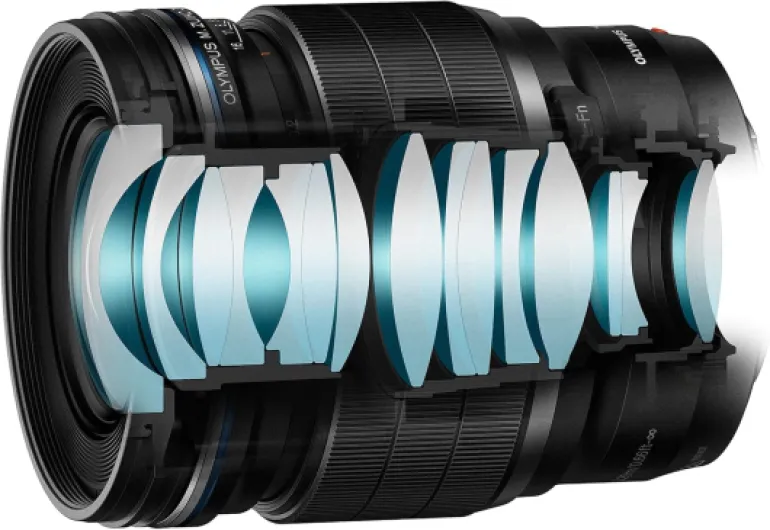
Durability is one of the reasons to look at the PRO line, and this 17mm f/1.2 fits that image. The barrel feels solid, there’s no wobble in the moving parts, and the mount is metal with a rubber gasket. I used it in light rain and cold weather, and I didn’t see any condensation or issues with the focus ring. The weather sealing gave me enough confidence to keep shooting without constantly hiding the camera under my jacket.
The hood, although plastic, handled a couple of bumps and one light knock against a doorframe without any cracks or visible damage. The front element is slightly recessed when the hood is on, so it’s fairly protected from casual bumps. I still used a UV filter most of the time just for peace of mind, and the 62mm filter size is common enough that filters aren’t too hard to find, though they’re not the cheapest.
Over a few weeks, I didn’t notice any paint chipping or scratches, and the markings remained clean. Obviously that’s not a long‑term test, but it feels more robust than the cheaper Olympus primes. The focus ring kept the same smooth resistance, and there was no play developing in the clutch mechanism, which can be a weak point on some lenses if it’s not well built.
If you’re rough with your gear, this lens seems to handle it better than most budget lenses. That said, it’s still a precision piece of glass: drop it hard, and it will probably suffer. But for regular field use—backpacks, shoulder bags, light rain, some dust—it feels like it’s built to cope. From a durability point of view, it fits nicely with the idea of a system you can use outdoors all year round, as long as the camera body is also weather‑sealed.
Image quality and autofocus: where it actually earns its price
In terms of performance, this is where the 17mm f/1.2 PRO starts to justify its price. The lens is sharp already at f/1.2, especially in the center. I shot portraits wide open in a dim restaurant, and faces were crisp with nice detail, even at ISO 1600–3200. The corners are a bit softer at 1.2, but for portraits and street, that’s not really a problem. Stopping down to f/2 or f/2.8 tightens everything up, and for landscapes at f/4–f/5.6, the frame looks very even.
The big selling point is the combination of low‑light performance and background blur. On Micro Four Thirds, you don’t get full‑frame style blur, but at close to medium distances, this lens gives you a clear subject separation. I used it for half‑body portraits and food shots on tables, and the background melted enough to make the subject stand out without looking fake. The bokeh is smooth and not nervous; bright points in the background stay round and not too busy, especially in the center of the frame.
Autofocus is another strong point. On my E‑M1 Mark II, it locked focus quickly in most situations, even in low indoor light. The Eye AF worked well for portraits; it grabbed the eye most of the time, and when it missed, it was usually because the person moved suddenly or I was too close. On the PEN-F, AF was slightly slower but still totally usable. For video, the AF is quiet enough that the built‑in mic didn’t pick up any focus noise in my clips.
Where it’s less impressive is when you compare it with cheaper options. The Olympus 17mm f/1.8 is already quite sharp and much smaller. The 1.2 version gives you a bit more blur, slightly better low‑light handling, and cleaner corners, but we’re talking about a difference that matters mostly if you often print big, crop a lot, or are picky. For casual use or social media, the cheaper lens already does a good job. So performance is strong, no doubt, but the jump over the f/1.8 is more incremental than dramatic in many situations.
What you actually get with this 17mm f/1.2
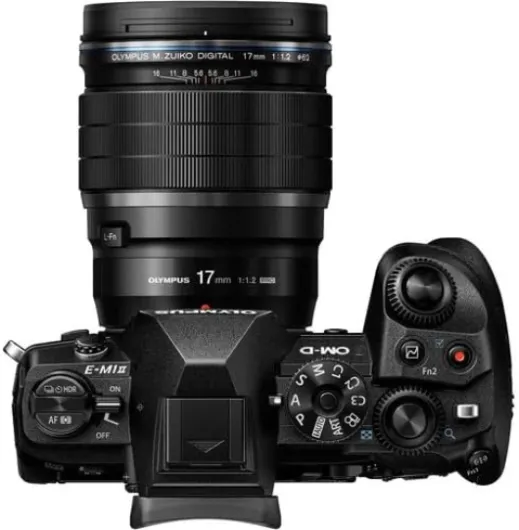
Out of the box, you get the lens, a proper petal hood, front and rear caps, and a small soft pouch. Nothing fancy, but it’s complete. The hood is plastic but feels solid enough and locks on with a reassuring click. The pouch is light padding only; it’s fine for tossing the lens into a backpack, but don’t expect serious protection if you drop it. At least you don’t have to buy the hood separately, which is often the case with cheaper lenses.
The lens itself is in the PRO line, so you get the usual Olympus touches: the focus clutch to switch quickly between AF and manual, a programmable L-Fn button on the side, and a metal mount. The markings for distance and depth of field are clear, and the whole lens feels like it’s built to put up with real use, not just sit in a cabinet. It’s also weather‑sealed, which matches the higher‑end OM-D bodies well. I used it in light rain and cold weather (around 0–2°C), and it didn’t complain at all.
In terms of focal length, 17mm on Micro Four Thirds is a 34mm equivalent, which is a nice middle ground for everyday shooting: wide enough for street and environmental portraits, but not so wide that faces look weird. I used it for small group shots, interiors, and some food photos on a table; it handled all of that without forcing me to back up too far. It’s a very practical focal length if you like to keep one lens on the camera for most of the day.
The main thing to keep in mind is that this is a prime lens, not a zoom. You’re stuck at 17mm, so if you’re used to an all‑in‑one zoom, you’ll need to move your feet more. That said, primes usually force you to think a bit more about composition, and that’s what happened to me: I found myself more deliberate with framing, especially for street shots. As a package, what you get here is a well‑equipped, weather‑sealed, fast prime that’s clearly aimed at people who shoot often and care about build and handling.
Pros
- Very sharp already at f/1.2 with smooth, clean bokeh for MFT
- Solid, weather‑sealed construction with handy focus clutch and L-Fn button
- Fast and quiet autofocus that works well in low light and with Eye AF
Cons
- Large and fairly heavy for a Micro Four Thirds prime, less discreet for street
- High price compared to the 17mm f/1.8 and other alternatives
Conclusion
Editor's rating
After using the Olympus M.Zuiko 17mm f/1.2 PRO for a few weeks, my takeaway is pretty clear: it’s a very capable lens that delivers what it promises, but it’s not for everyone. The image quality is strong, especially wide open, with sharp subjects and smooth background blur that helps Micro Four Thirds get closer to the look people expect from larger sensors. Autofocus is quick and reliable, the weather sealing works, and the overall build feels ready for heavy use in real conditions.
On the flip side, you pay for all of that in both money and bulk. It’s big and relatively heavy for a Micro Four Thirds prime, and if you mainly chose this system for small, light gear, this lens goes against that logic. The cheaper 17mm f/1.8 already does a solid job for many situations, so the jump to the f/1.2 only really makes sense if you often shoot in low light, care about that extra bit of blur, and want a lens you can rely on in bad weather and long-term use.
If you’re a portrait, event, or street shooter who uses MFT seriously and doesn’t mind a larger lens, this 17mm f/1.2 PRO is a strong choice and will probably stay on your camera a lot. If you’re more of a casual travel shooter or mainly post to social media, you might be better off saving money and weight with the smaller primes or a fast zoom. In short: very good lens, but best suited to people who know exactly why they want it.