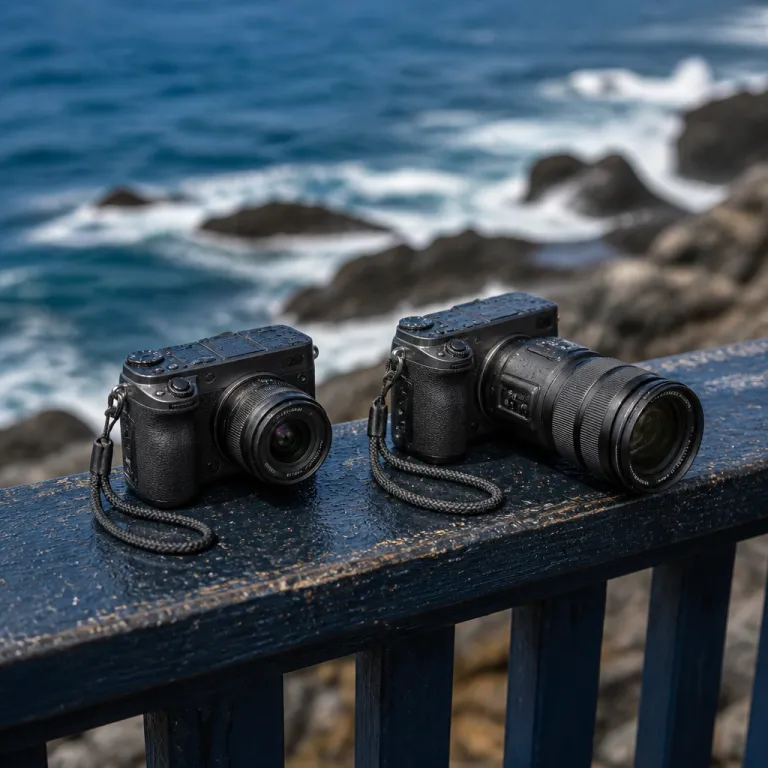
IBIS vs lens stabilization in plain language
When you compare IBIS vs lens stabilization, you are really comparing where the correction happens. In body stabilization, often called IBIS or in body image stabilization, the camera moves its sensor to counter camera shake while lens stabilization shifts optical elements inside the lens itself. Both systems aim to keep the image sharp during shooting handheld, but they do it in different places inside the camera body and the body lens combination.
Think of IBIS as a floating sensor platform that reacts to motion measured by a gyro sensor and accelerometers inside the camera ibis mechanism. When your hands move, the sensor physically slides or tilts by tiny amounts so that the projected lens image still lands in the right spot, which can give you several extra stops of usable shutter speeds in low light. With lens stabilization, the gyro sensor lives in the lens barrel instead, and a dedicated group of glass elements shifts to redirect the light path, so the image stays stable on the sensor even when the camera body moves slightly.
For a beginner comparing cameras, the phrase IBIS vs lens stabilization can feel like alphabet soup. You might see a Canon EOS camera body with no body stabilization but a Canon lens that offers optical image stabilization, while another brand flips that equation with strong stabilization IBIS and many unstabilised lenses. The important thing is that both stabilisation approaches fight your own camera shake, not your subject’s motion, so they help when you are steadying the camera but do nothing when a child sprints across the frame at a slow shutter speed.
How sensor and lens systems actually work together
Once you understand the basics of IBIS vs lens stabilization, the next step is knowing when they join forces. Many modern cameras coordinate body stabilization with lens stabilization so the sensor and the lens elements do not fight each other, but instead split the work across different axes of movement. In practice, that means the camera ibis system might correct for roll and pitch while the lens stabilization handles yaw and some translational motion, giving you more effective stops of shake reduction at longer focal lengths.
On a Canon EOS body that lacks IBIS, a stabilized Canon lens with optical image stabilization still gives you a real advantage, especially at a long focal length like 200 mm or 300 mm. When you mount that same type of stabilized lens on a body with strong body stabilization, the combined system can sometimes feel almost locked to the scene, which is stabilization great for slow shutter speeds when shooting handheld in dim interiors. The exact number of stops you gain depends on the camera, the lens, and your own technique, but it is common to see two to four stops of improvement over the old rule of thumb of using a shutter speed of 1 over the focal length.
Focal length matters because the longer the lens, the more any tiny movement is magnified in the final image. That is why lens based stabilisation still leads for very long telephoto lenses, where correcting at the lens front is more efficient than moving the sensor alone inside the camera body. If you want a deeper sense of how different focal lengths behave in real scenes, it is worth reading a detailed guide on what common focal lengths actually see in practice, then mapping that knowledge onto how stabilization ibis helps you hold those focal lengths steady.
Where IBIS quietly changes your everyday shooting
For many beginners, the most practical benefit in the IBIS vs lens stabilization debate appears with small prime lenses that lack any optical stabilisation. Mount a compact 35 mm or 50 mm prime on a camera with strong body stabilization and suddenly low light street scenes or indoor portraits become far more forgiving. You can shoot at shutter speeds two or three stops slower than the old 1 over focal length guideline, which keeps ISO lower and preserves more image detail and colour.
Video shooters feel this even more, because IBIS smooths micro jitters when you are walking with the camera body in front of you. While it will not replace a gimbal for complex moves, a good camera ibis system makes casual vlogging, talking head clips, and simple pans look less amateurish, especially when you are shooting handheld with unstabilised lenses. The stabilised sensor also helps when you are reframing slightly during a shot, because the image does not bounce with every tiny adjustment of your grip on the body lens combination.
IBIS also shines when you return to a camera that has been sitting unused and want to push yourself creatively again. If you follow a structured approach to a gear and creativity reset, you will probably end up walking around with a single small prime, and body stabilization keeps that minimalist setup versatile in changing light. For stills, remember that IBIS only compensates for your own camera shake, so if your subject moves, you still need a fast enough shutter speed to freeze that motion regardless of how advanced the stabilization ibis system might be.
Why lens stabilization still matters for long glass
Even with strong IBIS, lens stabilization remains crucial when you work at long focal lengths or with heavy telephoto lenses. At 300 mm or 400 mm, every tiny tremor in your hands translates into a huge wobble in the viewfinder, and correcting that wobble optically inside the lens gives the sensor an easier job. This is why many pro wildlife and sports shooters still rely on big stabilized telephoto lenses, often with a dedicated lens switch that lets them choose between different stabilisation modes for panning or static subjects.
On systems like Canon EOS, you will find many telephoto options where the Canon lens includes optical image stabilization and sometimes Canon USM autofocus motors, even if the body itself lacks IBIS. In those cases, the lens image stabilization is doing the heavy lifting, and the camera body simply records the stabilised image projected onto the sensor at the chosen shutter speed. When you compare IBIS vs lens stabilization for this type of work, lens based stabilisation usually wins because it can correct for larger angular movements before they are magnified by the long focal length.
For beginners, the takeaway is simple yet often overlooked when reading online posts about gear. If your main interest is birds, field sports, or distant wildlife, prioritise a stabilized telephoto lens over paying extra for body stabilization, because the lens stabilization will help more at those focal lengths. You can always join a local club or online member community to try different cameras and lenses before buying, but in almost every case, a good stabilized telephoto lens will feel more stable in the viewfinder than relying on camera ibis alone at 400 mm.
Practical buying and shooting advice for beginners
When you stand in a store comparing IBIS vs lens stabilization on spec sheets, start by thinking about what you actually shoot. If most of your photos are daytime family moments, travel scenes, or casual vlogs at wide to normal focal lengths, a stabilized kit lens or even no stabilization at all can be enough, because you will usually have comfortable shutter speeds. In that scenario, paying a premium for body stabilization might not change your images as much as investing in a better lens or a simple audio upgrade for video.
Low light changes the equation, especially for solo creators shooting handheld video or stills indoors. Here, a camera body with solid body stabilization lets you pair small unstabilised primes with a compact rig, keeping your setup light while still gaining a couple of stops of usable shutter speeds before motion blur from camera shake creeps in. Remember that stabilization great as it is does not freeze moving subjects, so for kids running in a living room or people dancing at a party, you still need to raise shutter speed and accept higher ISO to keep the image sharp.
As you refine your technique, follow the classic rule of using a shutter speed of at least 1 over the focal length, then treat any extra stops from IBIS or lens stabilization as a safety margin rather than a guarantee. For educational projects like modern portrait sessions that mix stills and video, a guide to how composite school photo sessions work can show how professionals balance focal lengths, shutter speeds, and stabilization in real workflows. Over time, you will build your own sense of when to rely on camera ibis, when to trust lens based stabilisation, and when to simply brace your body, exhale slowly, and time the shot so that technique does as much as the technology.
FAQ
Does stabilization help freeze moving subjects like kids or pets ?
Stabilization only corrects your own camera shake, not subject motion. Whether you use IBIS, lens stabilization, or both, a running child or a fast moving pet will still blur if your shutter speed is too slow. To freeze motion, prioritise a faster shutter speed first, then let stabilization help you keep the background sharp at that chosen speed.
How many stops of stabilization do I really gain in practice ?
Manufacturers often claim four to seven stops of image stabilization, but real world gains are usually smaller. Most beginners can reliably hold two to three stops slower than the 1 over focal length rule with modern IBIS or lens based stabilisation, assuming good handholding technique. Treat any extra claimed stops as marketing headroom rather than a promise for every shot.
Should I prioritise an IBIS body or stabilized lenses on a tight budget ?
If you mostly shoot at normal focal lengths in good light, a non IBIS body with a stabilized kit lens is often the best value. Creators who love small primes and low light scenes benefit more from a body with strong IBIS, even if some lenses lack optical stabilization. Telephoto specialists should prioritise stabilized lenses first, because lens based stabilisation is more effective at long focal lengths.
Is IBIS enough for smooth handheld video without a gimbal ?
IBIS makes a big difference for casual handheld video, especially for talking head clips and gentle walking shots. It reduces micro jitters and helps your framing feel more stable, particularly with unstabilised lenses at moderate focal lengths. For complex moves, running shots, or very long lenses, a gimbal or monopod still offers smoother results than any in body stabilization system alone.
Do I need to turn stabilization off when using a tripod ?
Many modern cameras and lenses automatically detect tripod use, but not all systems behave perfectly. To avoid potential feedback loops where the stabilization system hunts for motion that is not there, it is often safer to use the lens switch or camera menu to disable stabilization when the setup is rock solid. For long exposures or critical landscape work, turning off both IBIS and lens stabilization removes one more variable from the image making process.