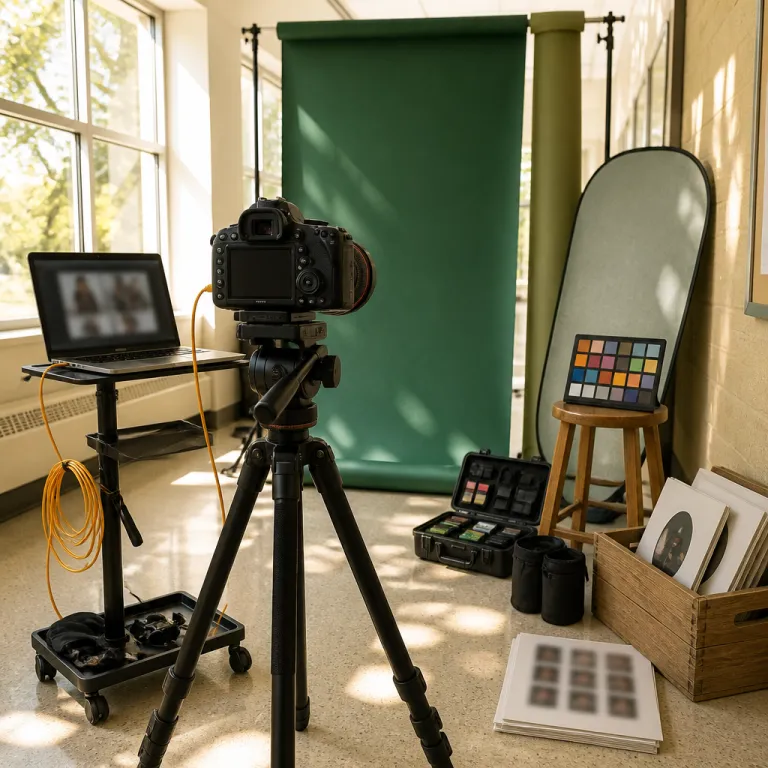

What a composite school photo shoot really is
Parents asking what is a composite photo shoot for school usually want clarity. A composite school photography session is a structured portrait day where each student is photographed individually, then software combines those separate shots into one seamless class group image. This approach lets photographers manage kids calmly while still delivering traditional class portraits that feel cohesive and professional.
In practical terms, the photographer captures one portrait photography shot per child, sometimes several photos, and later uses digital tools to create composite images that resemble a classic group photo. Instead of lining thirty kids in a cramped corridor, the photo session focuses on one child at a time, which means each image can be lit, framed, and timed more carefully. The final photo composite looks like everyone stood together, but every face is sharp, every pose is visible, and no one is hidden in the back row.
For digital camera users, understanding what composite school photography involves helps you plan your own workflow. Your shoot will usually follow a consistent framing and background so that composite photos align perfectly when you edit them later. When you know which composite techniques you will build into the final layout, you can decide how much time to spend on each shot and how many backup images to capture for safety.
Planning the composite chapter of your school portraits
Before you press the shutter, treat the project as a clearly defined phase in your yearly photography work. This planning stage will define how your school photography brand looks, how your portraits feel, and how efficiently you can create composite layouts for every class. Thinking in terms of a repeatable process also helps you standardize your approach so each group image feels consistent from year to year.
Start by deciding how you will fill the frame for each child, because consistent framing makes it easier to create composite images that align naturally. Many portrait photography specialists choose a mid length shot that includes the head and shoulders, leaving enough negative space to adjust borders or background elements during the edit. When you know the exact crop, you can also choose location elements, such as a neutral wall or a simple backdrop, that will not distract from the kids and that will composite cleanly.
Lens choice matters as much as lighting in this type of photo shoot. A short telephoto lens between 50 mm and 85 mm keeps faces flattering and avoids distortion, and resources explaining how to choose the best portrait lenses for Canon cameras can guide beginners who are unsure where to start. Once your gear is set, you can plan how the shoot will run, how many photos composite options you need per child, and how much time you allocate to each image so that the schedule stays realistic for the school.
Lighting, background, and camera settings for clean composite photos
Good composite photography starts with clean, repeatable lighting that makes editing easier. When every photo of the kids shares the same light direction, contrast, and color temperature, your composite photos will blend naturally without obvious seams or mismatched shadows. This is why many professionals treat the lighting plan as a technical guide that will shape every shot during the school day.
Use a soft key light, such as an off camera flash with a softbox, placed slightly above eye level to create flattering portraits. A reflector or secondary light can fill the shadows gently, giving you a balanced wash of light that keeps details in darker areas without flattening the image. If you work in a gym or hall, position your setup so the background is far enough away to blur, which helps every image merge smoothly when you create composite layouts later.
Camera settings should prioritize consistency over experimentation during this type of shoot. Lock your aperture, shutter speed, and ISO so each photo session segment produces nearly identical images, and test your border thickness for any graphic frames you plan to add in post. For gear planning, guides to essential portrait photo equipment can help you decide which stands, modifiers, and backup bodies you need to keep the school photography day running without interruption.
From single shots to finished composite images in editing
Once the shooting day ends, the real composite work begins in your editing software. You import all the individual photos, select the best shot of each child, and then edit exposure, color, and contrast so every image matches before you create composite layouts. This stage is where a disciplined workflow saves time, because you can apply synchronized adjustments to many images at once.
Most photographers use Adobe Photoshop or similar tools to build the final group image, because layer based editing makes it easy to arrange composite images precisely. You start with a background layer, then fill it with a neutral color or subtle texture, and gradually add each student as a separate layer, adjusting size and position until the group looks natural. A simple step by step approach is to place the back row first, then the middle row, then the front row, nudging each portrait so shoulders overlap slightly and eye lines stay level.
During this process, you will composite not only the kids but sometimes officer titles or class labels into the layout. Many studios create composite photos that include text layers for names, roles, and the school name, treating this as a design task that must remain readable even when printed small. Careful attention to alignment, spacing, and image sharpness ensures that every photo composite looks professional, whether viewed on screen or as a large wall print in the school corridor.
Working with schools, kids, and officer titles on photo day
Technical skills alone do not answer what is a composite photo shoot for school, because people management is just as important. You are dealing with kids who may be nervous, teachers who are busy, and administrators who expect accurate officer titles and class information on every final image. Clear communication before the shoot will reduce stress and help the day run smoothly.
Agree with the school on the schedule, the order of classes, and how you will record names and roles for later editing. Many photographers treat this as an organizational system, using printed lists or digital forms to track which image belongs to which child, and which students hold officer titles such as class representative or club leader. When the shoot will involve hundreds of photos, this level of planning prevents mix ups that could delay delivery by weeks.
On the day, keep each photo session short but respectful, giving every child at least one strong shot and a quick review if time allows. A simple, concrete plan might be two to three poses per student, around one minute per child, and ten to fifteen minutes per class including transitions. When families later ask what composite method you used, you can confidently explain that each group photo is built from carefully managed individual portraits, not rushed snapshots.
Choosing locations and camera techniques for flexible school composites
Location choices shape both the mood of your portraits and the ease of your editing. When you choose location options inside the school, such as a library corner or a neutral hallway, you gain control over light and background that makes composite images easier to assemble. Outdoor locations can work too, but changing light and weather may complicate the process if you need consistent photos composite results.
For photographers who want to understand how different focal lengths affect perspective in a composite, resources explaining what 24 mm, 35 mm, 50 mm, and 85 mm actually see in practice are invaluable. A moderate telephoto lens keeps facial proportions natural, which matters when you create composite layouts where every face appears side by side. Wide lenses can distort features, so they are better reserved for environmental shots rather than the core portraits that will composite into the class group.
As you refine your approach, think of each school year as a new chapter in your portfolio. You can adjust how you fill the frame, how you balance fill lighting, and how you design the final image layout, but the core idea of what composite school photography means remains the same. You capture individual portraits with care, then use digital tools to merge those images into a group photo that feels timeless, organized, and worthy of a place on the family wall.
Key statistics about school composite photography
- Industry surveys from professional photography associations report that more than half of school photography studios now offer some form of digital composite class photo, reflecting a shift away from traditional single shot group portraits. For example, the School Photographers of America 2022 member poll found that a majority of participating studios had already added composite class products to their catalog.
- Print labs that serve school photographers indicate that composite images often reduce reshoot rates by around one third, because individual portraits can be replaced without repeating the entire group photo. Internal summaries from several major North American labs, shared at trade shows and user conferences, describe similar reductions in reshoot volume once schools adopt composite workflows.
- Market research on family photo purchases shows that parents are more likely to order multiple photos when they receive both an individual portrait and a composite class image, increasing average order value for studios. Vendor white papers on school photography sales, based on aggregated order data, consistently note higher package uptake when a composite class print is included.
- Workflow studies among high volume photographers suggest that once a template is built, editing time per composite class image can drop below fifteen minutes, making the method efficient for large schools. Time tracking shared in professional forums and conference presentations often cites a range of ten to twenty minutes per finished class layout for experienced editors.
FAQ about composite school photo shoots
What is a composite photo shoot for school in simple terms ?
A composite school photo shoot is a process where each student is photographed individually, then software combines those separate portraits into one class group image. The final result looks like a traditional group photo, but every face is clearly visible and can be retouched or replaced without reshooting the entire class. This method relies on consistent lighting, framing, and background so the images blend naturally.
Why do photographers prefer composite images over traditional group photos ?
Photographers often prefer composite images because they offer more control and flexibility. If a child blinks or misses the original day, the photographer can add or replace that single portrait without affecting the rest of the group. Composite photos also reduce the stress of managing large groups of kids in one shot, which improves both safety and image quality.
Do composite class photos look artificial or fake ?
When done carefully, composite class photos can look very natural. Consistent lighting, matching camera angles, and subtle editing help the final image resemble a real group shot. Families usually focus on seeing every child clearly, which is easier to achieve with a well designed composite layout.
How long does it take to edit a composite class photo ?
The editing time depends on class size, the number of retouches, and the complexity of the layout. Once a template is created, many professionals can assemble and refine a composite class image in less than half an hour. High volume studios often streamline this further with batch processing and organized naming systems.
Can parents still order individual portraits as well as the composite group image ?
Yes, composite school photography usually includes both individual portraits and the final class group image. Parents can order prints or digital files of their child alone, the composite class photo, or packages that combine several options. This flexibility is one reason composite workflows have become popular among modern school photographers.