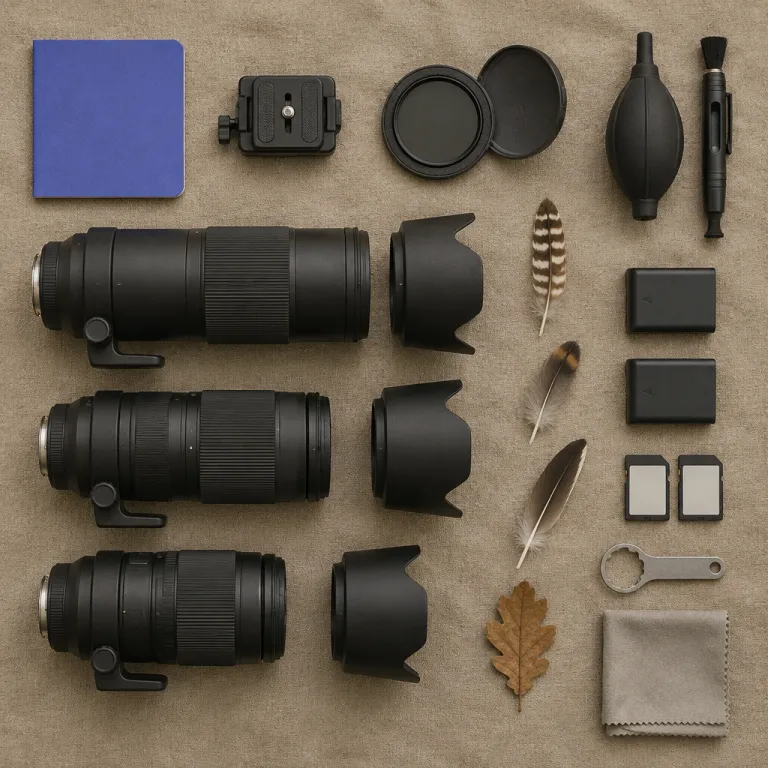
Why EF nature photography lenses matter for serious wildlife work
Choosing the right EF nature photography lenses shapes every wildlife image. A carefully matched Canon EF lens on an EOS camera controls focal length, field of view, and depth of field, which together define how your subject fills the frame. When photographers understand how each lens interacts with the sensor and available light, they gain predictable control over image quality in demanding wildlife photography.
For many photographers, the first big decision is whether a single zoom lens or several prime lenses will best support their style of nature photography. A versatile Canon telephoto zoom such as the EF 100–400mm f/4.5–5.6L IS II USM, with fast Canon USM autofocus and strong image stabilization, can track wildlife across a wide field while still delivering sharp images at long focal lengths. Prime EF wildlife lens options, especially on full-frame EOS-1D X Mark III or EOS 5D Mark IV cameras, trade flexibility for higher lens speed, better low-light performance, and often superior optical quality.
Every EF lens Canon produces for wildlife and nature work sits within a broader series that balances price, weight, and performance. Professional EF telephoto lenses usually offer weather sealing, robust image stabilization, and fast Canon USM motors that lock focus quickly on moving animals. Enthusiast EF nature photography lenses may sacrifice some maximum aperture or build quality, yet they still provide excellent image quality when paired with modern EOS cameras and careful technique.
Focal length, field of view, and how close you really get
Understanding focal length is essential before investing in EF nature photography lenses. On a full-frame EOS camera, a 300mm wildlife lens offers a tight field of view that isolates distant subjects, while a 70–200mm zoom lens provides more flexibility for larger animals or environmental portraits. When that same Canon EF lens is mounted on an APS-C EOS body with a smaller sensor, the effective field becomes narrower, making the focal length behave like a longer wildlife lens for distant subjects.
Many photographers rely on a core set of focal lengths that live on their cameras for most assignments. A 24mm wide-angle Canon EF lens captures sweeping landscapes for nature photography, while 35mm and 50mm lenses balance field of view and depth of field for habitat shots, and an 85mm or 135mm Canon prime excels at tighter wildlife portraits. A detailed guide to what different focal lengths actually see in practice helps translate these numbers into real-world framing before you choose specific EF nature photography lenses.
Telephoto EF lenses in the 300–600mm focal length range dominate serious wildlife photography because they compress perspective and fill the frame from a safe distance. When paired with Canon extenders, a 300mm wildlife lens can reach 420mm or 600mm while preserving autofocus and image stabilization on many EOS Mark cameras. However, each extender slightly reduces lens speed and can affect image quality, so photographers must balance reach, light, and sharpness when building their EF nature photography lens kit.
Prime versus zoom EF lenses for nature and wildlife
Choosing between prime EF nature photography lenses and zoom lenses defines how you work in the field. A prime Canon EF lens with a fixed focal length usually offers higher lens speed, giving brighter viewfinders and better low-light performance for wildlife photography at dawn or dusk. Zoom EF lenses trade some maximum aperture for flexibility, allowing one Canon lens to cover multiple focal lengths without changing equipment while animals move unpredictably.
In practical terms, a 400mm f/2.8 Canon EF wildlife prime, such as the EF 400mm f/2.8L IS III USM, delivers exceptional image quality and shallow depth of field, but it is heavy, expensive, and less adaptable to sudden changes in subject distance. A 100–400mm zoom lens with Canon USM and strong image stabilization may be slower in lens speed, yet it lets you reframe quickly as wildlife approaches or retreats, especially when used on modern EOS Mark cameras. Many nature photography specialists carry both a fast prime lens and a flexible zoom lens, switching depending on light, distance, and the specific wildlife photography assignment.
Accessory choices also influence how EF nature photography lenses perform over time. Protective filters can shield the front element of a Canon lens from dust and scratches, but low-quality glass may degrade image quality and reduce contrast. Before adding filters to any telephoto wildlife lens or wide-angle Canon option, it is worth reading a detailed analysis of whether you actually need a UV filter so that your EF lenses and cameras remain protected without sacrificing sharp images.
Stabilization, autofocus, and handling in challenging light
Wildlife photography often happens in low light, where EF nature photography lenses are pushed to their limits. Image stabilization in a Canon EF lens compensates for small hand movements, allowing slower shutter speeds while still capturing sharp images of static subjects. When combined with a fast Canon USM autofocus motor and a sensitive EOS sensor, stabilized EF lenses help photographers maintain image quality without always resorting to very high ISO settings.
Autofocus performance becomes critical when tracking wildlife that moves erratically across the field of view. On many EOS Mark cameras, advanced AF systems work best with lenses that maintain a relatively bright maximum aperture, even when extenders are attached to extend focal length for distant subjects. A light lens with responsive Canon USM motors can follow birds in flight or running mammals more reliably than a heavier telephoto with slower focusing, especially when the photographer must react quickly while handholding the camera.
Handling characteristics also influence which EF nature photography lenses feel practical during long days outdoors. A well-balanced Canon wildlife lens design distributes weight so that the camera and lens combination rests comfortably in the hand or on a monopod. When image stabilization, lens speed, and physical length are all considered together, photographers can choose EF lenses that maintain both optical quality and physical comfort during extended wildlife photography sessions.
Using extenders, light, and support gear to maximize EF lenses
Canon extenders offer a cost-effective way to increase focal length for wildlife photography without purchasing entirely new EF nature photography lenses. A 1.4x extender turns a 300mm wildlife lens into a 420mm lens, while a 2x extender doubles the focal length at the cost of two stops of lens speed. Because each extender also magnifies any optical imperfections, pairing high-quality extenders with top-tier Canon EF telephoto designs is essential to preserve image quality.
Light management is just as important as focal length when working with EF lenses in nature photography. Early morning and late evening provide soft, directional light that flatters wildlife, but these conditions demand lenses with good maximum aperture and effective image stabilization to avoid motion blur. Photographers who understand how their EOS cameras, sensors, and EF lenses respond to changing light can deliberately balance ISO, aperture, and shutter speed to maintain sharp images without excessive noise.
Support equipment further extends what EF nature photography lenses can achieve in the field. A sturdy tripod or monopod reduces fatigue when using a long Canon wildlife lens, while gimbal heads allow smooth tracking of moving subjects at extreme focal lengths. For close-up work or product-style shots of your camera lens collection, specialized lighting tools that elevate your product photography equipment can reveal fine details in the lens barrel, glass, and coatings, helping you evaluate build quality and wear over time.
Wide angle EF lenses for environmental nature photography
Not every EF nature photography lens needs to be a long telephoto. Wide-angle EF lenses between 16mm and 35mm on a full-frame EOS camera capture sweeping landscapes, dramatic skies, and animals within their habitats. When used thoughtfully, a wide-angle Canon EF lens can create immersive images where the environment tells as much of the story as the subject itself.
Because wide-angle lenses exaggerate perspective, careful control of depth of field becomes essential. Stopping down the aperture on a Canon lens to f/8 or f/11 increases depth of field, keeping both foreground details and distant mountains sharp in a single image. On high-resolution EOS Mark cameras, this technique allows nature photography enthusiasts to produce large prints where viewers can explore fine textures across the entire field of view.
Wide-angle EF lenses also interact differently with light compared to long wildlife lenses. Flare, ghosting, and edge softness can appear when shooting into the sun, so choosing a camera lens with strong coatings and good optical design helps maintain image quality. For photographers building a balanced kit of EF nature photography lenses, combining at least one wide-angle Canon model with a telephoto wildlife lens ensures coverage from intimate animal portraits to expansive environmental scenes.
Building a coherent EF lens kit for wildlife and nature work
Constructing a practical set of EF nature photography lenses starts with honest assessment of your subjects and locations. Bird specialists may prioritize a 500mm or 600mm Canon wildlife lens, such as the EF 500mm f/4L IS II USM or EF 600mm f/4L IS III USM, with compatible Canon extenders, while landscape-oriented photographers lean toward wide-angle EF lenses and a moderate telephoto zoom. In both cases, pairing each Canon lens with an appropriate EOS camera and sensor size ensures that focal length and field of view match real-world shooting distances.
A balanced kit usually combines at least one fast prime lens with one or two flexible zoom lenses. For example, a 24–70mm zoom lens covers general nature photography, a 70–200mm or 100–400mm zoom handles larger wildlife, and a fast 300mm or 400mm prime delivers maximum image quality when light is scarce. Each Canon EF lens in this series should offer reliable image stabilization and Canon USM autofocus so that every EOS Mark body in your bag can produce sharp images under pressure.
Long-term satisfaction with EF nature photography lenses depends on build quality, service support, and how the system evolves with your skills. Investing in durable Canon L-series designs with weather sealing protects against dust and moisture during field work, while choosing lenses that maintain good performance with extenders extends their usefulness as your wildlife photography ambitions grow. By aligning lens speed, focal length, and handling with your creative goals, you create a coherent Canon EF toolkit that consistently delivers high image quality across diverse nature photography assignments.
Key statistics on lenses and wildlife photography
- Market research from CIPA (Camera & Imaging Products Association) reports that interchangeable-lens camera shipments account for more than half of global camera revenue, underlining how critical lens choices are for serious photography.
- Surveys of professional wildlife photographers published by major photo magazines consistently show that telephoto lenses of 300mm focal length and longer are used for the majority of wildlife images, especially for birds and distant mammals.
- Independent lab tests from organizations such as DxOMark indicate that modern image stabilization systems in Canon lenses can provide between 3 and 5 stops of shake reduction, allowing significantly slower shutter speeds in low-light conditions.
- Field studies by conservation photography groups highlight that full-frame cameras paired with high-quality telephoto lens options are preferred for large prints and exhibition work, due to their superior image quality and dynamic range.
- Industry sales data show a steady increase in demand for zoom lens designs in the 100–400mm range, reflecting photographers’ need for flexible focal length coverage in unpredictable wildlife environments.
FAQ about EF nature photography lenses
Which EF focal length is best for general wildlife photography ?
For general wildlife photography, focal lengths between 300mm and 400mm on a full-frame EOS camera offer a strong balance between reach and handling. A 100–400mm zoom lens provides flexibility for larger animals and closer encounters, while a 300mm prime Canon EF telephoto delivers higher lens speed and often better image quality. Many photographers start with a 70–300mm or 100–400mm Canon lens, then add longer EF nature photography lenses as their needs become more specialized.
Do I need image stabilization on my wildlife lens ?
Image stabilization is extremely helpful on any wildlife lens used at long focal lengths. Stabilized Canon EF lenses allow slower shutter speeds when light is limited, which is common at dawn and dusk in nature photography. While fast shutter speeds still matter for moving subjects, image stabilization improves the keeper rate for handheld shots and reduces fatigue during long sessions with heavy EF nature photography lenses.
Should I choose a full frame EOS camera for EF wildlife lenses ?
A full-frame EOS camera paired with EF nature photography lenses offers wider field of view at any given focal length and generally better low-light performance. However, APS-C EOS cameras effectively extend the reach of a Canon wildlife lens because the smaller sensor crops the image, making a 300mm lens behave like a longer focal length. The best choice depends on whether you prioritize maximum image quality and shallow depth of field from full frame, or extra reach and lighter cameras from APS-C bodies.
Are Canon extenders worth using for wildlife photography ?
Canon extenders are valuable tools when you already own a high-quality wildlife lens and occasionally need more focal length. A 1.4x extender usually maintains better image quality and autofocus performance than a 2x extender, while still giving a noticeable increase in reach. Photographers who frequently work at extreme distances often combine a strong base Canon EF telephoto with compatible extenders, accepting a small loss in lens speed to capture sharp images of elusive wildlife.
How many EF lenses do I really need for nature photography ?
Most nature photography enthusiasts can cover their needs with three well-chosen EF lenses. A wide-angle Canon EF model handles landscapes and environmental scenes, a standard zoom lens covers general photography, and a dedicated Canon wildlife lens provides the reach required for distant animals. As your skills and projects expand, you can add specialized EF nature photography lenses, such as a fast prime for low light or a macro lens for close-up details, to refine your kit.