
Summary
Editor's rating
Value for money: fast and reliable, but not cheap
Design and build: simple, compact, feels like it can take a beating
Battery impact: small improvement, but don’t expect miracles
Durability and reliability: feels solid, and so far zero failures
Performance: fast enough for 8K and heavy bursts without drama
What this CFexpress 4.0 Gold card actually offers
Pros
- Very fast write and read speeds, suitable for 4K/6K/8K and heavy RAW bursts
- So far very reliable with no corrupted files or recording issues
- Sturdy build with laser-etched serial number and 3-year warranty
Cons
- Price is relatively high compared to slower or lesser-known brands
- Battery life improvements are small to the point of being hard to notice

Specifications
View full product page →| Brand | ProGrade Digital |
A fast card for people who actually hammer their cameras
I’ve been using the ProGrade Digital CFexpress 4.0 Type B 512GB Gold mainly in a Nikon Z8 and a Canon R5 (not the Mark II) for a mix of photo bursts and 4K/8K video. I bought it because my older CFexpress 2.0 cards were starting to choke on long 4K 60p clips and high-speed bursts. On paper, this card is clearly made for people who shoot a lot and hate waiting on buffers and card readers.
Right away, the first thing I noticed is that it actually keeps up with the cameras. In the Z8, I can hold long bursts in RAW without the camera freezing every few seconds. In 4K 60p and 4K 120p, it just records, no dropped frames, no random stops. Same story in the R5 with 4K HQ and regular 4K. So in practice, the advertised high write speeds translate into real-world reliability, not just nice numbers on the box.
I also used it on a couple of paid shoots: one wedding (heavy photo bursts plus some 4K clips) and one small corporate interview in 4K. In both cases, the card behaved like you want: insert, format, forget about it. No overheating warnings, no corrupted clips, no weird compatibility issues. That sounds basic, but if you’ve ever lost footage because of a dodgy card, you know how stressful that can be.
Overall, my first impression is pretty simple: it’s fast, it works, and it feels like it’s built for real use, not just casual weekend shooting. It’s not cheap, and there are slightly cheaper options out there, but if you’re pushing your camera hard with 4K/8K or massive RAW bursts, this one holds up well so far.
Value for money: fast and reliable, but not cheap
Let’s talk about the part that usually hurts: price. The ProGrade CFexpress 4.0 Gold 512GB sits in the upper mid-range in terms of cost. It’s often cheaper than top-end Sony or SanDisk Pro cards, but still noticeably more expensive than some budget CFexpress brands or older CFexpress 2.0 cards. So you’re paying for speed, brand reputation, and some extra features like the serial number and software ecosystem.
From a practical point of view, here’s how I see it: if you shoot 4K/6K/8K or do a lot of high-speed RAW bursts, the extra money makes sense because you actually feel the difference. Faster buffer clearing, fewer recording issues, and quicker transfers to your computer save time and reduce stress. When you’re dealing with paid work or important personal events, that reliability and speed are worth something. For that use case, I’d call the value good, not mind-blowing, but justified.
If you mostly shoot 1080p or casual photos, this card is overkill. You’d be better off with a cheaper CFexpress 2.0 or even a fast SD UHS-II card if your camera supports it. The extra performance will be wasted, and you’ll just have spent more for bragging rights. Also, if you’re on a tight budget, the price could be a real barrier. There are cheaper cards that get the job done, even if they’re not as fast or polished.
So in terms of value, I’d put it this way: for serious hybrid shooters (photo + 4K/8K video) or people who shoot professionally, the ProGrade CFexpress 4.0 Gold 512GB is worth the investment. For casual users, it’s probably more card than you actually need, and your money might be better spent on another lens, an extra battery, or a decent tripod.

Design and build: simple, compact, feels like it can take a beating
Physically, there’s not a lot to say about a CFexpress card, but a few details matter. This ProGrade Gold 512GB is the usual CFexpress Type B size, so if your camera takes CFexpress Type B, it will fit just fine. The front has the typical gold label with clear capacity marking. That sounds minor, but when you have a few of these in a pouch, being able to quickly read the size and series from a distance is handy on a shoot.
The card slides cleanly into both the Z8 and the R5 slots with no weird resistance or sloppy fit. It doesn’t rattle once inside. When you eject it, it doesn’t feel flimsy; there’s no flex when you press on it with your fingers. I’ve had cheap SD cards where the plastic shell starts to creak or separate after a few months. This one feels much closer to the "pro" cards from brands like Sony and SanDisk in terms of toughness.
I’ve already dropped it twice on a hard studio floor while swapping cards in a rush. No visible damage, no cracks, and the card kept working normally. Obviously, that’s not a formal torture test, but at least it doesn’t feel fragile. It also doesn’t heat up insanely. After long 4K takes in a warm room, the card is warm when I pull it out, but not burning hot. That’s good because some older cards could get pretty toasty, which never feels reassuring around expensive cameras.
In short, the design is practical and sturdy. Nothing fancy, no gimmicks, just a compact metal/plastic shell that feels like it can handle real-world abuse: card swaps in the field, pockets, card wallets, and the occasional drop. If you’re used to premium CFexpress cards, this one sits in the same league in terms of build and general feel.
Battery impact: small improvement, but don’t expect miracles
ProGrade mentions that their Gold series cards are optimized to use less camera battery. I was curious about that, so I paid attention during a few shoots. I mainly tested this on the Nikon Z8 and the Canon R5, swapping between this ProGrade CFexpress 4.0 Gold and one of my older CFexpress 2.0 cards from another brand. I didn’t run a lab test, just real-world usage on similar sessions: same type of shooting, similar temperatures, same batteries.
What I noticed is this: if there’s a battery benefit, it’s there but small. On a long portrait session with mixed photo and a bit of 4K 30p, I felt like the battery on the Z8 drained slightly slower with the ProGrade card, but we’re talking maybe one extra notch on the battery gauge at the end of the session. It’s not enough to suddenly turn your camera into a battery hero. The camera’s screen, EVF, and image stabilization still eat most of the power.
On video shoots, especially 4K 60p, I didn’t see any obvious difference. The battery still goes down at roughly the same rate. If you’re recording high-bitrate footage, the camera is already working hard, and the card is just one part of the chain. I wouldn’t buy this card specifically for battery savings; that feels more like a bonus than a real selling point. Spare batteries will do far more for you than picking one CFexpress card over another.
So my take is simple: don’t count on battery life as a major argument for this card. If there is an efficiency gain, it’s modest and not life-changing in real use. Nice if true, but not something I noticed in a way that changes how I plan a shoot. I still pack the same number of batteries as before.
Durability and reliability: feels solid, and so far zero failures
For me, the most important thing with a card like this isn’t just speed; it’s whether it keeps my files safe. I’ve used this ProGrade CFexpress 4.0 Gold 512GB for a couple of months now, including two paid gigs, some personal projects, and a few test sessions where I deliberately hammered it with long 4K and repeated formatting. So far: no corrupted files, no camera errors, and no weird behavior.
Physically, it holds up well. I’ve swapped it in and out of the Z8 and R5 dozens of times. The contacts still look clean, the label hasn’t peeled, and the shell hasn’t loosened or cracked. I’ve carried it in a simple card wallet in my bag, sometimes not being super gentle, and it still looks pretty new. I also accidentally left it in a hot car for a few hours (not recommended), and it still worked fine afterward. Again, not a lab test, but that gives me some confidence.
ProGrade adds a 3‑year warranty and a laser-etched serial number to help avoid counterfeits. I did check the serial on their site, and it came back valid. That’s reassuring because fake cards are a real problem, especially with popular brands. I haven’t had to use their support or recovery software yet, so I can’t comment on that part from experience, but knowing it’s there is at least some peace of mind if things ever go bad.
Overall, in terms of durability and reliability, I’d say it’s pretty solid. It behaves like you expect from a pro-oriented card: you put it in, you shoot, and you don’t think about it. There are probably tougher, fully ruggedized options with higher price tags, but for regular professional and serious amateur use, this card feels more than adequate so far.
Performance: fast enough for 8K and heavy bursts without drama
This is where the ProGrade CFexpress 4.0 Gold 512GB really earns its place. In the Nikon Z8, I shot long bursts of 14-bit RAW at 20 fps. With my older CFexpress 2.0 card, the buffer would hit the wall pretty quickly and then crawl while writing. With this 4.0 Gold card, the buffer still fills (the camera has its limits), but it clears noticeably faster, and I can shoot another burst sooner. That difference is what matters when you’re tracking action or sports. It’s not night and day, but it’s clearly better.
On the video side, I used it for 4K 60p and 4K 120p on the Z8 and 4K HQ on the R5. No dropped frames, no camera warnings about slow cards, and no random recording stops. I didn’t push 8K RAW on the R5 Mark II (I don’t own that body), but other users report it handles 8K RAW just fine. Based on my use with heavy codecs, I don’t doubt it. The sustained write speed seems to be where it should be for this kind of workload.
On the computer, using a USB 3.2 Gen 2x2 CFexpress reader, I was getting real-world read speeds around 1300–1500 MB/s on big folders of RAWs and 4K clips. That’s below the 3400 MB/s advertised, but that’s normal: your reader, cable, and interface cap the speed. The main point is that dumping a 256–300 GB wedding or event shoot goes way faster than with my older SD UHS-II cards and even faster than my older CFexpress 2.0 card. It saves real time when you’re tired at the end of the day and still need to back everything up.
So in practice, performance is strong and consistent. It’s not just about peak benchmarks; it’s about not having to think about the card when you’re shooting. For me, it does that well. If your work involves casual 1080p, this is overkill. But for 4K/6K/8K or heavy burst RAW shooting, it keeps up without weird slowdowns or random glitches.
What this CFexpress 4.0 Gold card actually offers
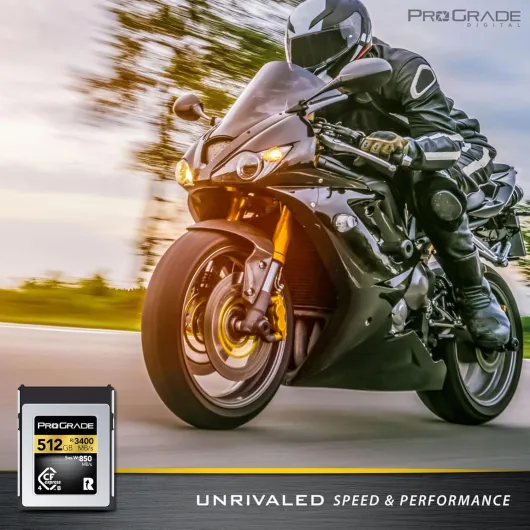
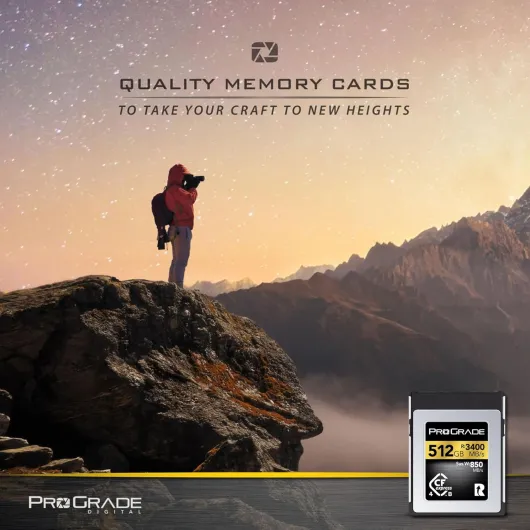
This specific model is the ProGrade Digital CFexpress 4.0 Type B Gold, 512GB. It’s aimed at mirrorless, DSLR and cinema cameras that support CFexpress Type B, and it’s also backward compatible with some XQD cameras if you’ve updated the firmware. Official specs: up to 3400 MB/s read, up to 3000 MB/s write, with sustained write around 850 MB/s in this Gold series. In plain English: it’s built for high-bitrate 4K/6K/8K video and long RAW bursts without the camera choking.
In my case, I’ve used it in a Nikon Z8 and Canon R5. The Z8 handled continuous RAW bursts at 20 fps for much longer than with my older 2.0 cards, and the buffer cleared noticeably faster. On the R5, 4K HQ and 4K 60p internal recording ran without weird pauses. I didn’t do lab tests, but in real use, it’s clearly in the "top tier" speed category. Pair it with a fast CFexpress card reader and transfers to the computer are also very quick, especially for big folders of 8K or time-lapse sequences.
ProGrade pushes a few extra things: a 3‑year warranty, a laser-etched serial number to fight counterfeits, and their Refresh Pro / Recovery software (sold separately). I didn’t need the recovery tool yet, but I did check the serial on their site to confirm it wasn’t a fake. That’s a real concern with memory cards these days, so I appreciate that part. It at least gives you a way to confirm you didn’t buy a dodgy clone.
Overall, the product positioning is clear: this is not a budget CFexpress card. It’s targeted at people who shoot serious photo or video and want fewer headaches with dropped frames, buffer issues, or corrupted files. If you’re just snapping JPEGs here and there, you probably don’t need this level of card. But if your camera shoots 4K/6K/8K or high fps RAW, the specs and real-world use line up pretty well with what’s promised.
Pros
- Very fast write and read speeds, suitable for 4K/6K/8K and heavy RAW bursts
- So far very reliable with no corrupted files or recording issues
- Sturdy build with laser-etched serial number and 3-year warranty
Cons
- Price is relatively high compared to slower or lesser-known brands
- Battery life improvements are small to the point of being hard to notice
Conclusion
Editor's rating
The ProGrade Digital CFexpress 4.0 Type B 512GB Gold is a solid choice if you’re actually pushing your camera hard. In real use, it handles long RAW bursts and high-bitrate 4K/6K/8K footage without drama. The buffer clears quickly, transfers to the computer are fast, and I haven’t had any corrupted files or random recording stops so far. Build quality feels sturdy, and the small touches like the laser-etched serial number and 3‑year warranty add a bit of confidence in a market where fake cards are a real problem.
It’s not perfect. The price is on the high side, and the claimed battery savings are, in my experience, pretty minor. If you’re mainly shooting 1080p or casual stills, this is overkill and not the best way to spend your money. But if you’re a hybrid shooter, doing client work, weddings, events, or anything where you routinely fill cards with 4K+ video or huge RAW bursts, this card fits that use very well. It’s one of those pieces of gear that just gets the job done quietly, which is exactly what you want from storage.