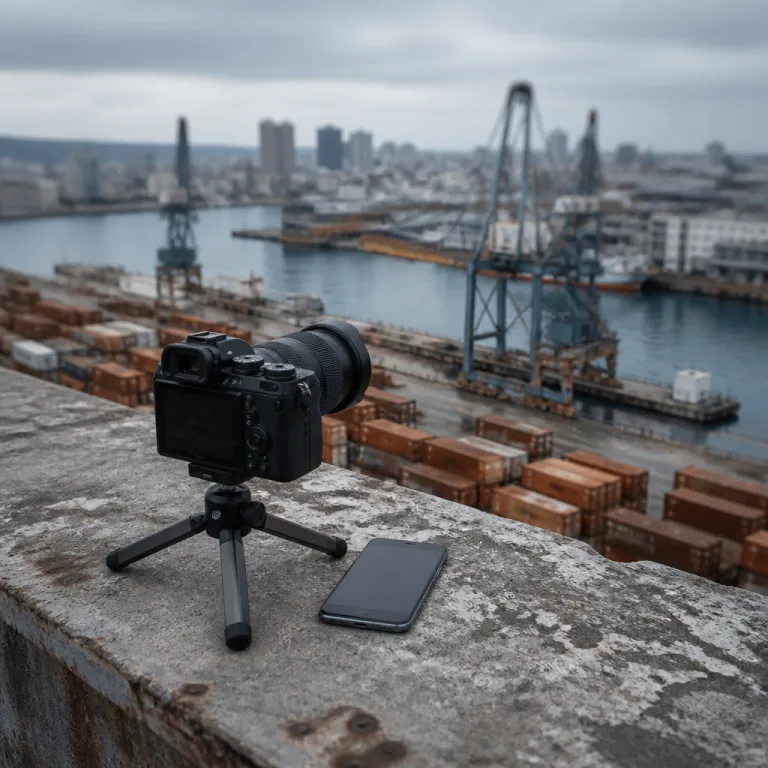
What phones genuinely do better than dedicated cameras
Your phone has become the default camera because it is always there. Modern phones from the Apple iPhone line, the latest Samsung Galaxy models, and every serious Android flagship quietly erase friction between seeing a moment and capturing it. That immediacy is the real starting point for any honest comparison of a dedicated camera versus smartphone photography in 2026, because availability beats theoretical image quality when your kid is already blowing out the candles.
Look at how a recent iPhone 15 Pro or iPhone 15 Pro Max handles a high contrast street scene at noon. The phone camera fires multiple frames, blends them with computational HDR, and delivers balanced images where sky detail and shadow texture coexist in a way most cameras cannot match straight out of camera. The same thing happens on a Google Pixel 8 Pro, where the image processor leans on machine learning to lift faces, tame highlights, and make casual shots look like they came from a careful review driven workflow.
On the hardware side, the gap between camera phones and small cameras has narrowed in surprising ways. A flagship camera phone now combines a high resolution main camera, a dedicated megapixel ultrawide module, and one or more rear cameras with genuine telephoto reach. Even if each individual sensor is tiny compared with a mirrorless body, the phone cameras work together to simulate a flexible zoom range that would require at least two lenses on a dedicated camera.
Video is where phones quietly pulled ahead for many people who care about smartphone photography. A Galaxy S24 Ultra or Xiaomi 14 Ultra uses advanced electronic stabilization, gyro data, and that same powerful processor to keep handheld clips looking like they were shot on a gimbal. When you add instant editing, social ready formats, and the fact that battery life is usually enough for a full day of mixed use, the best phone for casual creators is often the one already in their pocket.
Even the so called weaknesses of a phone camera are often masked by software. Portrait modes use depth maps and subject detection to fake shallow depth of field, while night modes stack multiple shots to simulate long exposures without a tripod. For someone who only shares images on social platforms and never prints larger than A4, the phone versus dedicated camera debate in 2026 can feel academic because phones already deliver more than good enough results.
That is why many people now start their gear research not by asking which cameras are technically the best, but by asking whether any camera can beat the convenience of their existing phones. When you can tap to share a sharp, stabilized clip from a Snapdragon Elite powered handset in seconds, a separate camera has to justify its weight and cost. The frictionless loop of shooting, editing, and posting from a single device is the strongest argument on the smartphone side of the dedicated camera vs smartphone photography conversation.
Where dedicated cameras still change the game
Pick up a mid range mirrorless body with a fast prime and the difference is immediate. A larger sensor paired with a bright lens gives you optical background blur that no computational portrait mode can fully match, especially around hair, glasses, and fine edges in real world photography. This is where the dedicated camera versus smartphone photography comparison stops being about specs and starts being about how images actually feel.
Consider a 24 megapixel APS C camera with a 35 mm f/1.4 lens. You get clean files at ISO 6400, real control over depth of field, and the ability to pull detail from shadows in RAW that would be mush on any phone camera. When you shoot the same scene on even the best phone, the tiny sensor and heavy noise reduction flatten textures, and the image falls apart faster when you push exposure in post.
Optical zoom is another area where cameras still win decisively. A dedicated telephoto lens, even a modest 70–300 mm, maintains detail and contrast across the zoom range in a way that no digital crop from a smartphone can replicate. Phone cameras with a megapixel telephoto module do impressive work for their size, but once you compare large prints, the limits of small sensors and aggressive sharpening become obvious.
Long exposures tell a similar story. With a tripod mounted camera, you can shoot multi minute exposures of waterfalls, city traffic, or night skies without relying on stacking tricks that phones use to fake the effect. The main camera on a mirrorless body simply gathers more light per pixel, and the cleaner signal gives you smoother gradients, richer color, and fewer artifacts than any computational blend.
Battery life also matters when you shoot seriously. A dedicated camera can often handle a full day of stills, especially if you are not constantly chimping, while phones juggle messaging, navigation, and apps that drain the battery before golden hour. Even the best phone with a large battery has to split its energy budget between many tasks, whereas cameras are single purpose tools designed to prioritize shooting.
If you care about high resolution stills, a body in the 30 megapixel class or higher opens creative doors that phones cannot. You can crop aggressively, print large, and still retain fine detail that survives close inspection. For a sense of what this looks like in practice, a guide to top 30 megapixel digital cameras shows how these sensors balance file size, dynamic range, and real world handling in ways that matter more than headline numbers.
When you compare cameras and phones in a structured camera comparison tool, the dedicated camera vs smartphone photography debate becomes less about brand loyalty and more about matching tools to intent. Cameras give you interchangeable lenses, tactile controls, and a shooting experience that encourages deliberate framing instead of casual taps. That shift in mindset is the real upgrade many enthusiasts are looking for, even if their phones already produce technically impressive shots.
Intentionality, creative growth, and the myth of the best camera
The cliché that the best camera is the one you have with you is only half true. Your phone is always present, but that constant presence can make photography feel like an afterthought rather than a craft. The dedicated camera vs smartphone photography discussion in 2026 becomes more interesting when you ask not just what looks good on screen, but what helps you grow as a photographer.
Using a dedicated camera forces you to slow down and make choices. You decide which lens to mount, how far to stand, whether to prioritize shutter speed or aperture, and how much ISO noise you are willing to accept for a given shot. That friction is not a bug, it is a feature that turns random shots into intentional photography, and it is something phones with fully automatic modes rarely encourage.
On a phone, the main camera and rear cameras quietly juggle between lenses and digital zoom to keep the experience seamless. You pinch to zoom, the software decides whether to switch to a telephoto module or crop the sensor, and the image processor hides the transition. With a dedicated camera, you feel the decision to switch from a 24 mm wide angle to an 85 mm portrait lens, and that physical act reinforces the idea that composition is a choice, not a default.
There is also the question of how you interact with your images after the fact. On phones, shots often vanish into endless camera roll archives, briefly surfaced by algorithms before being buried again. With a camera, you are more likely to import files, cull ruthlessly, and give each image a short review before editing, which builds a feedback loop that improves your eye over time.
Hybrid creators who care about both video and stills sit at an interesting crossroads in the dedicated camera versus smartphone photography debate. Modern mirrorless bodies now offer in body stabilization, advanced codecs, and autofocus that can track eyes through a crowd, narrowing the gap with phones that once owned casual video. The line between cinema camera and mirrorless body has blurred so much that a resource on what this means for solo creators reads almost like a manifesto for leaving the phone behind when a project really matters.
Phones still have a role, especially when you need to shoot, cut, and post within minutes. A Galaxy S24 Ultra or Xiaomi 14 Ultra with a Snapdragon Elite chipset can stabilize 4K clips, apply LUT like filters, and export directly to social platforms without touching a computer. Yet when you care about color grading latitude, rolling shutter performance, and consistent focus pulls, a dedicated camera remains the more reliable partner.
In the end, the best phone and the best camera are not rivals so much as complementary tools. Use the phone for spontaneous smartphone photography, quick behind the scenes shots, and reference images, then reach for the camera when you want files that can survive heavy editing and large prints. The real upgrade is not from one sensor to another, but from casual snapping to deliberate seeing.
Who still needs a dedicated camera, and how to choose one
Not everyone needs a separate camera anymore, and that is fine. If your photography lives entirely on social platforms, you rarely print, and you mostly shoot friends, food, and travel in good light, a modern iPhone, Google Pixel, or Samsung Galaxy already gives you more than enough. For that audience, the dedicated camera vs smartphone photography question is mostly solved in favor of phones.
Where a dedicated camera still earns its place is with people who feel a pull toward craft. If you are starting to notice the limits of phone cameras in low light, if your portraits look flat despite portrait mode, or if your night city shots turn into smeared noise when you zoom in, your instincts are already telling you that a larger sensor and better optics matter. Enthusiasts who want to shoot fast action, wildlife, or indoor events quickly learn that even the best phone struggles to track subjects and maintain clean files at high ISO.
Choosing the right camera means being honest about what you shoot most. Street photographers might favor a compact body with a fixed lens, while parents who photograph sports will benefit from a camera with fast continuous autofocus and a decent telephoto zoom. Landscape shooters should look for strong dynamic range, weather sealing, and lenses that stay sharp edge to edge, because those qualities pay off more than another few megapixels on the spec sheet.
When you compare options in any camera comparison tool, pay attention to how the main camera behaves at your typical ISO range, not just at base. Look at how rear cameras or lens options cover your preferred focal lengths, and read how reviewers describe real world battery life instead of trusting the rated shot count. A link such as a guide to top digital cameras with video stabilization can be more useful than a generic spec table, because it focuses on how stabilization actually feels when you are handholding at dusk.
For many people, the ideal setup is a partnership between phones and cameras rather than a winner takes all choice. Use your phone cameras for scouting locations, testing compositions, and capturing quick reference shots, then return with your dedicated camera when the light is right and you have time to work the scene. That rhythm respects what phones do best while still giving space for the deeper, slower work that only a camera encourages.
As you weigh the trade offs between a dedicated camera and smartphone photography in 2026, remember that no spec can measure how a tool changes your behavior. A camera that nudges you to go out at sunrise, to print your favorite images, and to edit with care will do more for your growth than any incremental upgrade in megapixel count. In the long run, the most important spec is not the sensor size or the processor speed, but the one thing you cannot buy off a shelf — the habit of intentional seeing that a dedicated camera quietly builds every time you choose to carry it.
Key figures shaping the camera and smartphone photography landscape
- According to data from Counterpoint Research’s Global Smartphone Market tracker (for example, 2023 full year estimates, published January 2024 on counterpointresearch.com), global smartphone shipments exceeded roughly 1.1 billion units, while dedicated camera shipments from the Camera & Imaging Products Association (CIPA, annual shipment statistics on cipa.jp, accessed 2024) stayed below 10 million units in the same period. This contrast highlights how phones now dominate casual image capture by sheer volume.
- CIPA shipment reports for recent years (see CIPA “Camera & Imaging Products Shipment Report,” 2022–2023 summaries on cipa.jp) show that interchangeable lens cameras account for roughly 80% of dedicated camera value, even though they represent a smaller share of units. That split underlines how serious photographers still invest heavily in cameras despite the rise of camera phones.
- DxOMark and independent lab tests consistently find that flagship phones with 1/1.3 inch class sensors still trail full frame cameras by about 3–4 stops of dynamic range. For example, lab measurements published on dxomark.com between 2021 and 2023 often place premium smartphones around 11–12 EV of usable range, while enthusiast full frame bodies can reach 14–15 EV, meaning cameras can retain highlight and shadow detail in scenes where phones must rely on aggressive HDR blending.
- Surveys from major print labs in the early 2020s (for instance, internal customer reports cited by European and North American labs in 2021–2022 industry briefings) indicate that orders for prints larger than 30 × 45 cm are dominated by files from dedicated cameras, with phones contributing a minority share. That pattern confirms that larger sensors and better optics still matter most when images leave the screen and are viewed at arm’s length on paper.
- Consumer behavior studies from firms such as GfK and similar market analysts (for example, camera and smartphone ownership reports released around 2022–2023) show that many buyers now keep their cameras for five years or more, while they replace phones every two to three years. This replacement cycle suggests that a well chosen camera remains a long term creative tool rather than a fast cycling gadget.