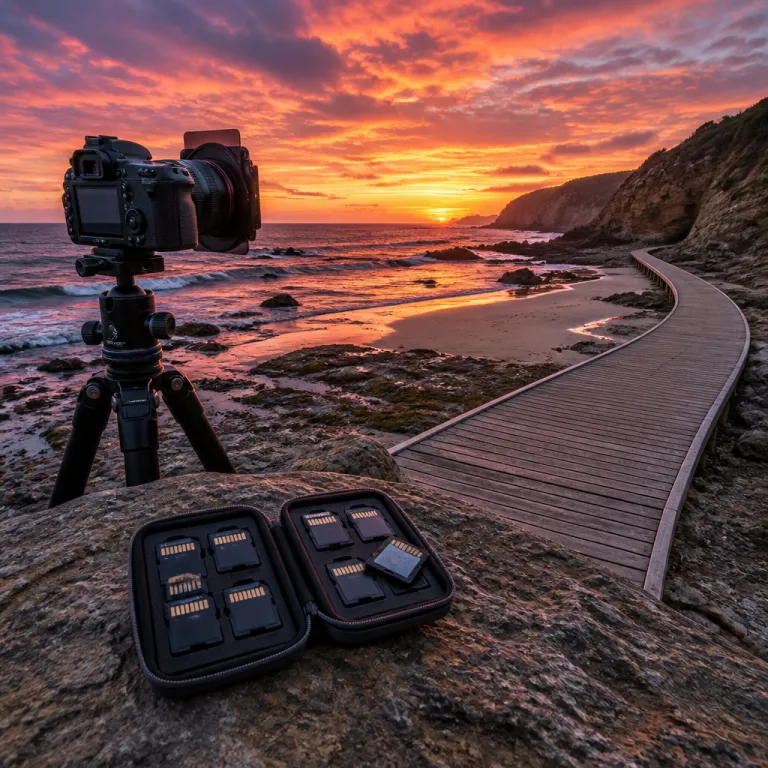
Understanding how many photos a 32 GB card can hold
A 32 GB memory card sounds simple, yet the number of photos it can hold varies widely. The real answer to how many photos will 32gb hold depends on file size, which is driven by your camera settings, image resolution, and whether you shoot JPEG photos, RAW files, or both together. To estimate how many photos your card can hold, you must first understand how your camera creates files and how those files consume storage.
On most modern cameras, a single JPEG image at 24 megapixels typically produces a file size between 6 and 10 megabytes (MB), while RAW photos from the same sensor often reach 25 MB or more. For example, Canon’s EOS R6 generates fine JPEG files of roughly 7 to 9 MB and RAW images around 20 to 25 MB at 14-bit depth, while Sony’s A7 IV often records 24 megapixel JPEGs in the 8 to 12 MB range and lossless compressed RAW files close to 30 MB, according to manufacturer documentation. That means the number of photos a 32 GB card can hold might range from roughly 3,000 JPEG photos to closer to 1,000 RAW photos, with many pictures falling somewhere in between when you mix formats. When you ask how many photos will 32gb hold, you are really asking how your personal photography style translates into data and file sizes.
If you shoot only JPEG photos at a medium resolution, your images’ memory footprint will be smaller and your memory card will store many photos comfortably. Switch to RAW files for serious editing flexibility and the same card size will hold raw images in far lower quantities, because each file contains much more image data. Hybrid shooters who record JPEG+RAW pairs will see their memory cards fill fastest, since every press of the shutter creates two files instead of one and quickly reduces how many pictures the card can hold.
How format, compression, and speed affect your 32 GB storage
When photographers wonder how many images fit on a 32 GB card, they often overlook how JPEG compression levels and RAW bit depth change the answer. A highly compressed JPEG file from a compact camera may use only 3 MB, while a lightly compressed JPEG photo from a full frame camera can easily double or triple that size. RAW files from high resolution cameras can exceed 40 MB, so the same 32 GB memory card will hold raw images in far smaller numbers than a basic model shooting small JPEG photos.
File size is also influenced by subject detail and ISO noise, because more complex pictures generate more data for both JPEG and RAW files. A simple blue sky image may create smaller JPEG files, while a dense forest scene or night cityscape can inflate average file sizes significantly. This is why camera manufacturers only provide approximate image-count estimates on screen, and why your real world card capacity often differs from the brochure.
Card speed does not change how many photos will 32gb hold, yet it strongly affects how quickly you can fill that storage during burst shooting. High speed memory cards, such as UHS-II SD cards or CFexpress cards, allow the camera buffer to clear faster, so you can capture many pictures in rapid sequences without waiting. If you shoot sports or wildlife photography with long bursts of RAW files, pairing your camera with the right high speed card is essential, and you can study detailed guidance in this resource on which memory card your camera needs and how fast it has to be.
Estimating JPEG, RAW, and mixed shooting on a 32 GB card
To turn the question of how many photos will 32gb hold into a practical answer, start by checking the average file size your camera reports for JPEG and RAW. Many cameras display remaining image count on the rear screen, and you can divide the remaining capacity by that count to estimate the typical file sizes you are generating. Once you know whether your JPEG photos average 5 MB or 10 MB, and whether your RAW files average 25 MB or 35 MB, you can calculate realistic storage expectations for your photography.
For example, if your JPEG+RAW pair totals 30 MB (for instance, 8 MB fine JPEG plus 22 MB compressed RAW at 24 megapixels), a 32 GB memory card will hold raw plus JPEG combinations for roughly 1,000 shots before filling. Because card makers use decimal gigabytes (1 GB = 1,000 MB) while computers and cameras often treat 1 GiB as 1,024 MB and reserve some space for the file system, the usable capacity of a 32 GB card is closer to 29 to 30 GiB, so real world image counts usually land slightly below the theoretical maximum. If you switch to JPEG only, the same card size might store many photos, perhaps 3,000 or more, depending on compression and resolution. Shooting RAW only will usually land between those extremes, with many pictures possible but fewer than JPEG, because each RAW file preserves more image data for editing latitude.
Hybrid workflows also affect how many photos your memory card can hold over a full day of photography. Some cameras allow you to send JPEG photos to one memory card and RAW files to another, which can double your effective storage but requires careful card management. For deeper technical guidance on balancing card size, file sizes, and camera compatibility, you can consult this article about choosing the right memory chips for your digital camera, then apply those principles to your own shooting habits.
How resolution, sensors, and cameras change the numbers
The same 32 GB memory card behaves very differently in a 12 megapixel compact camera and a 45 megapixel full frame body. Higher resolution sensors create larger image files, so the number of photos a card can hold shrinks as megapixels climb, even if you keep the same JPEG compression level. When you ask how many photos will 32gb hold, you must always pair that question with the specific camera model and its native resolution.
Entry level cameras and many smartphones generate relatively small JPEG photos, so a 32 GB card capacity can feel generous for casual photography. In contrast, professional cameras that record high resolution RAW files, sometimes in 14-bit or 16-bit depth, can consume storage at a dramatic rate. A single burst of RAW photos during fast action photography might create hundreds of megabytes of data, quickly reducing how many pictures remain before the card is full.
Different brands also handle RAW files differently, with some compressing RAW photos and others saving uncompressed data that increases file size. For instance, Canon’s EOS R6 offers both compressed and uncompressed RAW options, while Sony’s A7 IV provides lossless compressed RAW that trims file sizes compared with fully uncompressed data, as outlined in their official manuals. This means two cameras with similar megapixel counts can still produce different average file sizes, changing how many photos your storage can accommodate. When planning a shoot, always test your own cameras by filling a card during practice sessions, then reviewing how many photos the memory cards actually stored under realistic conditions.
Practical planning for travel, events, and landscape photography
For travel photography, the question of how many photos will 32gb hold is not just technical, it is logistical. A city break with mostly JPEG photos at moderate resolution might work comfortably with a single 32 GB memory card, especially if you back up files each evening. A multi day wedding or wildlife trip with RAW files, high resolution images, and many pictures per hour will almost always require multiple cards or larger capacities.
Event photographers often carry several memory cards rather than one large card, because spreading files across cards reduces the risk of losing all data if a single card fails. In that context, a 32 GB card size becomes one unit in a broader storage strategy, where you estimate how many photos each card can hold and rotate them through the day. Landscape photographers who shoot at base ISO and use long exposures may generate slightly smaller RAW files, yet they often bracket exposures and capture many photos of the same scene, which still fills storage quickly.
If you are planning a dedicated landscape trip with a wide angle lens, it helps to think about both optics and storage together. You might study this guide to landscape lenses, focal length, and filters, then estimate how many photos your 32 GB card will hold when you bracket exposures at sunrise and sunset. By combining lens choice, card capacity, and realistic file sizes, you ensure your photography sessions are limited by creativity rather than by storage.
Choosing the right memory cards and backup strategy
Once you understand how many photos will 32gb hold for your specific camera, the next step is choosing the right memory cards and backup workflow. A single 32 GB memory card may be enough for occasional family pictures, but serious photography usually benefits from several cards with different card size options. Many photographers carry a mix of 32 GB and 64 GB cards, balancing the convenience of larger storage with the safety of spreading files across multiple cards.
High speed cards such as CFexpress cards or fast UHS-II SD cards do not increase how many photos your card can hold, yet they dramatically improve how quickly your camera writes RAW files and JPEG photos. This matters when you shoot many pictures in continuous mode, because a slow card can cause the buffer to fill and stop you from capturing critical moments. When evaluating memory cards, look at both capacity and speed ratings, then match them to your camera’s capabilities and your typical file sizes.
Backup strategy is just as important as card choice, because no amount of planning about how many photos will 32gb hold can protect you from data loss without redundancy. After each session, copy all files from your memory card to at least two separate locations, such as an external SSD and a cloud service, then verify that the files open correctly. Treat your memory cards as temporary capture tools rather than long term storage, and your images will remain safer over the lifetime of your photography.
Fine tuning settings to maximise a 32 GB card
Photographers who want to stretch how many photos will 32gb hold can adjust camera settings without sacrificing too much quality. Lowering image resolution slightly, increasing JPEG compression one step, or switching from RAW plus JPEG to RAW only can reduce average file size while still preserving editing flexibility. Each change affects how many photos your memory cards can store, so test different combinations and review the resulting image quality on a calibrated screen.
Some cameras offer multiple RAW formats, such as compressed RAW, lossless compressed RAW, or small RAW, each producing different file sizes. Choosing a compressed RAW option can significantly reduce storage usage, allowing a 32 GB memory card to hold raw images in greater numbers while keeping most of the tonal data you need for post processing. If you mainly share pictures online rather than printing large, you may find that slightly smaller RAW files and more efficient JPEG photos are an acceptable compromise.
Ultimately, the answer to how many photos will 32gb hold is a moving target shaped by your camera, your settings, and your shooting style. By understanding how file sizes, image resolution, and card speed interact, you can predict how many pictures a given card size will support on any assignment. That knowledge turns a simple piece of storage into a reliable tool, ensuring your focus stays on composition, light, and the creative side of photography.
Key figures on 32 GB cards and photo capacity
- On a 24 megapixel camera shooting fine JPEG photos, a 32 GB memory card typically stores around 3,000 to 4,000 images, based on average file sizes of 6 to 8 MB reported by major camera manufacturers such as Canon and Nikon.
- On the same 24 megapixel camera shooting uncompressed RAW files, a 32 GB card usually holds roughly 900 to 1,300 photos, assuming RAW file sizes between 20 and 30 MB as documented in official camera manuals.
- When recording RAW plus JPEG pairs, photographers can expect a 32 GB card to store approximately 700 to 1,000 images, because each shutter press generates two files whose combined size often exceeds 30 MB.
- High resolution cameras above 40 megapixels can produce RAW files larger than 50 MB, which reduces the capacity of a 32 GB card to well under 700 photos, according to manufacturer specifications for recent full frame models.
- Industry reliability tests from major card brands indicate that using several 32 GB cards instead of a single very large card can reduce the impact of a rare card failure, because no more than a fraction of a day’s shooting is stored on any one card.
FAQ about 32 GB cards and photo storage
How many JPEG photos will a 32 GB card usually store
On a typical 20 to 24 megapixel camera, a 32 GB memory card will usually store between 3,000 and 5,000 JPEG photos, depending on compression level and subject detail. Highly compressed JPEG settings and simpler scenes produce smaller files, which increase the total number of photos the card can hold. Less compressed settings and very detailed images reduce that capacity, so real world results vary from one photographer to another.
How many RAW files fit on a 32 GB memory card
Most modern interchangeable lens cameras produce RAW files between 20 and 40 MB, so a 32 GB card typically holds around 800 to 1,600 RAW photos. Higher resolution sensors and uncompressed RAW formats sit at the lower end of that range, while compressed RAW formats allow more images. Checking the average file size in your own camera menu gives the most accurate estimate for your specific setup.
Is a 32 GB card enough for a full day of travel photography
For casual travel photography in JPEG only, a 32 GB memory card is usually enough for a full day, and often for several days, because you are unlikely to exceed a few thousand images. If you shoot RAW files, burst sequences, or video clips, that same card may fill much faster. Many photographers carry at least two 32 GB cards for travel to ensure they never run out of storage.
Does card speed change how many photos a 32 GB card can hold
Card speed does not change the storage capacity of a 32 GB card, so it does not alter how many photos the card can hold. Speed only affects how quickly your camera writes files and clears its buffer, which matters for continuous shooting and high resolution RAW capture. Choosing a high speed card improves performance but leaves total gigabytes and image counts unchanged.
Should I use several 32 GB cards or one larger card
Using several 32 GB memory cards spreads your files across multiple pieces of storage, which reduces the risk of losing all your photos if a single card fails or is misplaced. A single larger card is more convenient but concentrates all your data in one place. Many working photographers prefer multiple medium size cards for critical assignments, then back up to external drives as soon as possible.