
Summary
Editor's rating
Value for money: where this lens really makes sense
Design: light, simple, and a bit plasticky but practical
Build and durability: feels okay, but don’t abuse it
Performance: sharp enough, fast enough, with clear limits in low light
What this RF 100-400mm actually offers on paper
Is it actually effective for wildlife, sports and aviation?
Pros
- Lightweight and compact for a 100–400mm, easy to carry all day
- Autofocus and image quality are solid in good light, especially for wildlife and outdoor sports
- Very good value for money within the Canon RF system compared to more expensive telephotos
Cons
- Slow maximum aperture (f/5.6–8) makes low-light and indoor action difficult
- No real weather sealing and mostly plastic build, not ideal for harsh conditions

Specifications
View full product page →| Brand | Canon |
A telephoto zoom that doesn’t destroy your back or your wallet
I’ve been using the Canon RF 100-400mm F5.6-8 IS USM for a few weeks on a Canon R6 and an R7, mostly for birds in the park, a local football match, and some random planes passing overhead. I bought it because I wanted reach beyond 200mm without spending a fortune on the RF 100-500 or carrying something huge around. On paper, this lens looks like a compromise: small, light, cheap (for RF), but with a pretty slow aperture at the long end. I wanted to see if that trade-off actually works in real life.
The first thing that stood out is how easy it is to keep this lens on the camera all day. At around 635 g, it feels more like a big kit lens than a serious telephoto. That makes a difference if you’re walking several hours, tracking birds or kids playing sports. It doesn’t pull your neck down when it’s hanging on a strap, and it doesn’t make the camera feel front heavy. Compared to older DSLR 100–400mm lenses, this is night and day in terms of comfort.
Image quality was my main concern before buying it. With a max aperture of f/8 at 400mm, I expected soft, noisy shots all the time. In practice, if you keep your shutter speed reasonable and don’t shoot in a cave, the results are actually pretty solid. On my R7, I got sharp photos of birds at 400mm, and I could crop a bit without the image falling apart. It’s not on the same level as the RF 100-500, but for the price difference, I honestly didn’t feel cheated.
Overall, my first impression is that this lens is a very practical tool. It’s not perfect, and it clearly has limits in low light and for background blur, but it gets the job done for wildlife, sports and aviation if you manage your expectations. If you want something light, flexible and relatively affordable for the RF system, this lens hits a pretty good balance. If you’re chasing pro-level results in bad light, that’s where you’ll start to see the compromises show up.
Value for money: where this lens really makes sense
For me, the biggest selling point of this RF 100-400mm is the price-to-performance ratio in the RF ecosystem. Canon RF telephotos are usually expensive, and this one sits in the more affordable bracket while still giving you 400mm reach, image stabilization, and decent autofocus. Compared to the RF 100-500L, you obviously give up build quality, weather sealing, a brighter aperture at the long end, and 100mm of extra reach. But you also keep a lot more money in your pocket and carry way less weight. For a hobbyist who doesn’t earn money with photos, that trade-off is pretty attractive.
Compared to older EF options plus an adapter, like the EF 70-300 or EF 100-400, this lens has the advantage of being native RF, lighter, and with Nano USM that plays very nicely with Canon’s latest AF systems. You don’t have the bulk of the adapter, and everything just feels more balanced on the camera. If you already own a good EF telephoto, it’s harder to justify buying this, but if you’re building an RF kit from scratch, this lens is a logical pick for reach on a budget.
The main thing that keeps it from being a perfect deal is the slow aperture. You’re basically locked into shooting in decent light or accepting higher ISO and more noise. If you mostly shoot in bright daylight, this isn’t a big problem. If you like golden hour, forests, or indoor sports, then the value drops because you’ll hit the lens’s limitations constantly. In that case, saving longer for a faster lens might make more sense.
Overall, I think the value is good to very good for the right user: someone who wants to get into wildlife, outdoor sports, or aviation without going broke, and who doesn’t mind working within the lens’s limits. It’s not the cheapest lens ever, but in the Canon RF world, it’s one of the more sensible purchases if you need telephoto reach and care more about practicality than bragging rights.
Design: light, simple, and a bit plasticky but practical
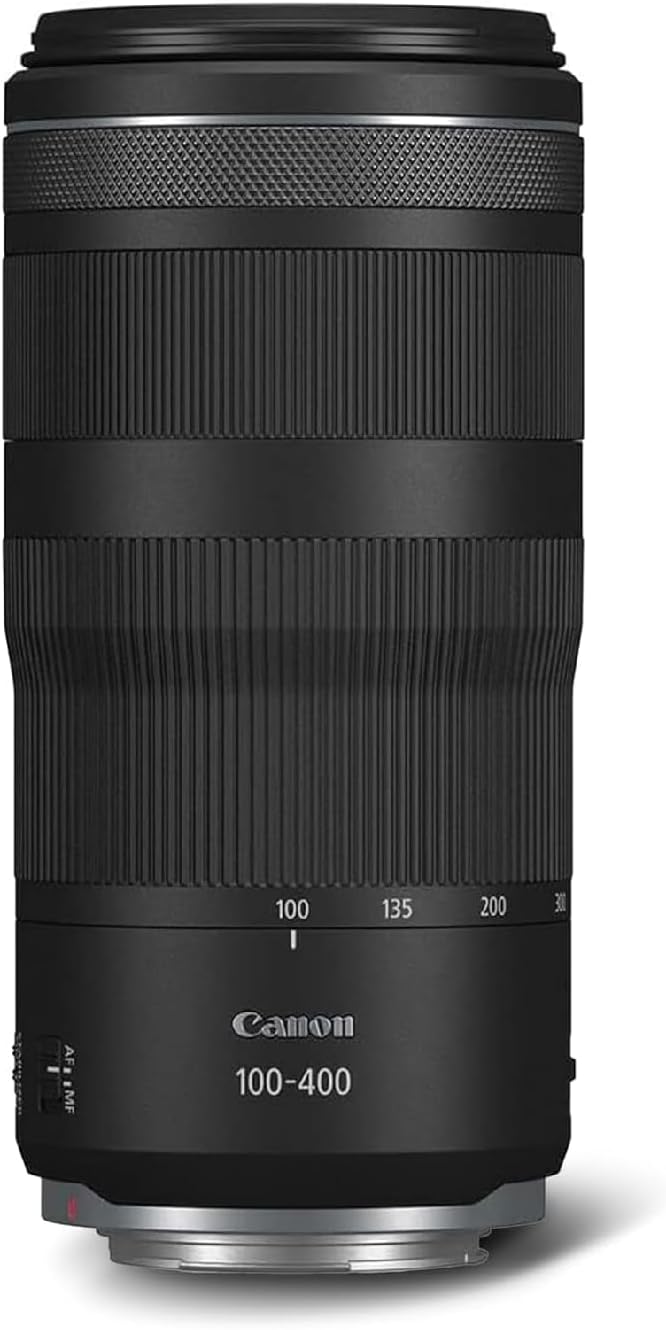
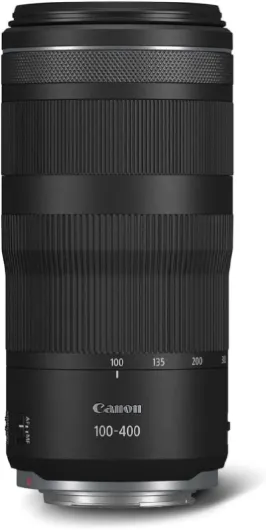
Design-wise, the RF 100-400mm is pretty straightforward. It’s a black, telescoping zoom, no internal zoom mechanism, so the barrel extends as you go toward 400mm. The first thing I noticed taking it out of the box was how light it felt compared to how it looks. It doesn’t have that heavy, metal tank feeling of L lenses, but that’s also why it’s actually pleasant to carry around. On my R6, the combo feels balanced: not too front heavy, and I can shoot one-handed for short bursts without worrying I’ll drop it.
The zoom ring is fairly smooth, with enough resistance so it doesn’t creep on its own during normal use. You can go from 100 to 400mm with a quick twist, which is handy when a bird suddenly flies closer or further away. The focus ring is thinner and electronic, so it doesn’t feel as precise as a mechanical ring, but for autofocus use I honestly didn’t care much. There’s also a control ring near the mount that you can assign to ISO, aperture, or whatever you like. I set it to ISO and used it constantly; it’s one of those Canon RF features that actually helps in the field.
One weak point for me: there’s no physical focus limiter switch and no built-in tripod collar. The lack of a tripod collar isn’t a huge problem because the lens is light, but for long sessions on a monopod or tripod, it would have made balancing the setup nicer. You can buy third-party collars, but that’s extra cost. Also, no weather sealing gasket at the mount, so I wouldn’t trust this lens in heavy rain. I used it in light drizzle without issues, but I still kept a cloth handy and didn’t push my luck.
Overall, the design is honest: mostly plastic, light, simple controls, and clearly built with portability and cost in mind. It doesn’t feel fragile, but it doesn’t feel premium either. If you’re used to Canon L glass, you’ll feel the difference immediately. If you’re coming from kit lenses or EF-S lenses, it will feel like an upgrade in terms of ergonomics and usability, even if the materials are nothing special.
Build and durability: feels okay, but don’t abuse it
In terms of durability, this lens feels like solid consumer gear, not pro gear. The barrel is mostly plastic, and while it doesn’t feel cheap to the point of being toy-like, you can tell it’s built to hit a price point. I carried it in a simple shoulder bag, no special padding, for several outings, and it handled that without any issues. No rattles, no weird zoom play, and the zoom mechanism still feels the same as on day one. So for normal hobby use, I’m not worried about it falling apart quickly.
There are a few things to keep in mind though. First, there’s no real weather sealing. I don’t see a rubber gasket at the mount, and Canon doesn’t market this lens as weather-resistant. I shot in light drizzle once, wiped it down a couple of times, and it was fine, but I wouldn’t take it out in heavy rain or dust storms without some protection. If you’re into serious wildlife in rough conditions, that’s a limitation. Compared to L lenses, you definitely need to be more careful.
The extending zoom design also means the barrel moves in and out, which can pull in dust over time. After a few weeks, I didn’t see any dust inside the elements, but long-term, it’s something to watch. That said, most consumer zooms are like this, so it’s not unique to this lens. The filter thread is 67mm, and I’d honestly recommend sticking a cheap UV or clear filter on it if you’re going to be in sandy or salty environments. The front element is not deeply recessed, so it’s easier to smudge or scratch if you’re clumsy.
Overall, I’d rate durability as good enough for regular use, but not something I’d trust in extreme conditions. If you treat your gear reasonably well, this lens should last. If you’re rough with your equipment, toss it in the back of a car without a bag, or shoot a lot in bad weather, I’d be more cautious. It’s clearly designed as a lighter, more affordable option, not a tank.

Performance: sharp enough, fast enough, with clear limits in low light
On the performance side, this lens is better than I expected for the price and size, but it’s not magic. In good daylight, autofocus is quick and accurate. On the R6 and R7 with animal eye AF, it locked onto birds and dogs reliably, even at 400mm. Tracking a football game, it kept up fine as long as I stayed at reasonable shutter speeds. I didn’t feel like the lens was slowing the camera down in any serious way. For casual sports and wildlife, it definitely gets the job done.
Image quality is pretty solid in the center, especially between 100 and 300mm. At 400mm, wide open at f/8, you can see a bit of softness, but nothing dramatic. Stopping down to f/9–f/10 cleans things up a bit, but then you’re pushing ISO even more. For real-world use, I just left it at f/8 and lived with the slight softness; the photos were still good enough for prints and social media. Corners are softer, but at this focal length, most people are focusing on the subject in the center anyway, so it didn’t bother me much.
Where this lens hits its limit is low light and indoor use. For example, I tried shooting an indoor basketball game, and honestly, it was rough. To freeze motion at 1/500s, I was at ISO 12800 pretty fast, and the images were noisy and flat. The stabilization helps for static subjects, but it does nothing for moving players. Same story for late evening wildlife: you can shoot, but you’re fighting the aperture the whole time. This lens is clearly happier in daylight or bright outdoor conditions.
The bokeh and background blur are decent but not mind-blowing. At 400mm, even at f/8, you can still separate your subject from the background fairly well, especially if the background is far away. Just don’t expect the creamy look you get from a fast telephoto prime. In short: performance is good for the price and size, but you have to accept that this is a daylight lens first. If you mostly shoot in bad light, you’ll run into its limits very quickly.
What this RF 100-400mm actually offers on paper
On the spec sheet, the Canon RF 100-400mm F5.6-8 IS USM is a compact telephoto zoom designed for RF mount bodies. You get a focal range of 100 to 400mm, a variable maximum aperture of f/5.6 at 100mm down to f/8 at 400mm, optical image stabilization rated around 5.5 stops, and Canon’s Nano USM autofocus motor. The lens weighs about 635 g and is roughly 165 mm long, so it’s much smaller than the old EF 100-400 bricks people used to carry. It uses UD glass elements to control chromatic aberration and has a standard 67mm filter thread, which is nice because filters in that size don’t cost a fortune.
In practice, the 100–400mm range is very usable. At 100mm you can shoot portraits, bigger animals or general outdoor scenes. Once you start pushing toward 300–400mm, it becomes ideal for birds, kids playing football, dogs running around, and planes in the sky. I used it on an APS-C body (R7), and there it behaves more like 160–640mm in 35mm terms, which is honestly great for wildlife. On a full-frame like an R6, it’s more of an all-round telephoto that you can still manage handheld without feeling silly.
The max aperture being f/5.6–8 is the obvious downside. That means you need decent light to keep your shutter speeds high enough for action. On a cloudy day or late afternoon, I found myself at ISO 3200–6400 pretty quickly, especially on the R7. If you’re allergic to noise, you’re going to notice this. On the flip side, the built-in stabilization helps a lot for static subjects. I could shoot at 1/60s around 200–300mm and still get sharp shots, as long as the subject wasn’t moving too fast.
So, on paper and in real use, this lens is clearly built as a budget-friendly, lightweight telephoto for hobbyists and enthusiasts. It’s not trying to be a pro sports lens, and if you expect it to behave like a big white prime, you’ll be disappointed. But if you go in thinking “I want reach, portability, and decent quality at a sane price”, the feature set lines up well with that goal. It’s a realistic tool, not a fantasy lens.
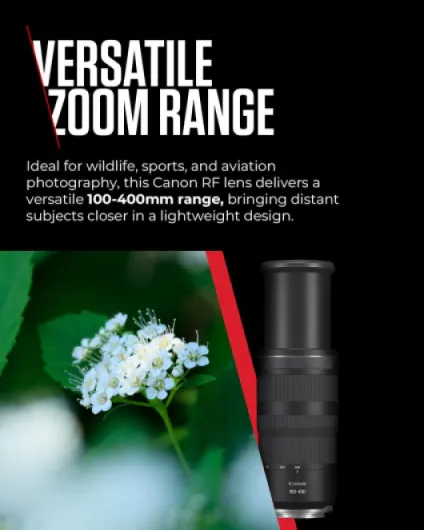
Is it actually effective for wildlife, sports and aviation?
I mainly bought this lens for casual wildlife and some sports, so I pushed it in those scenarios. For wildlife, on an APS-C body like the R7, the effective reach is great. Birds that were just dots with my 70-200 suddenly became properly frame-filling, especially around 300–400mm. I spent a morning at a lake shooting ducks, herons and gulls, and the hit rate was surprisingly high. As long as the light was decent, focus stuck and the images looked sharp enough to crop a bit in post. For people who like birding but don’t want to carry a huge lens, it does the job.
For sports, I tested it at a local football match and a kids’ rugby training. Outdoors, in bright conditions, it handled it fine. I stayed mostly between 150 and 300mm, with shutter speeds around 1/1000s and ISO between 400 and 1600 depending on clouds. The lens tracked players well, and I got plenty of usable shots. The slower aperture only really became a problem when clouds rolled in or the sun started to drop, then ISO climbed fast. Indoors, like I said earlier, I found it pretty limiting. If you shoot a lot of indoor sports, this isn’t the right tool.
For aviation, the 100–400 range is actually very practical. I used it once at a small airfield and then again just pointing at commercial jets overhead. At 400mm, planes in the sky are big enough to look interesting, especially on APS-C. The lens focuses quickly on those distant, high-contrast subjects, and the stabilization helps when you’re handholding and tracking. It’s not a pro spotting setup, but for hobby use, it’s absolutely fine.
So in terms of effectiveness, I’d say: it delivers for daytime wildlife, outdoor sports, and casual aviation. It struggles in low light and indoors, and it’s not for people who want ultra-shallow depth of field or pro-level sharpness across the frame. But if your main goal is to reach subjects that were too far away with your kit lens, and you usually shoot outside, this lens is a very practical step up.
Pros
- Lightweight and compact for a 100–400mm, easy to carry all day
- Autofocus and image quality are solid in good light, especially for wildlife and outdoor sports
- Very good value for money within the Canon RF system compared to more expensive telephotos
Cons
- Slow maximum aperture (f/5.6–8) makes low-light and indoor action difficult
- No real weather sealing and mostly plastic build, not ideal for harsh conditions
Conclusion
Editor's rating
The Canon RF 100-400mm F5.6-8 IS USM is a practical, no-nonsense telephoto zoom that makes a lot of sense if you’re in the Canon R system and want more reach without getting into pro-level prices or weights. It’s light, easy to carry all day, and pairs well with both full-frame and APS-C bodies. In good light, autofocus is quick, image quality is solid in the center, and stabilization helps you keep shots sharp for static or slower subjects. For daytime wildlife, outdoor sports, and plane spotting, it does exactly what you expect it to do.
On the downside, the slow aperture and lack of weather sealing are the big compromises. In low light or indoors, you’re going to be pushing ISO hard, and the lens just isn’t built for rough conditions or heavy professional use. The build is mostly plastic and feels more like a well-made consumer lens than anything premium. If you go in expecting L-series performance, you’ll be disappointed. But if you accept it for what it is—a budget-friendly, lightweight telephoto—it’s actually a pretty smart purchase.
I’d recommend this lens to hobbyists and enthusiasts who mainly shoot outdoors in decent light and want to get closer to wildlife, sports, or aircraft without dragging around a huge lens. If you’re a pro, or you shoot a lot in bad weather or dark environments, you’re better off looking at faster, tougher glass, even if it costs a lot more. For everyone else, this RF 100-400mm is a good value, realistic tool that fits nicely into a compact RF kit.