
Summary
Editor's rating
Value for money: where it really makes sense
Design: simple, functional, a bit no-frills
Materials and build: better than the price suggests, with a few cheap spots
Durability and daily use feel
Performance with real cameras and phones
What you actually get with the TP12
Pros
- Lightweight and compact but still reasonably stable for DSLR/mirrorless and phones
- Arca-type head and plate work with common systems and include a usable phone holder
- Good build for the price with metal in the important structural parts
Cons
- Quick-release clamp feels less secure and confidence-inspiring than higher-end systems
- Less stable at full height with center column extended, especially in wind

Specifications
View full product page →| Brand | NEEWER |
A budget tripod that doesn’t feel like a toy
I picked up the NEEWER Basics TP12 because I needed a travel tripod I wouldn’t cry over if an airline wrecked it. My usual setup is a heavier Manfrotto, which is great but a pain to carry on trips and hikes. This Neewer was in the mid-range price bracket on Amazon, had a 4.6/5 rating and a ton of reviews, so I figured I’d gamble on it for a couple of photo walks and some phone video work.
Over about two weeks, I used it with a Canon DSLR plus a mid-range zoom, a heavier telephoto, and also an iPhone on the included phone holder. I shot in a park, on a city street at night, and indoors for a quick talking-head video. I also strapped it to a backpack and walked around a few hours to see if the weight and folded size were actually travel-friendly, or just marketing talk.
First impression: it doesn’t feel like those super flimsy $20 tripods where everything flexes and rattles. The legs lock in place properly, the ball head doesn’t slump as soon as you add a bit of weight, and the whole thing feels reasonably solid for something that’s still pretty light. It’s not pro cinema gear, but it’s not junk either.
It’s not perfect though. A couple of details are clearly where they cut costs: the quick-release system is just okay, some plastic parts feel a bit cheap, and there are no spiked feet for rough terrain. But for the price, it does the job and is a clear step above the typical bargain-bin tripods you see bundled with entry-level cameras.
Value for money: where it really makes sense
For the price (often under $60, sometimes closer to the mid-$30s on sale), the TP12 is good value for money. You’re getting a tripod that’s clearly a step up from the super cheap kits, without jumping into the $200+ territory of big brands. If you’re a hobbyist, content creator, or someone who travels and just needs a reliable stand for photos and video, it hits a nice balance between cost, weight, and stability.
Compared to my older budget aluminum tripod, this Neewer is lighter, packs smaller, and feels more solid at the joints. The included phone holder is actually usable, which saves you from buying a separate clamp. The Arca compatibility is also a plus because you can reuse plates or upgrade the head later without throwing away the whole setup. So you’re not locked into some weird proprietary system.
Where the value is slightly less impressive is if you already own a solid tripod and are picky about heads. The ball head is okay but not special, and if you plan to upgrade it to something nicer, the cost difference to just buying a better tripod in the first place starts to shrink. Also, if you often shoot in rough conditions (wind, sand, mountains), you might outgrow the TP12 and wish you’d gone for a more rugged carbon model from the start.
In short, the TP12 hits a sweet spot for budget-conscious users who still care about stability. It’s not the cheapest option out there, but the extra money over the absolute bottom tier is well spent. If you’re on a tight budget and want something that doesn’t feel like a toy, the value is definitely there. If you’re already deep into pro gear, this will feel like a backup or travel-only option, not your main workhorse.
Design: simple, functional, a bit no-frills
The design is very straightforward, which I liked. There are only a few knobs on the head: one to lock the ball, one for the panoramic base, and the clamp knob for the plate. That’s it. Compared to some heads with five different controls, this is much easier to use when you’re in a hurry. Extend the legs with the flip locks, set the angle, tighten the ball, done. For casual shooting or basic video, that’s honestly all you need.
Visually, it’s just a black aluminum tripod with some plastic accents. Nothing fancy, nothing that screams “steal me”. The leg sections are fairly thin but not in a scary way. When fully extended to the max height with the center column up, you can feel a bit of wobble if you tap it, but that’s normal at this price and weight. At half extension or with the center column down, it feels much more confident.
One design thing I appreciated is the low-profile ball head. Keeping the center of gravity lower really helps stability. With my DSLR and a heavier telephoto, I didn’t feel like the setup was going to tip over as long as the legs were spread properly. Panning is smooth enough for simple moves, though I wouldn’t use it for serious video where you need perfectly fluid motion – it’s more for repositioning than cinematic pans.
There are a couple of design compromises. The quick-release clamp is a screw-tighten style, not a fancy lever-lock. It works, but you don’t get that satisfying locked-in feeling like on some Manfrotto or higher-end Arca clamps. Also, no detachable leg for monopod use on this model (despite some reviewers talking about that on other Neewer tripods), so if you want a monopod, you’ll need a separate one. In short: the design is practical, not flashy, and focuses on the basics that matter for travel use.
Materials and build: better than the price suggests, with a few cheap spots
The tripod is a mix of aluminum alloy and plastic. The good news: the critical structural parts are mostly metal. The leg supports, main chassis, and ball head body are aluminum, which is what you want. Several reviewers mentioned being surprised to see cast aluminum where they expected plastic, and I agree – it gives a more trustworthy feel when you’re putting a few thousand dollars of camera on top.
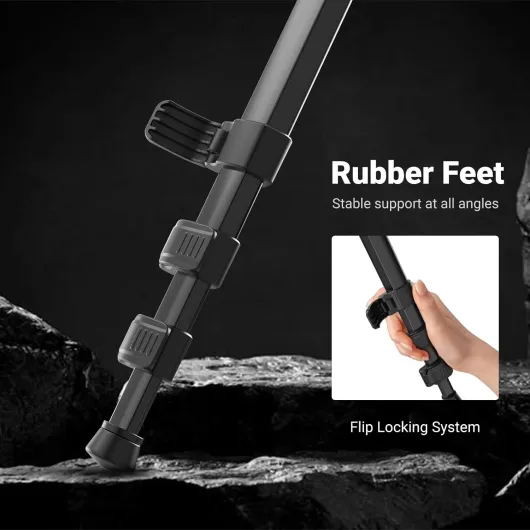
The plastic parts are mostly the leg flip locks, knobs, and parts of the phone holder. They don’t feel super premium, but they also don’t feel like they’ll snap off with normal use. I did a few quick open/close cycles on all the leg locks and twisted the knobs more than I usually would just to see if anything creaked. Nothing concerning. Over years of heavy use, these are the bits that might loosen or wear, but for a travel tripod at this price, it’s acceptable.
The finish on the aluminum is decent. It doesn’t feel rough or sharp, and there were no weird burrs or poorly cut edges on my unit. The legs slide in and out smoothly, and the flip locks clamp tight without needing a ton of force. The ball in the head moves smoothly enough. It’s not buttery like a high-end head, but it doesn’t grind or stick either. For photo work, it’s fine. For heavy video panning, you’ll notice the limits.
Overall, the materials feel like a clear notch above the flimsy entry-level tripods, but still a step below more expensive carbon-fiber or pro aluminum models. If you’re expecting a tank that will survive years of abuse, this isn’t that. If you want something light, reasonably tough, and okay to throw around a bit while traveling, the materials are good enough to feel safe using it with a DSLR and a decent lens.
Durability and daily use feel
I obviously haven’t had this thing for years, but after some rougher handling than normal, it held up fine. I tossed it into a car trunk without a case, knocked it over on grass on purpose, and carried it strapped under a backpack for a couple of hours where it rubbed against the ground and rocks a bit. No major scratches beyond normal use marks, no loose parts, and the locks still bite firmly.
The flip locks are usually the first thing to cause problems on cheap tripods. On this one, they feel reasonably tight. I opened and closed them repeatedly and then checked if the legs started slipping under load – they didn’t. Worst case, if they loosen over time, you can usually tighten the screws, but that’s something to monitor if you use it heavily. The ball head also still locks properly after a bunch of adjustments; it doesn’t feel like it’s wearing out quickly.
Where I’m a bit more cautious is the quick-release plate and clamp. It’s Arca-type and works, but it doesn’t have that super secure, clicky lock you get on some higher-end systems. One Amazon reviewer mentioned swapping the head for a Manfrotto one just to feel more confident, and I get that. I didn’t have my camera slip or anything scary, but I did double-check the clamp more often than on my main tripod. If you’re paranoid about dropping gear, you might eventually upgrade the head.
For normal travel and hobby use, I’d say durability is decent. It’s not built like a pro studio tripod that you’ll hand down to your grandkids, but it also doesn’t feel disposable. If you take basic care of it – don’t slam the locks, avoid sand in the leg sections, and don’t overload it – it should last you a good while. For the price bracket it’s in, the durability is honestly better than I expected.
Performance with real cameras and phones
In actual use, the stability is pretty solid for its size and price. With a Canon DSLR and a mid-range zoom, I had no problem doing long exposures at night in the city, as long as I kept the center column lowered and didn’t fully extend the thinnest leg sections. At full height with the center column all the way up, it’s still usable, but like any light tripod, a gust of wind or someone bumping into it will show up in your shots.
I also tested it with a heavier telephoto. The head holds it, but you have to tighten the ball head a bit more, and there’s a slight sag if you don’t really crank it down. Once locked, it stayed in place. So for wildlife or sports where you’re constantly re-aiming, this wouldn’t be my first choice, but for static shots with a heavier lens, it works if you’re patient. The claimed 11 lb load rating feels realistic as a maximum, not a comfortable everyday load. I’d stay under that for regular use.
With a phone and the included holder, it’s obviously overkill in a good way. For vertical Reels/TikToks or horizontal YouTube shots, it’s stable and doesn’t wobble. The 360° rotation and quick switch between portrait and landscape is handy. I did a couple of basic pans and tilts with the phone for video, and while the head isn’t a fluid video head, you can get acceptable moves if you’re gentle and don’t expect pro-level smoothness.
In terms of handling, setup is quick: flip the locks, extend, lock, done. The bubble level helps for basic alignment, and the panoramic base with degree markings is useful if you’re into panoramas. It’s not a precision tool, but it lets you repeat angles more easily. Overall, performance is good enough for travel, hobby work, and light professional use, especially if you’re mainly shooting stills or simple talking-head videos.
What you actually get with the TP12
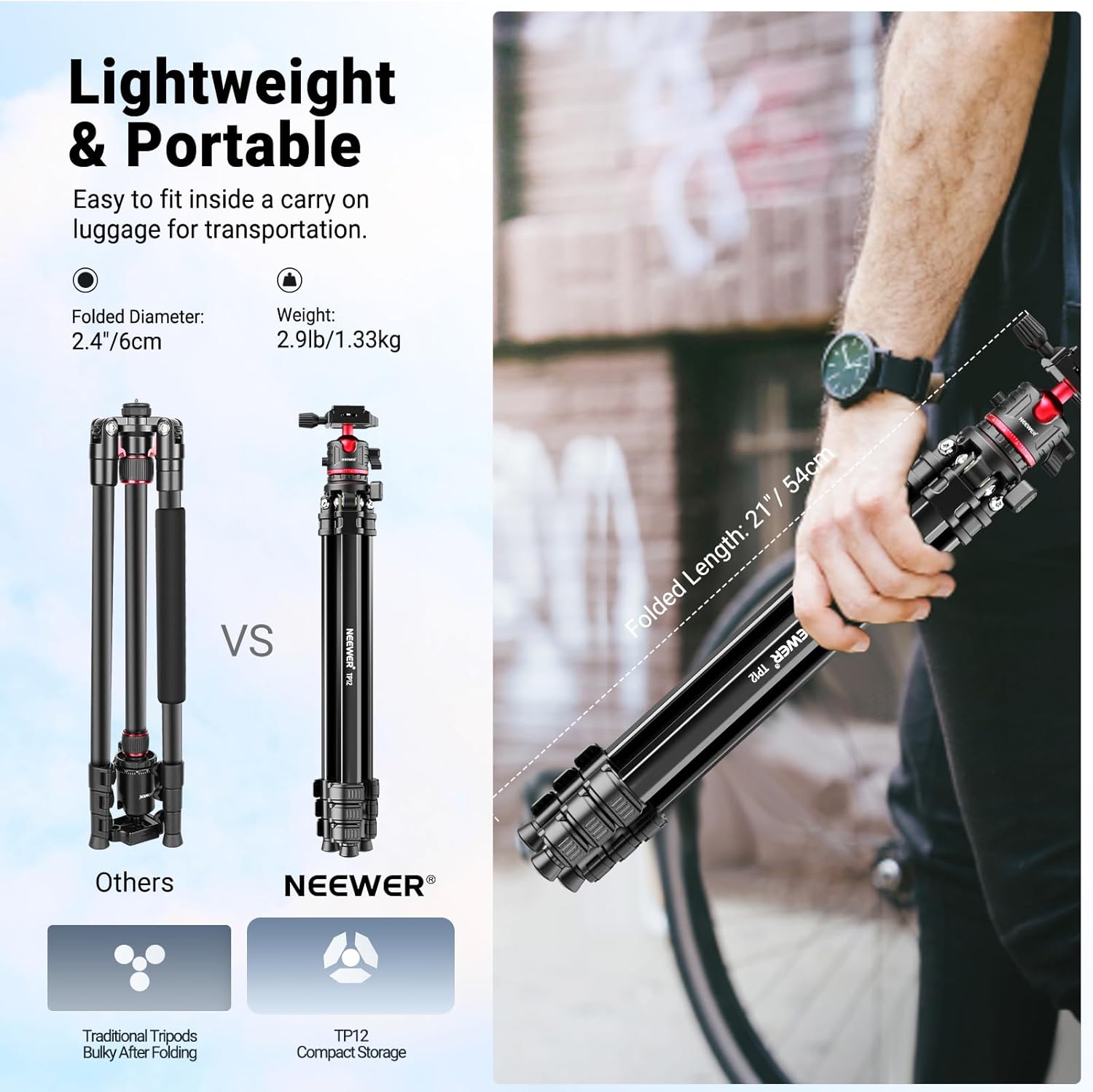
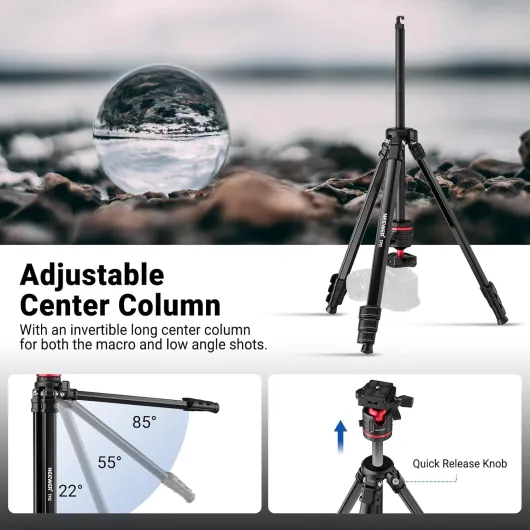
The TP12 is a 66.5" / 169 cm aluminum travel tripod with a ball head and Arca-type quick-release plate. Officially it supports up to 11 lb (5 kg), weighs about 2.9 lb (1.33 kg), and folds down to around 20" (51 cm) with a pretty narrow 2.4" leg bundle. In the box, you get the tripod with the ball head attached, an Arca-style plate, and a phone holder that screws on via the standard 1/4" thread.
The head is a low-profile ball head with a panoramic base. That means you can do 360° pans using the marked base, and drop the camera into a 90° slot for vertical shots. The clamp is Arca-compatible, so if you already use Arca plates or Peak Design-style plates, this will likely work out of the box. There’s also a 1/4" thread on the clamp for adding a small accessory like a light or mic arm if you want to get fancy.
The center column can go up and down for extra height and can be inverted for low-angle or macro shots. So if you’re into shooting plants, product photos on a table, or anything close to the ground, that’s doable without weird hacks. The tripod feet are rubber only, no spikes, and the leg locks are the standard flip locks, not twist locks. For some people that’s a plus (faster to set up), for others it’s a minus (more bulk, more potential things to catch on straps).
The phone holder is meant for modern big phones (iPhone, Galaxy, Pixel, etc.) and rotates easily between portrait and landscape. It’s not a premium metal clamp, but it’s far from the worst I’ve seen bundled. Overall, the package is pretty straightforward: no fancy carrying case or extra accessories, just the basics that actually matter for shooting.
Pros
- Lightweight and compact but still reasonably stable for DSLR/mirrorless and phones
- Arca-type head and plate work with common systems and include a usable phone holder
- Good build for the price with metal in the important structural parts
Cons
- Quick-release clamp feels less secure and confidence-inspiring than higher-end systems
- Less stable at full height with center column extended, especially in wind
Conclusion
Editor's rating
The NEEWER Basics TP12 is a solid budget travel tripod that does what most people need without pretending to be high-end. It’s light enough to carry around, stable enough for most DSLR and mirrorless setups (within reason), and the Arca-compatible head plus phone holder make it flexible for both camera and smartphone shooting. It’s not fancy, but it gets the job done in a way that feels more serious than its price tag suggests.
If you’re a hobby photographer, a content creator shooting with a phone or mid-weight camera, or someone who just wants a decent tripod for trips and occasional work, this is a good pick. You’ll appreciate the compact folded size, the quick setup with flip locks, and the fact that it doesn’t feel like it’s going to collapse under a normal load. However, if you’re super picky about your quick-release system, regularly use heavy lenses, or work in rough conditions, you might find the head a bit basic and the overall stiffness just okay rather than great. In that case, it’s probably worth spending more on a higher-end option.
Overall, I’d say the TP12 is good value for money and a sensible choice as a first tripod or a lighter travel backup. It’s not perfect, but for the price, it’s hard to complain too much as long as you know its limits and don’t abuse the load rating.