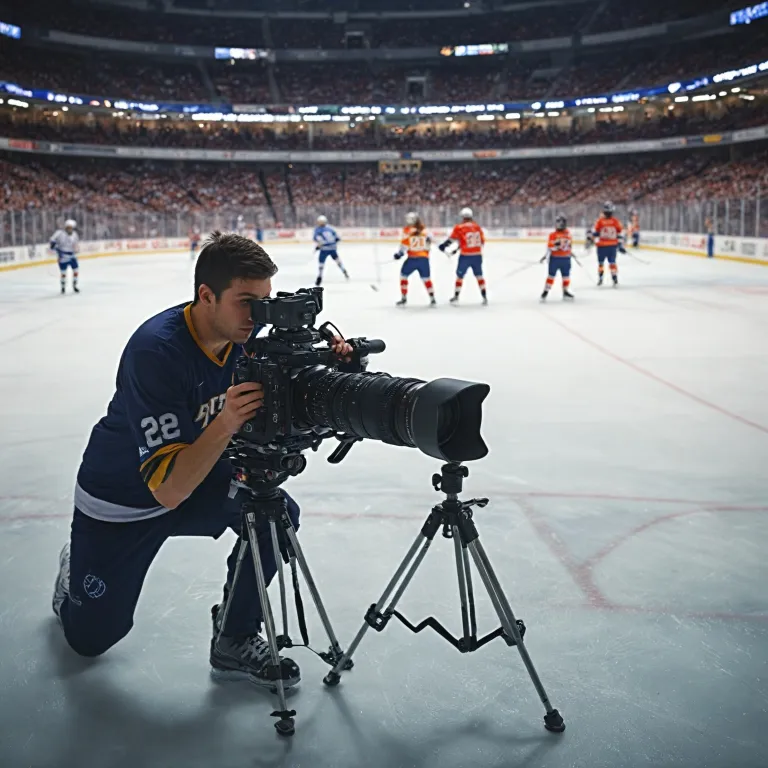
Building a solid foundation for camera settings in sports photography
Sports demand camera settings for sports photography that balance speed and control. When a photographer enters a stadium or arena, the camera, lens, and mode must work together as a single responsive system. Thoughtful settings let you capture the emotion of a game in real time.
Before photographing sports, start by choosing a camera lens suited to the action. A longer focal length helps you frame fast moving players, while a shorter lens keeps you close to the atmosphere around the game. Matching focal length choices to each type of sports action gives your sports photography a consistent visual style.
Next, set your camera settings around shutter speed and aperture to freeze moving subjects. A fast shutter is essential for action sports, because even a slight delay blurs a critical play. When you set a fast shutter speed, you will often need to increase ISO to maintain proper exposure in changing light.
Modern cameras offer an aperture priority mode that simplifies exposure decisions during continuous shooting. In aperture priority, you choose the depth of field and the camera adjusts shutter speed, which helps when you are shooting both indoor sports and outdoor matches. This mode keeps your attention on timing, focus, and composition rather than constant technical adjustments.
Finally, think about how burst mode and focus settings support your creative goals. Continuous shooting with burst mode lets a sports photographer capture several frames at the peak of action, increasing the chance that one image shows perfect expression and ball position. Careful camera settings for sports photography at this stage will save time later during post processing.
Balancing shutter speed, aperture, and ISO for sharp sports action
Shutter speed is the backbone of camera settings for sports photography, because it directly controls motion rendering. For most outdoor sports, a photographer should start around 1/1000 s shutter speed to freeze fast moving players and balls. When the action sports sequence becomes even faster, increasing to 1/1600 s or beyond will keep every detail crisp.
With such a fast shutter, you must open the aperture wider to let in enough light. A wide aperture like f/2.8 or f/4 reduces depth of field, which isolates the subject from the background and strengthens the storytelling in your photography. This shallow depth field effect is especially powerful when a single athlete stands out against a busy stadium.
Indoor sports create extra challenges because light levels drop while the game speed remains high. To maintain a fast shutter speed, you will often need to increase ISO significantly, sometimes to values that feel uncomfortable at first. Modern camera sensors handle noise better, so a slightly grainy image with sharp action is preferable to a clean but blurred frame.
Use aperture priority mode when light changes quickly, such as during evening matches or mixed lighting arenas. In this mode, you set the aperture and ISO, and the camera chooses the shutter speed that will correctly expose the scene. Keep an eye on the minimum shutter speed, and if it falls too low, increase ISO again to protect sharpness.
During continuous shooting, review a few frames on the camera screen to confirm that your chosen camera settings still freeze the sports action. If you see motion trails on moving subjects, raise shutter speed or adjust aperture and ISO accordingly. This disciplined approach to exposure will reward the sports photographer with consistent, professional results over time.
Optimizing autofocus, burst mode, and focal length for moving subjects
Fast and reliable focus is as important as shutter speed in camera settings for sports photography. Switch your camera to continuous autofocus mode so it tracks moving subjects throughout the play. Pair this with burst mode, and your photography will capture decisive moments that happen within fractions of a second.
Most modern cameras offer subject tracking that locks onto players during action sports. Select a focus area that covers the central part of the frame, then let the autofocus system follow the athlete as you pan with the game. This approach keeps the camera, lens, and focus working together while you concentrate on timing and composition.
Choosing the right focal length is another key decision for every sports photographer. A telephoto camera lens between 70 mm and 200 mm suits many field sports, while longer focal lengths help when you are restricted to distant sidelines. For indoor sports, a slightly shorter focal length can capture both the athlete and surrounding environment, preserving context in your sports photography.
Continuous shooting with a fast frame rate increases your chances of a perfect capture. When you hold down the shutter in burst mode, the camera records a sequence of images that show the full arc of the action. Later, during post processing, you can select the exact frame where the ball meets the racket or the runner crosses the line.
If you are evaluating new gear, detailed tests of advanced autofocus and burst performance, such as those in this guide to high performance 1 inch sensor digital cameras, will help you understand how different models behave under pressure. Over time, you will learn how each camera and lens combination responds to fast moving subjects in different sports. That familiarity allows you to set optimal camera settings quickly, even when the game pace suddenly accelerates.
Adapting camera settings for indoor sports and challenging light
Indoor sports push camera settings for sports photography to their limits because light is weaker and often inconsistent. Gymnasiums, arenas, and indoor pools mix different color temperatures, which can confuse automatic exposure and white balance. A thoughtful photographer anticipates these issues and adjusts camera settings before the game begins.
Start by setting a fast shutter speed that still freezes action, usually around 1/800 s or faster. Then open the aperture as wide as your lens allows, which both gathers more light and creates a pleasing depth of field that separates athletes from distracting backgrounds. When light remains insufficient, increase ISO until the histogram shows a healthy exposure without clipping highlights.
Because indoor sports lighting can flicker, use continuous shooting to capture multiple frames during each play. Some cameras include anti flicker modes that time the shutter to the lighting cycle, improving consistency across bursts. If your camera lacks this feature, shooting short bursts and checking exposure regularly will help you maintain quality.
In these environments, aperture priority mode can still be useful, but monitor the resulting shutter speed carefully. If the camera selects a shutter that is too slow for fast moving subjects, you will need to raise ISO or switch to manual mode with a fixed fast shutter. This balance between shutter speed, aperture, and ISO defines successful indoor sports photography.
After the game, careful post processing can reduce noise from high ISO settings while preserving detail in the sports action. Adjust contrast and clarity to emphasize the athlete’s movement, and correct any color shifts caused by mixed lighting. With practice, your camera settings for indoor sports will become second nature, allowing you to focus on storytelling rather than technical distractions.
Practical workflows for photographing sports from preparation to post processing
Effective camera settings for sports photography begin long before the first whistle. A disciplined sports photographer arrives early, studies the field, and chooses vantage points that suit the focal length range of the available lenses. This preparation ensures that your camera, lens, and settings align with the expected flow of the game.
Before shooting, set your base exposure using a fast shutter speed, a moderately wide aperture, and a starting ISO value. Then configure burst mode, continuous autofocus, and an appropriate drive speed for continuous shooting. Save these camera settings as a custom mode if your camera allows, so you can recall them instantly at future sports events.
During the game, anticipate where the next action will occur and pre focus on that zone. As players enter the frame, refine focus with continuous autofocus and track them while holding the shutter for short bursts. This method helps you capture peak sports action without filling your memory card with unnecessary frames.
After photographing sports, transfer your images and begin a structured post processing workflow. First, cull the sequence from each burst mode series, selecting the single frame that best captures the moment. Then refine exposure, contrast, and color, paying attention to skin tones and team colors that define the identity of each sports image.
Noise reduction becomes important when you increase ISO for low light games, especially indoor sports. Apply just enough noise control to smooth the background while preserving detail in faces, uniforms, and equipment. Over time, this consistent workflow from camera settings to post processing will elevate the overall quality of your sports photography portfolio.
Choosing and testing gear to support fast moving sports photography
The best camera settings for sports photography depend heavily on the capabilities of your camera and lens. A body with a fast burst rate, deep buffer, and reliable autofocus tracking gives the sports photographer more flexibility during intense action. Pairing this with a bright camera lens ensures that you can maintain a fast shutter speed without pushing ISO excessively.
When evaluating cameras, pay attention to how quickly they acquire focus on moving subjects and how well they maintain focus during continuous shooting. Test different autofocus modes, including subject tracking and zone focus, while photographing sports in real games or practice sessions. These tests reveal whether the camera will keep up with the pace of action sports.
Lens choice also shapes your creative options and technical settings. A zoom lens with a versatile focal length range, such as 70–200 mm, allows you to adapt quickly as the game shifts from wide scenes to tight portraits. Prime lenses with wider maximum apertures offer even faster shutter speeds and shallower depth of field, which can be valuable in low light or indoor sports.
For photographers exploring advanced options, detailed product analyses like this test of high resolution 8K digital cameras with dual lens systems can clarify how specific models handle demanding sports action. Even if you do not need every feature, understanding these capabilities helps you set realistic expectations for your own camera. Once you know the limits, you can tailor your camera settings to stay within the performance envelope.
Finally, practice switching between different camera settings profiles as the game evolves. For example, you might use one mode for wide pre game scenes, another for fast moving plays, and a third for post game portraits. This flexible approach ensures that your photography remains consistent and professional from the first warm up to the final whistle.
Refining creative style in sports photography through thoughtful settings
Beyond technical sharpness, camera settings for sports photography shape the emotional impact of each image. By adjusting shutter speed, aperture, and ISO, a photographer can choose between freezing every detail or allowing a hint of motion blur to convey speed. These creative decisions turn routine sports action into memorable storytelling.
Experiment with slightly slower shutter speeds during less critical moments of the game. Panning with moving subjects at around 1/250 s can keep the athlete sharp while blurring the background, emphasizing the sensation of speed in your photography. Reserve your fastest shutter settings for decisive plays where every detail must remain perfectly crisp.
Depth of field also influences how viewers read a sports image. A wide aperture isolates a single player, while a narrower aperture includes more of the team and environment, which can be useful for documenting the overall game narrative. By consciously choosing depth field characteristics, you will guide attention to the most important elements of the scene.
During post processing, refine contrast and color to match your intended mood for the sports photograph. Slightly deeper shadows can add drama to action sports, while softer tones may suit youth games or community events. Consistent treatment across a series helps establish a recognizable style that distinguishes your sports photography from others.
As you gain experience, review your favorite images and note the camera settings that produced them. Patterns will emerge in how you use shutter speed, aperture priority, ISO, and burst mode across different sports and lighting conditions. This reflection allows you to build personalized camera settings for sports photography that support both technical excellence and artistic expression.
Key statistics about camera settings for sports photography
- Typical shutter speed to freeze field sports action ranges between 1/1000 s and 1/2000 s in daylight conditions.
- Many sports photographers rely on continuous shooting rates of 10 to 20 frames per second for peak action coverage.
- Indoor sports often require ISO values between 3200 and 12800 to maintain fast shutter speeds with telephoto lenses.
- Telephoto focal lengths from 70 mm to 200 mm cover a large majority of professional field sports images.
- Wide apertures between f/2.8 and f/4 are commonly used to balance light gathering and depth of field control in sports photography.
Questions people also ask about camera settings for sports photography
What is a good shutter speed for sports photography ?
A good starting shutter speed for sports photography is around 1/1000 s, which usually freezes most running and jumping actions. For very fast sports or close views of the ball, many photographers increase shutter speed to 1/1600 s or even 1/2000 s. Always adjust based on the specific sport, distance, and available light.
Which camera mode is best for photographing sports ?
Aperture priority mode works well for many sports situations because it lets you control depth of field while the camera manages shutter speed. When lighting is stable and you need absolute consistency, manual mode with a fixed shutter speed and aperture can be more reliable. In both cases, combine the chosen mode with continuous autofocus and burst shooting.
How do I choose ISO for indoor sports photography ?
For indoor sports, start by setting the shutter speed and aperture you need, then raise ISO until the exposure looks correct. It is common to use ISO values between 3200 and 12800 in darker arenas, especially with longer lenses. Prioritize sharp, well exposed images, because modern noise reduction tools can manage moderate ISO noise during post processing.
What focal length is best for sports action photos ?
A zoom lens covering 70–200 mm is a versatile choice for many field and court sports. On smaller fields or when you can stand closer, shorter focal lengths around 50–135 mm may be sufficient. For large stadiums or restricted positions, longer telephoto lenses beyond 300 mm help you frame distant action tightly.
How can beginners practice sports photography skills ?
Beginners can practice by photographing local games, training sessions, or even friends playing in a park. Use these opportunities to experiment with shutter speed, aperture, and burst mode without pressure. Educational resources, including creative projects such as this retro camera building kit for young creators, can also build familiarity with camera controls and photographic thinking.