Summary
Analysis score
Average of the criteria rated below
Value for money: who actually benefits from the DZ13
Compact body, selfie mirror and simple controls
Battery, storage and everyday practicality
Build quality, reliability and known issues
Image and video performance: expectations vs reality
What the Praktica DZ13 promises on paper
Pros
- Very simple operation with automatic modes and easy-to-navigate menus
- Lightweight, compact body with selfie mirror and adjustable self-timer for group shots
- Full HD 1080p video and support for large microSD cards up to 512 GB, plus USB‑C charging
Cons
- Image quality and overall feel described by some buyers as similar to generic cheap cameras
- No built-in flash and likely heavy reliance on digital zoom, limiting low-light and zoom performance
- Plastic build with no water resistance and at least one report of a faulty display on arrival

Specifications
View full product page →| Brand | Praktica |
A budget compact camera with a big brand name on it
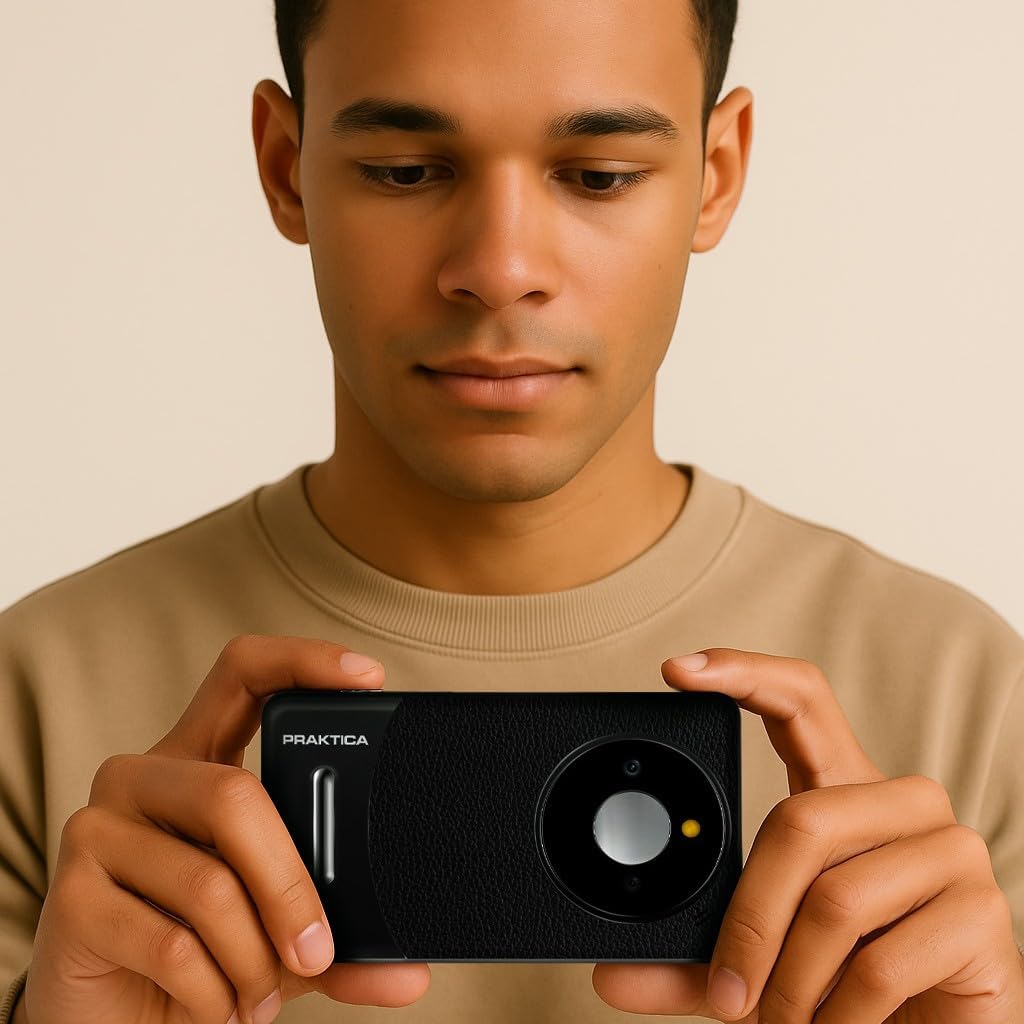
The Praktica DZ13 is a compact digital camera that targets people who want something more "camera-like" than a smartphone, without diving into complicated settings or spending a lot. It carries a well-known historic brand name, offers a 13 MP sensor, Full HD 1080p video and an 18x zoom, all in a 244 g plastic body with a 2.8" screen. On paper, it aims to be a simple travel or everyday camera that you can throw in a bag and forget about until you need it.
Public comments are mixed, though. The average rating sits around 3.3/5 over about twenty reviews, which clearly shows a split. Some buyers say it’s light, easy to use and gives clear enough pictures for casual use. Others are much harsher, describing it as feeling like a generic cheap camera with a big logo slapped on, and warning that image quality is nowhere near what the Praktica name might suggest to older photography fans.
That contrast sets the tone: this is clearly a budget product, not a serious enthusiast camera. The spec sheet confirms that impression: small 1/2.3" CMOS sensor, 13 MP stills, JPEG-only, automatic exposure and white balance, and no built-in flash. The focus is on point-and-shoot simplicity, selfie options, and Full HD video with a built-in microphone. No RAW, no manual exposure, no fancy connectivity like Wi‑Fi or Bluetooth.
In my opinion, anyone looking at the DZ13 needs to treat it as a straightforward snapshot tool, not as a replacement for a decent phone camera or a real zoom compact with optical zoom. The interest lies in its separate form factor, big storage support via microSD (up to 512 GB claimed), and the simple controls. If expectations stay in that range, it can make sense; if you expect "old Praktica" quality, the reviews suggest you’ll be disappointed.
Value for money: who actually benefits from the DZ13
The Praktica DZ13 sits in the budget compact camera category. The exact selling price isn’t quoted here, but the specifications and user comments clearly place it at the low end of the market. For that segment, you get 13 MP stills, Full HD video, a wide-angle lens with 18x digital zoom, a selfie mirror with timer, USB‑C charging, and support for very large microSD cards. The package even includes a pouch and wrist strap, which some rivals skip.
The mixed user feedback is crucial for judging value. Positive reviews point to ease of use, light weight and clear enough pictures for simple needs. For someone who struggles with complex menus or just wants a separate little camera that isn’t a phone, this simplicity has real value. On the other side, negative reviewers say it feels like a generic cheap camera and that the quality doesn’t match the Praktica name. One goes as far as saying it’s only suitable if you "don’t want quality photos". That’s a harsh but clear warning for anyone expecting performance beyond a basic level.
In my opinion, the DZ13’s value depends entirely on expectations. If you already own a recent mid-range or high-end smartphone, this camera is unlikely to beat it in terms of image quality, low-light performance, or convenience. The absence of a flash and any advanced features makes that even more likely. However, if you want a simple, non-intimidating camera for a child, an older relative, or as a no-stress travel backup, then the low price, easy menu, and separate form factor can make sense.
Overall, I’d say the DZ13 offers decent but limited value. It’s not a scam, but it’s also not a hidden gem. The brand name might raise expectations that the hardware and image quality don’t fully meet, and several comments reflect that disappointment. Treated as a straightforward budget gadget rather than a serious camera, it finds its place. For anyone even slightly serious about photography, or for those happy with their current phone camera, stretching the budget towards a better compact or simply sticking with the phone will probably be a smarter move.
Compact body, selfie mirror and simple controls
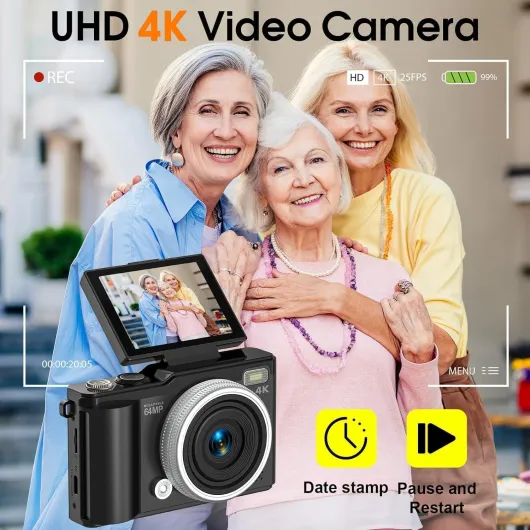
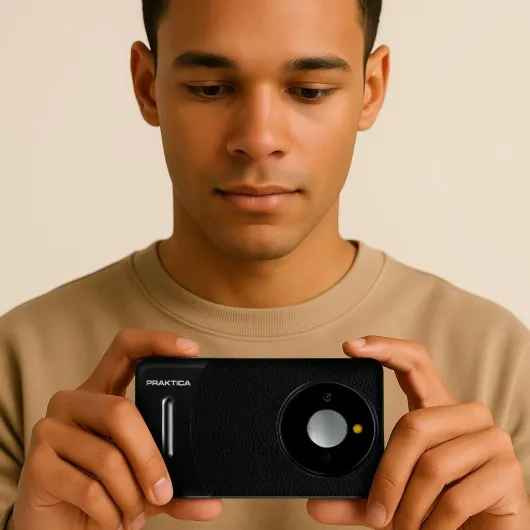
On the design side, the Praktica DZ13 goes for a small, lightweight and pocketable approach. At around 244 g, it is lighter than most interchangeable-lens cameras and even some larger smartphones with cases. The form factor is classic compact: rectangular body, lens on the front, 2.8" LCD on the back, and basic buttons to navigate the menus. One review simply calls it "light in my bag" and "easy to use", which fits the idea of a straightforward design with no clutter.
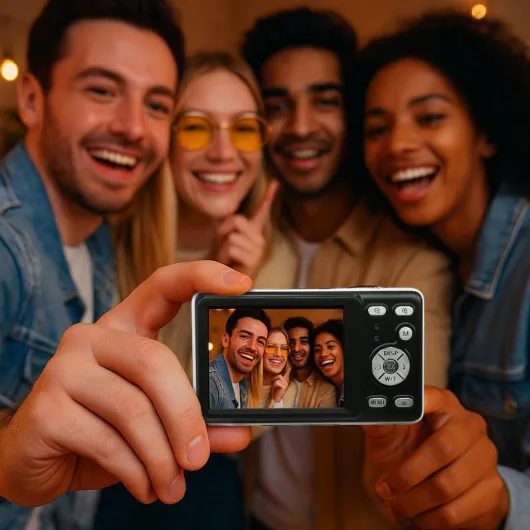
A specific feature that stands out is the built-in selfie mirror near the lens, combined with an adjustable self-timer (2, 5 or 10 seconds). This is clearly aimed at people who want to take selfies or small group shots without relying on a front-facing screen. There is no flip or articulating display, so the mirror is the workaround. For vlogging or framing yourself in video, that’s a modest but practical solution compared to guessing the framing blindly.
The 2.8" LCD is not huge by modern standards, but typical for entry-level compacts. There’s no electronic viewfinder; the LCD is the only framing and playback option. Comments mention that the menu is easy to navigate and settings are easy to change, which suggests a clear on-screen layout and a limited number of options, so you don’t get lost in submenus. That matches the rest of the spec sheet: simple modes, automatic exposure, and a few toggles for resolution and quality.
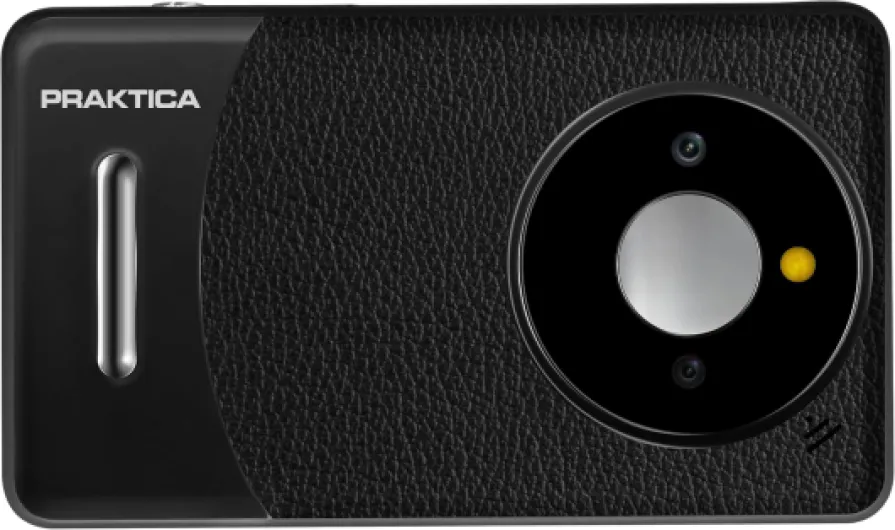
In terms of style, the camera is fully black, with a plastic enclosure and a slightly improved grip according to the product description. It doesn’t pretend to be premium; it looks like a straightforward compact aimed at practicality. In my opinion, if you want something discreet that doesn’t draw attention and just does the job of "a small camera", the DZ13 fits that brief. If you’re looking for a more refined body with metal parts, rotating screen or weather sealing, this is not it, and you’d need to move up a few price tiers.
Battery, storage and everyday practicality
The Praktica DZ13 runs on a 1200 mAh lithium-ion battery, rechargeable via USB‑C. That capacity is modest but in line with what you find in many compact cameras of this size. There’s no official number of shots per charge listed here, but with a small 2.8" LCD, a modest sensor and 1080p video, it should theoretically handle a normal day of light shooting for casual users, as long as you’re not recording long videos back-to-back. The USB‑C port is a plus: you can top it up with the same charger or power bank you use for many phones.
The camera supports microSD cards up to 512 GB, which is generous for this category. That allows for thousands of 13 MP photos and many hours of 1080p video, especially if you use standard JPEG quality. For someone travelling or recording events, the ability to keep one large card in and not worry too much about space is practical. The connection to computers is via USB as well, so you can transfer files without taking the card out, though using a separate card reader will still be faster.
In the published comments, nobody goes into detailed numbers about battery longevity, but there is no wave of complaints about the camera dying too quickly either. That usually indicates that, for the casual target audience, the autonomy is acceptable. The weight of 244 g including battery is also reasonable for throwing it in a bag or pocket. The included pouch and wrist strap help keep it handy and reduce the chances of dropping it.
In my opinion, the DZ13’s battery and storage setup is functional but unspectacular. The capacity isn’t huge, but the efficient hardware and small screen should keep consumption moderate. The real advantage lies in USB‑C charging and the big microSD ceiling, which together make it friendly for travel and everyday use. Power users filming long sessions or shooting hundreds of photos in one go would be better served with a camera that offers a larger battery, spare battery options, and clearer endurance figures.
Build quality, reliability and known issues
The Praktica DZ13 uses a plastic enclosure, which is standard in this price range but clearly positions it as a budget camera. There is no water resistance, no weather sealing, and no mention of reinforcement around the lens or screen. At 244 g, it’s light enough that a fall might be less catastrophic than with a heavier device, but it still needs to be treated with care. The included pouch and wrist strap are there for a reason: this is not a rugged camera.
Among the reviews, one verified buyer describes a specific issue: after powering on, the screen showed six lines across the display. They returned the camera and mention their disappointment. That kind of defect sounds like either a panel problem or a connection fault. It appears as an isolated case in the comments, but it does raise questions about quality control and long-term reliability, especially when combined with other remarks that the product feels similar to generic unbranded cameras.
On the positive side, there aren’t many reports of mechanical failures, broken doors, or dead batteries after a short time. The overall rating of 3.3/5 suggests that while some buyers are unhappy, others feel the product meets their expectations as a cheap, lightweight camera. One user calling it "cheap and cheerful" basically sums up the durability expectations: it works, but nobody expects it to last a decade of intense use. The plastic body will likely pick up scratches over time, and without sealing, dust and moisture exposure should be avoided.
In my opinion, the DZ13’s durability profile is exactly what you’d assume from a low-cost, plastic compact made in China: acceptable for casual, careful use, but not something to throw around or expose to tough conditions. If you want a camera for kids, rough travel, or outdoor sports, a rugged compact or action camera is a better fit. If you just want something to bring on city trips or family events and you’re reasonably careful, the DZ13 should cope, but relying heavily on brand heritage as a guarantee of robustness would be optimistic.
Image and video performance: expectations vs reality
On paper, the Praktica DZ13 offers 13 MP stills and 1080p/30 fps video. That’s enough resolution for social media, small prints and casual viewing on TVs or laptops. The dual Sony CMOS sensors and 1/2.3" size are standard for low-cost compacts. In good daylight, such a sensor should, in theory, handle basic snapshots without major issues. JPEG-only output and automatic exposure mean the camera does all the processing, with little room for recovery if exposure or white balance are off.
Where things get more nuanced is user feedback. One 5-star review says the camera delivers a "good clear picture" and praises its ease of use and portability. Another positive comment mentions that it’s the only one out of several attempts that felt easy and light enough for everyday carrying. These opinions suggest that for non-demanding users, especially those just wanting something simple to point and shoot, the performance is "good enough" when lighting is decent.
On the other side, a 1-star reviewer is very critical, comparing the DZ13 to "thousands of unbranded 64 MP cameras" often seen online, and stating that this camera is only suitable for people who don’t care about quality photos. They point out the menu is easy but clearly feel the image quality and overall feel do not match the Praktica heritage. Another buyer calls it "cheap and cheerful" and bluntly states "David Bailey NOT", basically saying that it works but won’t satisfy anyone with higher expectations.
For video, the spec sheet claims Full HD 1080p at 30 fps with a built-in microphone. There are no claims of advanced stabilisation or external mic input, so handheld video will likely depend heavily on how steady the user is. In my opinion, the DZ13’s performance profile is simple: it should be fine for daylight snapshots, basic travel clips and casual family moments. If you’re picky about sharpness, low-light performance, or dynamic range, there are clear signals in the reviews that this camera feels like a budget generic compact despite the brand name, and a decent modern smartphone will probably outperform it in many situations.
What the Praktica DZ13 promises on paper
The Praktica DZ13 is sold as a compact all-in-one digital camera for travel and general photography. It offers a 13 MP photo resolution from dual Sony CMOS sensors, a 1/2.3" sensor size, and Full HD 1080p video recording at 30 fps in MP4 format. The aspect ratio is locked to 16:9, which is fine for video and wide photos, but less flexible than cameras that also offer 3:2 or 4:3. Files are JPEG only, with selectable quality levels (Fine, High), so no RAW for heavy editing.
The lens is described as a wide-angle unit with up to 120° field of view and "18x zoom". The spec sheet calls it 18x digital zoom rather than optical, yet another line mentions 18x optical zoom, which is confusing. Given the price segment and similarities to many no-name cameras, in my opinion this "18x" is largely digital enlargement on top of a wide starting view, not a true long-range optical zoom. That means zooming heavily will likely hurt image quality, especially in low light.
Core shooting modes stay basic: Auto photo, Selfie, and Video. Exposure and white balance are automatic, and autofocus uses contrast detection in AF-A mode, which is standard for this kind of device. There’s no mention of optical stabilisation, only digital zoom, so users might need a steady hand or support for sharper images, especially when zoomed. The camera also lacks a built-in flash, which is rare even at this price and will limit indoor and night shots.
The camera connects and charges via USB-C, uses microSD cards up to a claimed 512 GB, and comes with a 1200 mAh lithium-ion battery. Box contents are straightforward: camera, USB‑C cable, pouch, wrist strap, and manual. Overall, the feature set is basic but covers the essentials for casual photos and Full HD video. In my opinion, the DZ13 is clearly aimed at people who want a separate camera that’s easy to understand, not photographers chasing high performance or creative control.
Pros
- Very simple operation with automatic modes and easy-to-navigate menus
- Lightweight, compact body with selfie mirror and adjustable self-timer for group shots
- Full HD 1080p video and support for large microSD cards up to 512 GB, plus USB‑C charging
Cons
- Image quality and overall feel described by some buyers as similar to generic cheap cameras
- No built-in flash and likely heavy reliance on digital zoom, limiting low-light and zoom performance
- Plastic build with no water resistance and at least one report of a faulty display on arrival
Conclusion
Analysis score
The Praktica DZ13 is, in my opinion, a basic compact camera with a big name but modest ambitions. The spec sheet says it all: 13 MP photos, 1080p/30 video, automatic exposure and autofocus, no flash, small 2.8" screen, and a plastic body. It’s built for simplicity and portability, not for high-end image quality or creative control. The selfie mirror and timer, USB‑C charging and large microSD support are the most practical highlights.
User feedback confirms this picture. Some buyers are happy: they call it light, easy to use, and good enough for clear everyday photos. Others are openly disappointed and compare it to generic cheap cameras, saying that anyone hoping for the "old Praktica" experience will be underwhelmed. The 3.3/5 average rating reflects a split between people with low, pragmatic expectations and those who expected more from the brand and the marketing.
In short, the DZ13 suits casual users who want a simple, inexpensive camera for holidays, family events or as a device for someone not comfortable with smartphones. It also makes sense if you just want a separate camera you don’t mind tossing in a bag. People who should skip it include anyone serious about photography, anyone expecting a clear step up from a decent smartphone, and anyone who cares a lot about low-light performance or build quality. For them, better compacts or even just sticking with a good phone camera will deliver more satisfying results.