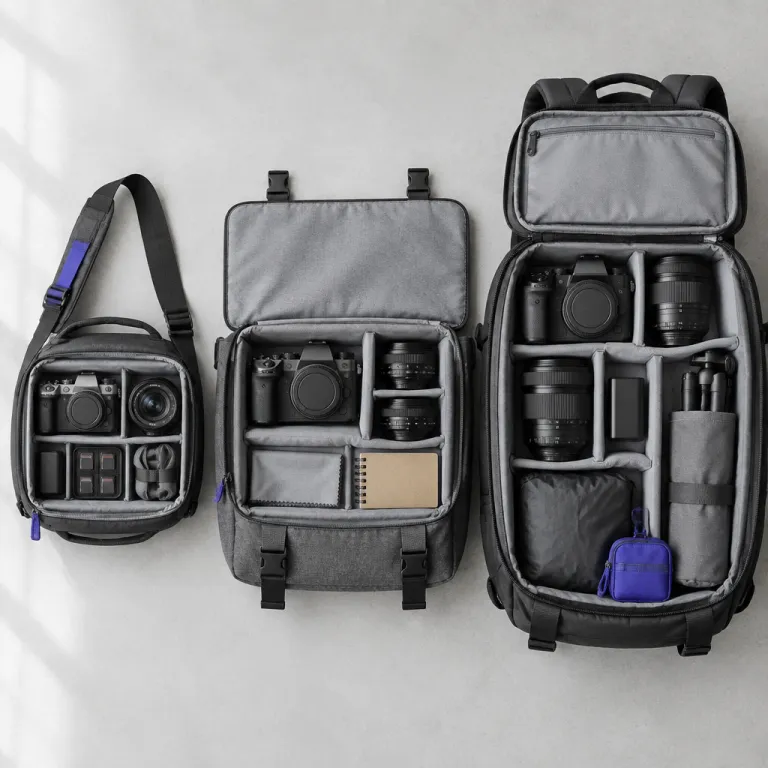
How to choose a camera bag that matches your real kit
Learning how to choose a camera bag starts with being brutally honest about your actual camera gear, not the fantasy kit you might buy someday. For a vlogger or content creator, that usually means one mirrorless camera, a couple of camera lenses, a compact mic, maybe a tiny light, and a laptop for editing on the go. If you build your choice around this real kit and how you carry it, you avoid the classic mistake of hauling a huge camera backpack that never leaves your closet.
Think first about the core trio of bag types — sling bag, camera backpack, and shoulder bag — because each one solves a different problem for cameras and lenses. A camera sling gives you fast access to a single body with a lens attached, while a backpack favors comfort and space for multiple camera bags or packing cubes, and a messenger style shoulder bag balances everyday carry with quick access in cities. The best camera setup for you is the one that lets you actually shoot more, not the one that wins a spec sheet review.
Lay your camera, lenses, mic, batteries, and cables on a table, then measure the rough size and weight of the whole kit. Add the inch measurement of your laptop if you edit away from home, because a 13 inch laptop needs a different laptop sleeve than a 16 inch laptop in most camera bags. Once you know the real space you need to carry, you can buy a camera bag that fits with a little room to grow instead of chasing the biggest bag on a top ten list.
Sling bags: fast access for solo shooters and street video
A camera sling bag is built for speed, which matters when you film yourself crossing a street or grabbing B roll before the light changes. Worn across your back and swung forward in one motion, a good sling lets you unzip, grab the camera with a lens attached, and start recording in seconds. That fast carry style is why many creators treat a compact sling as their best camera companion for daily shooting.
For vlogging, a 7 to 11 inch deep compartment usually fits a mirrorless camera, two small camera lenses, and a compact mic, while front pockets handle batteries and cards. Look for a padded laptop sleeve only if you truly edit on a small tablet or very slim inch laptop, because cramming a full size laptop into a tiny sling ruins comfort and balance. Side access and front opening designs both work, but side access is faster when you wear the sling high on your back and rotate it forward.
Comfort still matters with a sling bag, especially when you carry cameras for hours in a city. Wide straps, some structure in the back panel, and a stabilizer strap keep the weight from digging into your shoulder as you move. If you often shoot in light rain, pair a weather resistant sling with a properly sealed lens and read a detailed guide on what dust and moisture resistance actually protects against so you do not overestimate what your bag can handle.
Backpacks: capacity, comfort, and travel with bigger camera kits
A camera backpack makes sense when your camera gear grows beyond one body and two lenses, or when you hike, travel, or commute with a laptop every day. The trade off is clear ; you gain space and comfort for heavier kits, but you lose the instant access of a small sling bag or shoulder bag. That is why many creators end up with both a compact sling and a larger camera backpack instead of forcing one bag to do everything badly.
When you review backpack options, focus on how the internal space is divided rather than just the quoted litre size. A smart layout keeps a camera with a lens attached near the top, with padded dividers for extra camera lenses, a dedicated laptop sleeve for your inch laptop, and side pockets for a small tripod or gimbal. Back panel or front opening access can feel slower than side zips, yet they protect cameras from pickpockets in crowded transit and keep dirt off your harness when you lay the bag down.
For travel, check that the camera backpack fits under an airline seat or in an overhead bin, because a bag that fails carry on rules is useless for flights. Waist belts and sternum straps spread weight when you carry cameras, lenses, and a laptop for hours, which matters more than any marketing claim about the best camera protection. If you often shoot in harsh weather, pair a rain cover with proper lens protection and read a clear guide on what actually protects your lens versus what just costs money.
Messenger and shoulder bags: everyday carry for hybrid work and content
A messenger style shoulder bag suits creators who move between meetings, cafés, and quick shoots, carrying both work essentials and camera gear. The flat profile slides under a café table, while the top flap or zip gives you front opening access to a camera with a lens attached without taking the bag off. For many hybrid workers, this is the most realistic answer to how to choose a camera bag that fits both a laptop and a small kit.
Look for a padded laptop sleeve that matches your exact inch laptop, because a loose fit lets the computer slam into camera lenses when you walk. Internal dividers should create a snug bay for the camera body, one or two lenses, and maybe a compact mic, leaving separate space for a notebook, charger, and headphones. If the bag is too deep, your gear sinks and you end up digging, which slows you down more than any lack of fancy features.
Comfort with a shoulder bag depends on strap width, padding, and how high the bag rides on your torso. A wide strap with a sliding pad spreads weight better when you carry cameras and a laptop all day, while a narrow strap cuts into your shoulder. For city shooting, a low profile messenger that does not scream expensive camera bags is often safer than a huge branded camera backpack with obvious image credit tags on the outside.
Practical buying strategy: capacity, comfort, and what you really carry
Once you know whether sling, backpack, or messenger fits your style, refine how to choose a camera bag by planning for your next realistic lens, not a fantasy studio. A bag that barely fits your current camera and lenses leaves no space for a faster prime or compact zoom, which forces you to buy again sooner. Think in layers ; a small sling for daily shooting, plus a larger camera backpack or shoulder bag for travel and bigger jobs.
Check the stated size against your actual kit by measuring your camera with the lens attached, then adding a couple of centimetres for padding. If you edit on the road, confirm that the laptop sleeve truly fits your inch laptop, not just a generic laptop, because some sleeves are too tight for thicker models. Pay attention to empty bag weight as well, since a heavy shell eats into what you can comfortably carry before adding cameras, lenses, and accessories.
For creators in the United States, remember that what you pay for camera bags and other gear is shaped by import rules and taxes. Reading a clear explanation of how camera equipment import tariffs by country affect real prices helps you decide whether to buy locally or from abroad. In the end, the best camera bag is the one that disappears on your shoulder while you focus on framing, audio, and the story in front of your lens.
FAQ
How big should my first camera bag be for vlogging ?
For most solo creators, a compact sling or small shoulder bag that fits one mirrorless camera with a lens attached, one extra lens, a mic, and spare batteries is enough. Aim for a depth of around 7 to 11 inch inside, which covers most small zooms and primes. Oversized bags feel impressive at home but stay there once you realize how heavy they are to carry all day.
Do I really need a camera backpack if I mostly shoot in cities ?
If you usually film short clips, walk a lot, and rarely carry more than one camera and two lenses, a sling bag or messenger is often more practical. A camera backpack makes sense when you add a laptop, tripod, and extra audio gear, or when you travel and need to keep everything in one place. Many city shooters end up with a small sling for daily use and a larger backpack only for trips.
What is the safest way to carry a laptop with my camera gear ?
The safest setup is a bag with a dedicated padded laptop sleeve that keeps the computer against your back and away from camera lenses. In a backpack, this sleeve should be separate from the main camera compartment, while in a messenger it should sit behind the dividers. Avoid dropping a bare laptop into the same space as your camera, because hard edges can damage both body and lens.
Is a sling bag secure enough for travel and crowded places ?
A well designed camera sling can be secure if it rides high on your back, has lockable zippers, and uses tough fabric. In very crowded areas, rotate the sling to your chest and keep a hand on the front opening to protect your camera. For long travel days with more gear, many people prefer a camera backpack with back panel access, then use a smaller sling at the destination.
Should I buy one large camera bag or two smaller ones ?
Most creators are happier with two bags ; a small sling or shoulder bag for everyday shooting, and a larger camera backpack for travel or bigger projects. One oversized bag that tries to do everything usually ends up being too heavy for casual use and too slow for fast access. Matching bag size to your typical outing, not your maximum kit, keeps you shooting more and carrying less.