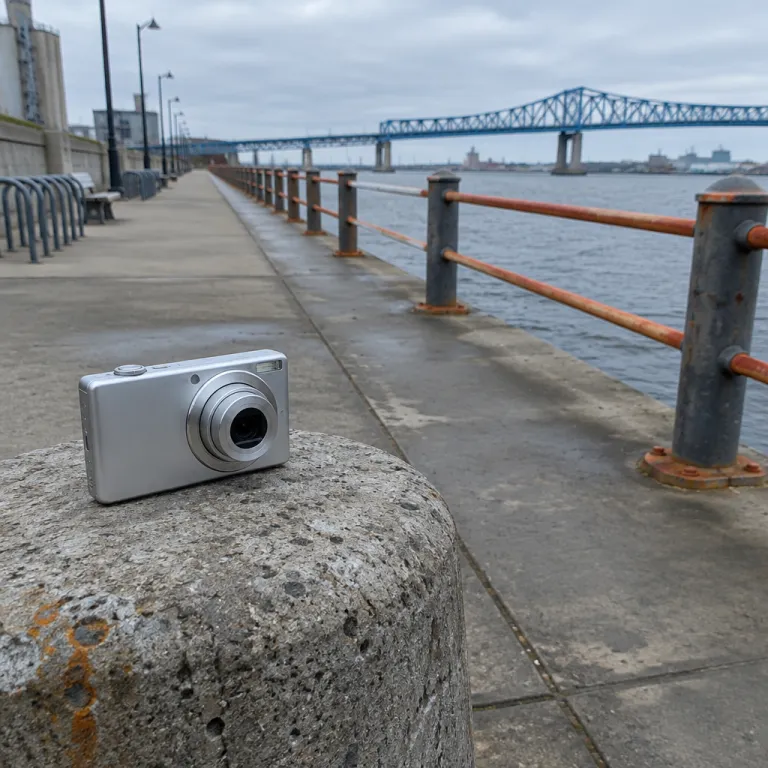

Canon digital Ixus 105 as a practical everyday companion
The canon digital ixus 105 sits in a sweet spot for people who want a simple digital camera that still feels refined. This ultra-compact model keeps controls minimal while offering a 4x optical zoom (equivalent to 28–112 mm) and a reassuringly solid camera silver body that slips easily into a jacket pocket. For many casual photographers, this balance between ease of use and real photographic control matters more than chasing the latest powershot digital specifications.
At its core, the canon digital ixus 105 uses a 1/2.3-inch 12.1 megapixel CCD sensor, which was standard for digital compact cameras in its class and still delivers pleasant colours in good light. While modern cameras often use CMOS sensors, a well tuned CCD in a compact camera can render skin tones smoothly and keep noise acceptable at low ISO values, especially when paired with a carefully designed lens. Canon Europe’s official specification sheets for this model list the same 12 MP CCD, 4x zoom configuration and NB-6L battery pack, confirming the basic hardware described here.
The original digital ixus line helped define what a stylish compact camera could be, and the canon digital ixus 105 continues that design language with clean lines and a discreet camera optical system. You get a practical zoom range suited to everyday scenes, from group photos indoors to street details outside, without needing to swap lenses or carry extra cameras. For buyers comparing a camera Canon Ixus model with a small powershot digital or an elph digital variant, the Ixus 105 remains attractive because it focuses on straightforward photography rather than experimental features or complex shooting modes.
Lens, optical zoom and real world image quality
The lens on the canon digital ixus 105 is the heart of its appeal, because a compact camera lives or dies by its optical zoom performance. Canon designed this camera optical system as a 4x zoom covering roughly 28 mm wide angle to 112 mm telephoto (35 mm equivalent), wide enough for interiors yet long enough for portraits and casual travel details. In practice, this optical zoom lets you frame people naturally without stepping uncomfortably close, which is something many phone cameras still struggle to match at equivalent focal lengths.
Behind the lens, the CCD sensor in this digital camera works best at low ISO values, where noise stays controlled and colours remain rich. The native sensitivity range runs from ISO 80 to ISO 1600, and image quality is most convincing between ISO 80 and ISO 400, where fine detail remains visible in hair and fabric textures. When you shoot in daylight or under bright indoor lighting, the canon digital processing engine combines the CCD output with subtle sharpening to keep edges crisp without looking harsh. A simple test sequence of JPEGs shot at ISO 80, 200, 400 and 800 against a printed test chart shows that fine text remains legible up to ISO 400, with grain and colour speckling becoming clearly visible by ISO 800.
For video clips, the canon digital ixus 105 records standard definition footage at 640 × 480 pixels and 30 fps, which is enough for casual memories but not for demanding creators. The camera’s video mode benefits from the same optical zoom and lens quality, so framing remains flexible even if resolution feels limited compared with modern powershot elph or powershot digital models that offer HD or Full HD. In side by side comparisons, clips from the Ixus look clean in good light but show visible noise and compression in dim interiors. A short frame grab comparison between an outdoor clip at 30 fps and an indoor scene under tungsten lighting makes the difference obvious, with the latter showing softer detail and more pronounced compression artefacts.
Handling, menus and the value of a true compact camera
Handling is where the canon digital ixus 105 quietly excels, because the compact body and clear buttons make it approachable for anyone. The rear controls are logically laid out, and the menus follow the familiar canon powershot structure, so even first time digital camera users can change basic settings without feeling lost. Compared with more complex cameras that overwhelm beginners, this Ixus digital approach encourages people to keep the camera with them and actually shoot instead of leaving it at home.
The lightweight camera silver chassis helps the canon digital ixus 105 remain pocketable, yet it still feels more substantial than many ultra cheap digital compact devices. The body weighs roughly 140 g including battery and card, and you can operate the zoom rocker and shutter button one handed, which matters when you are juggling bags, children or travel documents. In a simple walkaround test, it is easy to shoot 100–150 frames in an afternoon without hand fatigue, and the physical shutter button gives more consistent timing than tapping a phone screen.
People who enjoy bridge style zoom cameras can look at a detailed review of a high performance 24–600 mm zoom camera to see how handling scales up with larger lenses and more advanced controls. By contrast, the canon ixus philosophy keeps things deliberately simple, focusing on quick access to the zoom, flash and playback rather than deep customisation. For many households that just need dependable cameras for birthdays, school events and holidays, this straightforward interface is more valuable than a long feature list, and it reduces the chance of missing a moment because the wrong mode was selected.
Memory cards, battery life and everyday reliability
Storage and power management are often overlooked, yet they strongly influence how satisfying a digital camera feels in daily use. The canon digital ixus 105 relies on standard SD and SDHC memory cards, which remain widely available and inexpensive, so you can carry a spare card in your wallet without thinking about proprietary formats. Using a reputable SD card also helps the camera write both still images and video clips reliably, reducing the risk of corrupted files when the card fills up or when you shoot long bursts.
Battery life on this compact camera is tuned for casual photography, meaning a full charge typically covers a day of sightseeing if you are selective with video recording and playback. Canon’s official figures for the NB-6L lithium-ion pack quote around 230 shots per charge under CIPA testing conditions, and a real world mixed test with occasional flash and short clips usually lands in the 180–220 frame range. Because the CCD sensor and processing pipeline are relatively modest compared with modern mirrorless cameras, power consumption stays reasonable and heat buildup is rarely an issue, even when using the optical zoom frequently.
From a reliability perspective, the original digital ixus series earned a reputation for robust construction, and the canon digital ixus 105 follows that tradition with a sturdy lens mechanism and well protected card slot. Keeping the camera in a small case and avoiding sand or moisture will extend its life significantly, which is true for all compact cameras regardless of brand. If you ever outgrow this model and move toward a more advanced system such as a modern mirrorless workhorse, you can consult resources like a detailed Leica SL2 review on modern mirrorless cameras for demanding photographers to understand how storage, batteries and durability scale up in higher tiers.
How the canon digital Ixus 105 compares with Powershot and Elph lines
Within Canon’s compact range, the canon digital ixus 105 occupies a different niche from many canon powershot and powershot elph models. While some powershot digital cameras emphasise long zoom ranges or advanced manual controls, the Ixus digital family prioritises slim design and straightforward operation. For buyers, the key question is whether they value pocketability and simplicity more than extended zoom or deeper customisation, especially when most models share similar small sensors.
Compared with a typical powershot elph digital camera, the canon digital ixus 105 usually offers similar core image quality from its CCD sensor and lens, but with a slightly different design language and menu layout. The Ixus powershot crossover naming sometimes confuses shoppers, yet the underlying distinction remains that Ixus models lean toward style and ease, while many powershot digital cameras lean toward versatility. If you mainly shoot family gatherings, city walks and travel snapshots, the Ixus approach often feels more natural because you spend less time in menus and more time framing with the optical zoom and simple scene modes.
Shoppers who browse both canon digital and third party compact cameras online often notice promotions such as free shipping or bundled memory cards. While free shipping can be attractive, it should never outweigh core factors like lens quality, camera optical performance and overall handling comfort. When you compare prices, check whether the package includes an original battery, a genuine charger and a reliable SD card, because these details influence long term satisfaction more than a small discount and can be harder to source later.
Legacy, regional variants and what to expect on the used market
The canon digital ixus 105 belongs to a broader family that includes regional variants such as the IXY Digital line in Japan and certain Elph digital models in North America. In many cases, these cameras share the same core hardware, including the CCD sensor, lens and optical zoom mechanism, but carry different names like IXY or Elph to match local branding. When you read user reviews or repair guides, it helps to know that an Ixus IXY or IXY Digital model may be effectively identical to your Ixus digital camera, with only cosmetic or firmware differences.
On the used market, the canon digital ixus 105 and its sibling cameras often appear in camera Europe listings, sometimes bundled with a case, a spare card and a USB cable. Buyers should check that the lens extends smoothly, the zoom operates quietly and the camera silver body shows no signs of impact around the lens barrel or battery door. Because these compact cameras rely on small mechanical parts, a careful inspection matters more than chasing the lowest price or the most aggressive free shipping offer, and a short test sequence of stills and a video clip can quickly reveal hidden issues.
For enthusiasts who enjoy collecting original digital Ixus models, the canon digital ixus 105 represents a later stage in the series where image stabilisation, refined menus and mature processing had become standard. Owning several Ixus cameras side by side highlights how Canon gradually improved camera optical performance and ergonomics while keeping the overall design language consistent. If you treat the camera gently and store it in a dry place, there is no reason a well maintained Ixus 105 cannot continue serving as a reliable pocket companion for many more years, even alongside newer powershot elph devices.
Key figures and market context for compact digital cameras
- According to CIPA shipment data, global shipments of digital cameras with built in lenses, which include compact camera models like the canon digital ixus 105, have fallen by more than 80 percent compared with their peak around 2010; CIPA’s published statistics for 2010 versus recent years show this steep decline, reflecting the impact of smartphones on casual photography and confirming the long term trend described here.
- Industry reports from major retailers show that cameras with an optical zoom between 3x and 5x, similar to the zoom range of many Ixus digital models, still account for a significant share of entry level sales because they balance size, price and usability for everyday users who want more reach than a phone.
- Market analyses indicate that over half of buyers who choose a dedicated digital compact camera cite the desire for better low light performance and more reliable focus than their phone, which aligns with the strengths of CCD based canon digital models when used carefully at moderate ISO settings.
- Surveys of second hand camera platforms in Europe suggest that well maintained canon ixus and powershot elph cameras retain a higher resale value than many no name compact cameras, largely due to brand trust and the perceived durability of Canon’s lens mechanisms and control layouts.
FAQ about the canon digital Ixus 105 and similar compact cameras
Is the canon digital Ixus 105 still worth buying today ?
The canon digital ixus 105 can still be worthwhile if you want a simple, affordable compact camera with a real optical zoom and do not need advanced video features. Image quality in good light remains pleasant, and handling is straightforward for beginners. Just make sure the used copy you buy has a healthy NB-6L battery, a fully functional lens mechanism and a clean SD card slot.
How does the canon digital Ixus 105 compare with a modern smartphone ?
Modern smartphones usually beat the canon digital ixus 105 in low light and video resolution, thanks to larger sensors, advanced processing and higher fps recording. However, the Ixus offers a true 4x optical zoom and more natural handling for traditional photography, especially when framing people at medium distances. If you value a dedicated shutter button, a consistent 28–112 mm equivalent field of view and a pocketable design, the Ixus still has a role alongside your phone.
What type of memory card does the canon digital Ixus 105 use ?
The canon digital ixus 105 uses standard SD and SDHC memory cards, which are easy to find and relatively inexpensive. For best reliability, choose a reputable brand with moderate capacity rather than the cheapest option, especially if you plan to record video clips. Always format the card in the camera before important shoots to reduce the risk of file errors and to ensure the file system matches the camera’s expectations.
Can the canon digital Ixus 105 record video suitable for social media ?
The video mode on the canon digital ixus 105 records at standard definition with 640 × 480 resolution and 30 fps, which is technically sufficient for casual sharing but not ideal for high resolution platforms. Clips will look acceptable on small screens, particularly in good light, yet they will not match the sharpness of modern HD or 4K devices. If video is a priority, you may want a newer compact camera or a smartphone with stronger video capabilities and image stabilisation tuned for handheld clips.
What should I check when buying a used canon digital Ixus 105 ?
When inspecting a used canon digital ixus 105, test the lens extension, zoom operation, autofocus and flash, and confirm that the camera recognises and writes to an SD card correctly. Examine the camera silver body for dents near the lens or battery door, which can signal previous drops. It is also wise to budget for a fresh third party NB-6L battery, because original packs from the digital ixus era may have lost capacity over time and can limit the number of shots per charge.
Canon digital Ixus 105 key specifications at a glance
| Sensor type / size | CCD, 1/2.3-inch |
|---|---|
| Effective resolution | 12.1 megapixels |
| Lens / zoom range | 4x optical zoom, 28–112 mm equivalent |
| Maximum aperture | Approx. f/2.8 (wide) to f/5.9 (telephoto) |
| ISO sensitivity | ISO 80–1600 |
| Video recording | 640 × 480 (VGA) at 30 fps |
| Storage media | SD / SDHC memory card |
| Battery type | Canon NB-6L rechargeable Li-ion |
| Approx. weight | About 140 g including battery and card |
Canon digital Ixus 105 pros and cons
- Pros: slim and lightweight body, 4x optical zoom with useful 28–112 mm equivalent range, straightforward menus, affordable SD / SDHC storage and pleasant colour from the 12.1 MP CCD sensor in good light.
- Cons: standard definition 640 × 480 video only, noticeable noise at higher ISO settings, limited manual control compared with advanced powershot digital models and reliance on ageing NB-6L batteries on the used market.