
Summary
Editor's rating
Value for money: strong entry into RF, with some clear trade-offs
Design: compact and simple, but a bit too barebones in places
Battery life: decent for a day, but plan on a spare and a charger
Durability and build: light, plastic, and not really a camera to abuse
Performance: great for stills, video is clearly secondary
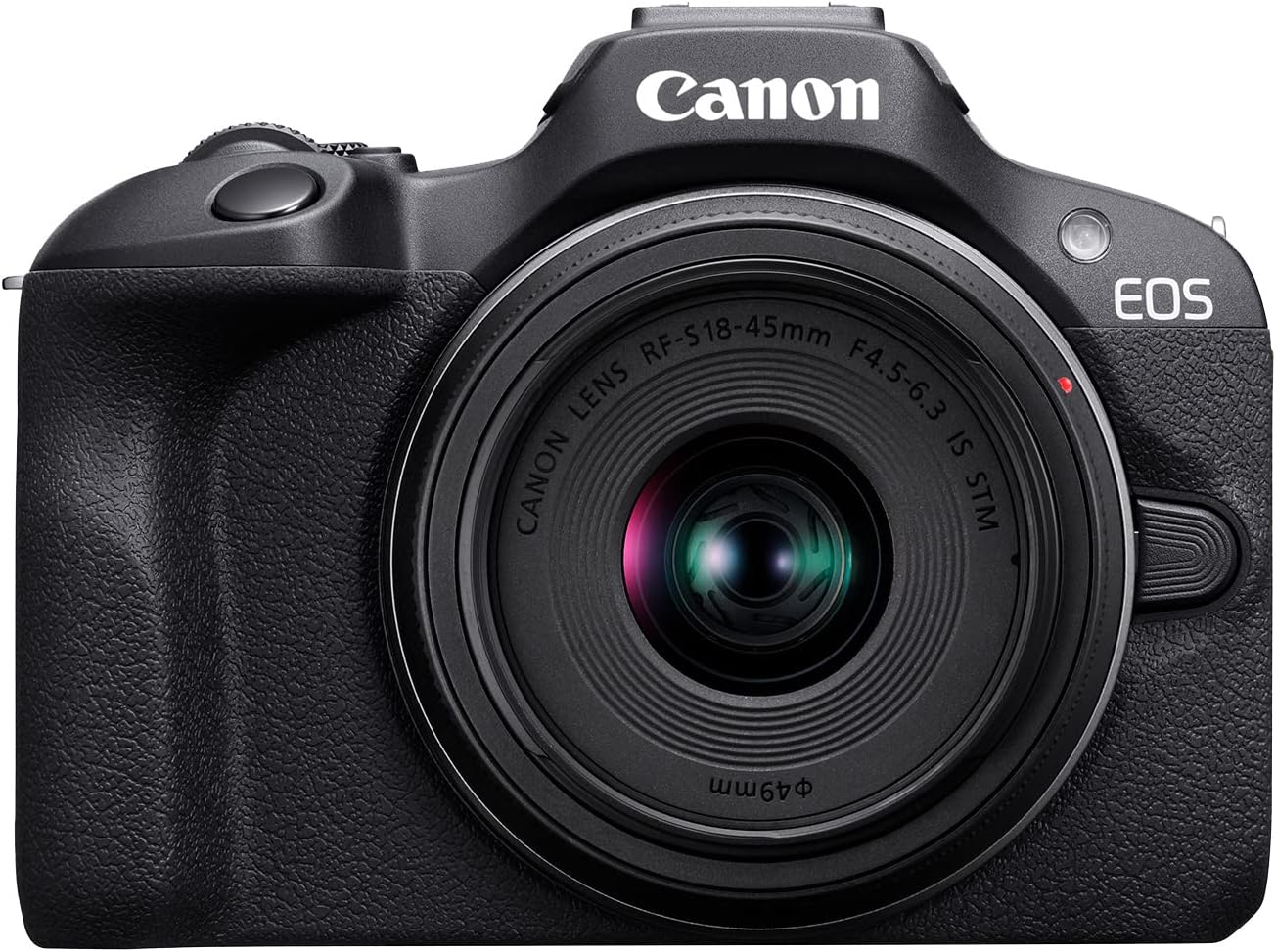
What you actually get with the EOS R100 kit
Pros
- Very compact and light, easy to carry everywhere
- Good 24.1MP APS‑C image quality with solid autofocus for photos
- Cheap way to get into Canon’s RF system with an included stabilized zoom
Cons
- No flip or touch screen, which limits video and low-angle use
- Video features are basic (4K crop, 720p 120fps) and not ideal for serious creators
- No external charger included and overall build feels quite budget

Specifications
View full product page →| Brand | Canon |
A small RF camera that finally made me carry a camera again
I’ve been playing with the Canon EOS R100 kit (the body plus the RF‑S 18‑45mm) for a few weeks now, mostly for family stuff, walks, and a couple of small events. I’m not a pro, I’m just the person in the group who usually gets stuck taking pictures. I’ve used older Canon DSLRs (Rebel series) and my phone for years, so that’s my reference point. This R100 is basically my first RF mirrorless body that I actually throw in a bag and take everywhere.
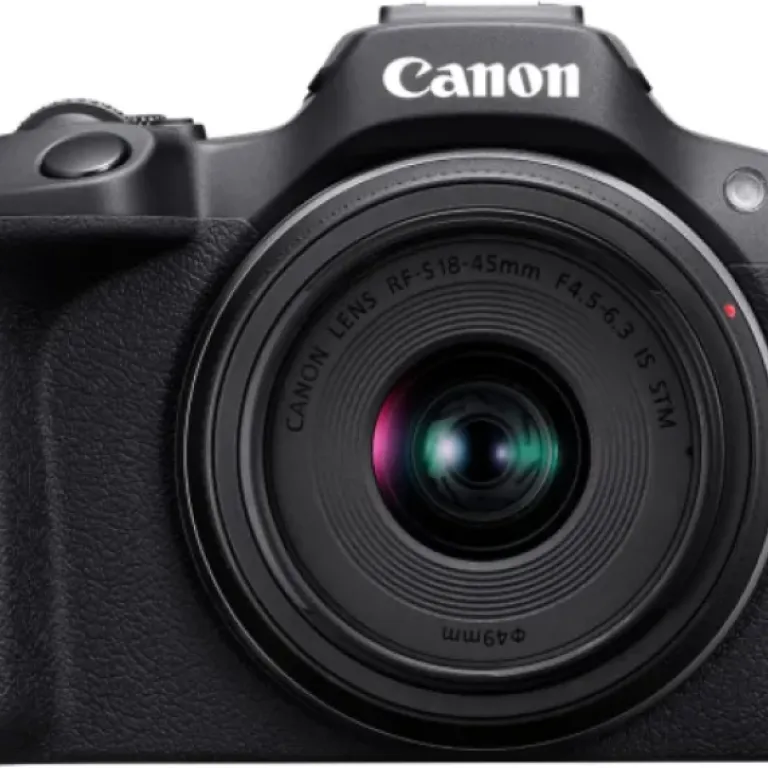
The first thing that hit me is how tiny and light this thing is. With the 18‑45mm kit lens collapsed, it feels closer to a chunky compact than a “serious” camera. That’s good and bad: good because I actually bring it with me, bad because it can feel a bit toy‑like in the hand, especially if you’re used to heavier bodies. But in day‑to‑day use, the small size is what made me reach for it instead of just defaulting to my phone.
My use case has been pretty typical: kids running around, indoor family dinners, street scenes during walks, and a couple of quick portraits with a cheap RF 50mm I already had. So this isn’t coming from a studio or wedding shooter, more like a “normal person who likes decent pictures” view. I shot a mix of JPEG and RAW, mostly in Aperture Priority and Program, and a bit of Manual just to see how the camera behaves.
Overall, the R100 feels like a no‑nonsense entry body: good photos, simple interface, and a bunch of corners cut to keep the price down. If you’re expecting a feature-packed video machine or a pro body in disguise, you’ll be disappointed. If you just want a cheap way into the RF system that beats your phone for stills, it’s actually pretty solid.
Value for money: strong entry into RF, with some clear trade-offs
Price-wise, the EOS R100 kit sits in a pretty sweet spot for someone who wants better photos than a phone without spending a fortune. You get a modern RF mount body, a stabilized zoom lens, solid autofocus, and image quality that’s perfectly good for prints, social media, and basic client work if you’re careful. For the money, the still photo performance alone makes sense, especially if you grab it during a discount.
Where the value is a bit mixed is in the missing features. No touch screen, no flip screen, older DIGIC 8 processor, and limited video specs compared to some competitors and even some older Canon models. You also have to factor in extras: another battery, a charger, and probably at least one better lens down the line (like the RF 50mm f/1.8) to really see what the sensor can do. The RF lens ecosystem is also not cheap, especially if you go for full-frame RF glass as many people recommend for future-proofing.
Compared to something like an older DSLR kit or a used higher-end mirrorless body, the R100’s main advantage is the current RF system and the compact size. If you know you want to slowly build into Canon’s RF lineup, this is a low-cost entry ticket. If you don’t care about RF specifically and just want the most features for the money, you might find better deals on the used market or from other brands that give you more video tools and better screens at similar prices.
So for me, the R100 kit is good value for someone focused on photos who wants into RF on a budget. If your main interest is video or you want a camera packed with modern conveniences, I’d say the value is just okay, and you should probably look one step up in the range or at a different brand.
Design: compact and simple, but a bit too barebones in places
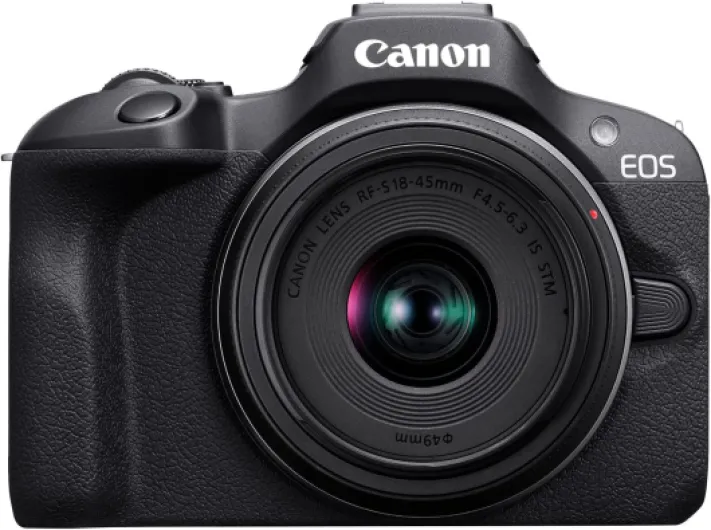
The design is very straightforward: small plastic body, decent grip, minimal buttons. If you’re coming from a Canon DSLR, you’ll recognize the menu logic and the general layout. There’s a mode dial on top, a control dial, a few buttons on the back, and that’s about it. No joystick, no extra thumb wheel, and no fancy switches. It’s clearly aimed at people who don’t want to fiddle with too many controls, which is fine, but it also means you do more in the menus than on the body.
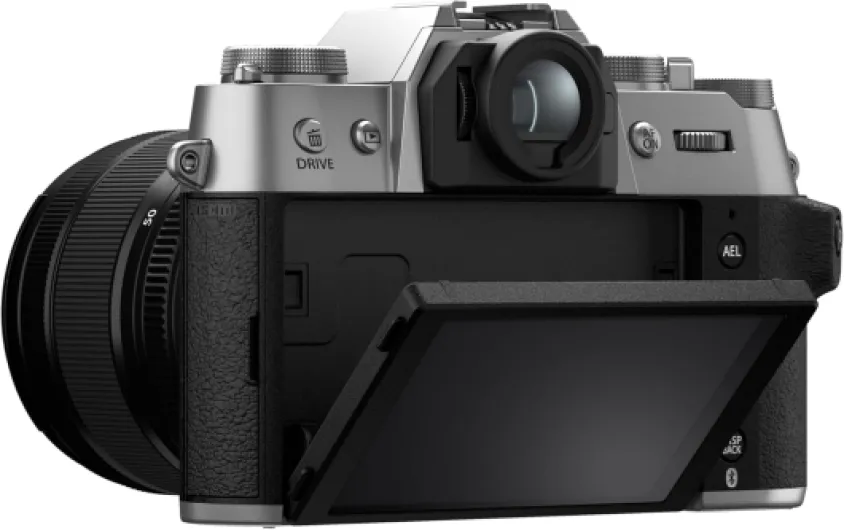
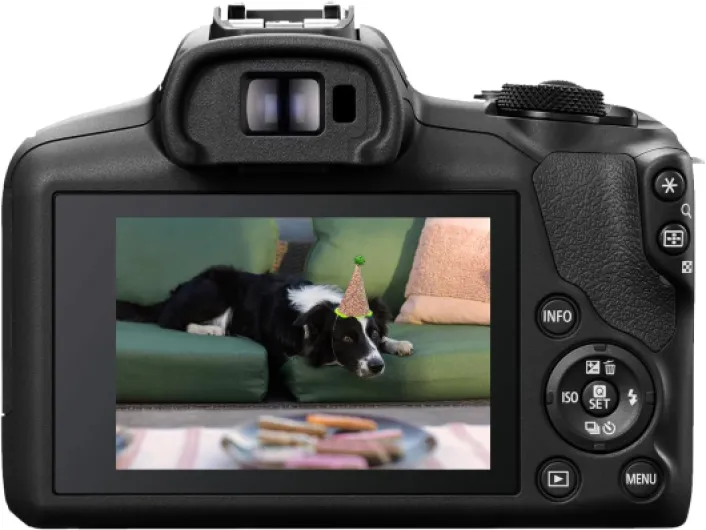
One thing that stood out is the lack of a flip or tilt screen. The back LCD is fixed and not touch-enabled. For basic photography, that’s manageable. You use the viewfinder most of the time anyway. But if you like low-angle shots, overhead shots, or any kind of vlogging or self‑recording, it gets annoying quickly. I found myself lying on the ground a couple of times to frame a low shot, which feels a bit silly in 2026 when even cheap cameras have tilt screens.
The EVF itself is okay. Not great, not terrible. It’s usable, the resolution is fine, and I didn’t really think about it after the first day, which is usually a good sign. If you wear glasses, it’s a bit tight but still workable. The body size actually makes the viewfinder feel slightly cramped, but you get used to it. The grip surprised me in a good way: for such a small camera, the right-hand grip is pretty secure. I never felt like I was going to drop it, even one‑handed.
In short, the design is very functional but stripped down. It’s a camera that tries to stay out of your way and be small first, comfortable second, and feature-rich third. If you’re okay with that trade-off, it works. If you’re picky about handling and want dual dials, joystick, and a flip screen, this is going to feel like a downgrade, even if the image quality is fine.
Battery life: decent for a day, but plan on a spare and a charger
The R100 uses the LP‑E17 battery, which is a pretty common Canon battery for smaller bodies. In real life, I was getting roughly 350–450 shots on a charge, depending on how much I chimped (reviewing images) and how much video I shot. On a full family day out with mixed photos and short videos, I ended up around 20% by the evening. So it’s fine for casual use, but if you’re trigger‑happy or shooting events, a second battery is basically mandatory.
One thing that annoyed me is that Canon doesn’t include a standalone charger in the box. You have to charge the battery inside the camera via USB. That’s okay if you’re at home and not in a rush, but on a trip or long day, it’s not ideal. I ended up buying a cheap dual charger and a second LP‑E17, which solved the problem, but it’s still extra cost and something to factor into the budget if you’re thinking about this kit.
The camera doesn’t seem to drain much in standby, which is good. I could leave it in my bag powered off for a few days and the battery level barely moved. Using the EVF instead of the rear screen also helps a bit. If you hammer the video, especially 4K, you’ll see the battery drop faster, but that’s normal. It doesn’t overheat or anything, it just uses more juice.
So overall, I’d call the battery life acceptable but not impressive. It’s enough for a casual user who takes a few hundred shots a day, but if you’re planning a long event or travel day without easy charging, just budget for at least one extra battery and, honestly, a small external charger. That turns it into a worry‑free setup.
Durability and build: light, plastic, and not really a camera to abuse
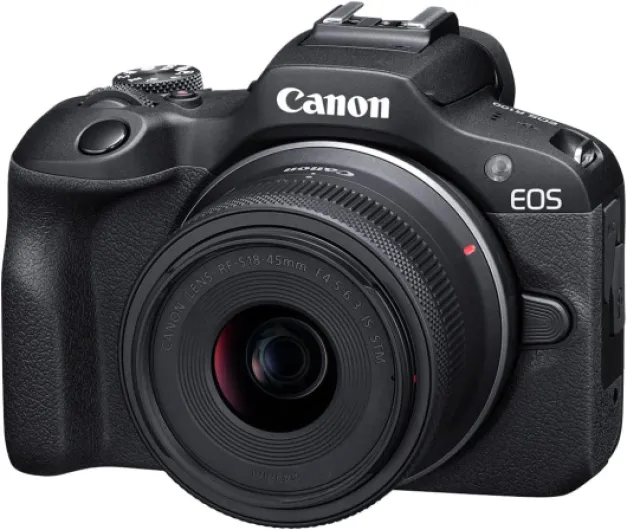
The R100 is clearly built to be light and cheap, not rugged. The body is mostly plastic, and you can feel that right away. It doesn’t feel like it’s going to fall apart in your hands, but it also doesn’t give that solid, dense feeling you get from higher‑end bodies. I tossed it into a backpack (in a small padded insert) several times, carried it around my neck at a fair, and used it in light drizzle once. So far, no issues: no creaks, no weird sounds, nothing loose.
That said, there’s no weather sealing advertised, and it shows. The doors for the battery, SD card, and ports feel basic, and I wouldn’t trust this camera in heavy rain or dusty environments without some protection. If you’re planning to shoot in more serious conditions (beaches with sand, hikes in bad weather, etc.), you’ll want to be careful or look at a more robust body.
The kit lens (RF‑S 18‑45mm) matches the body: very light, very plastic, and collapsible. The extending mechanism feels okay, but it’s not something I’d want to bang around. The mount is metal, though, which is good. Optically, it holds up fine, but in terms of build, it’s clearly a budget lens. After a few weeks of use, the zoom ring is still smooth, no play, so at least out of the box it seems well assembled.
My take: if you treat it as a casual, everyday camera and don’t abuse it, it should last. It’s the kind of gear you carry all the time but also try not to drop. If you’re rough on your stuff or used to semi‑pro bodies that can take a beating, this one will probably feel a bit fragile, even if it holds up in normal use.
Performance: great for stills, video is clearly secondary
For still photos, the R100 does a pretty solid job, especially considering the price. The 24.1MP APS‑C sensor is nothing new, but it delivers clean images with good detail and dynamic range as long as you don’t push the ISO into silly territory. I was comfortable up to ISO 3200 for family shots indoors. Above that, noise starts to creep in, but it’s still better than what my phone gives me in the same conditions. For daylight and outdoor use, you get sharp, clean files that are easy to edit.
The autofocus is where the camera surprised me. Dual Pixel AF with face and eye detect actually works well. For walking kids, pets, and casual portraits, it locked on and stayed there most of the time. It’s not as sticky or as fast as the higher-end R bodies, but for a budget model, it’s more than enough. Continuous shooting at 6.5 fps is decent for basic action like kids running or a bit of sports; just don’t expect crazy tracking like you see on pro cameras. For my use (kids, street, a bit of movement), it was totally fine.
Video is where the limitations show. You get 4K 24p with a crop from the center of the sensor, and rolling shutter is noticeable if you pan quickly. Full HD 60p looks better and has less crop, so I ended up using 1080p most of the time. There’s also 120 fps, but only at 720p, which feels a bit dated now. Autofocus in video is okay, but not as confident as in stills, and without a flip screen, framing yourself is basically guesswork. For quick clips of family and travel, it works; for serious YouTube or streaming, I’d look at something else.
Overall, I’d say the performance is clearly photo-first. If your main goal is to take better pictures than your phone and maybe shoot some casual video, it gets the job done. If you’re buying mainly for video content creation, especially talking‑head or vlogging, the compromises (crop, no flip, no touch) start to feel pretty limiting pretty fast.
What you actually get with the EOS R100 kit
In the box you get the EOS R100 body, the RF‑S 18‑45mm f/4.5‑6.3 IS STM kit lens, a battery (LP‑E17), a basic strap, and the usual paperwork. No external charger, which is a bit annoying. You charge through the camera with USB, so you’ll either be tethered to a wall or power bank, or you’ll end up buying a separate charger like I did. For an entry-level kit, I think Canon could have thrown in a simple charger, but they didn’t.
Spec-wise, the camera has a 24.1MP APS‑C sensor, DIGIC 8 processor, Dual Pixel AF, and it shoots up to 6.5 fps with One‑Shot AF. Video goes up to 4K 24p (cropped) and Full HD 60p. There’s also 120 fps but only in 720p HD, so that’s more for fun clips than anything serious. The viewfinder is electronic, the rear screen is fixed (no flip, no tilt) and it’s not a touchscreen. That’s where you feel the budget side right away.
The kit lens covers 18‑45mm, which on APS‑C is roughly 29‑72mm full-frame equivalent. So you’re getting a general-purpose zoom: a bit wide for landscapes and streets, and a bit long for portraits and details. It’s not bright (f/4.5‑6.3), so indoors you’re going to lean on ISO or flash, but for daylight and travel it’s fine. It also has optical stabilization, which helps since the body doesn’t have IBIS.
On paper, it’s a very “basic but complete” package: you can go from zero to taking decent photos right away. Just be aware that Canon clearly positioned this as the cheapest way into the RF mount, and you feel that in missing features (no touch, no flip screen, older processor). If you accept that, the overall package is still good value, especially if you grab it on sale like I did.
Pros
- Very compact and light, easy to carry everywhere
- Good 24.1MP APS‑C image quality with solid autofocus for photos
- Cheap way to get into Canon’s RF system with an included stabilized zoom
Cons
- No flip or touch screen, which limits video and low-angle use
- Video features are basic (4K crop, 720p 120fps) and not ideal for serious creators
- No external charger included and overall build feels quite budget
Conclusion
Editor's rating
After using the Canon EOS R100 kit in normal, everyday situations, I’d sum it up like this: it’s a very capable photo camera with stripped-down features, built to get you into the RF system without draining your wallet. Image quality is good, autofocus is reliable for most casual use, and the body is light enough that you’ll actually bring it with you. For someone who mainly wants to shoot photos of travel, family, and occasional events, it does the job and then some, especially once you add a brighter lens later.
On the other hand, the cost-cutting is obvious. No flip or touch screen, basic build, limited video options, and no included charger all remind you that this is the bottom of the RF lineup. If you’re hoping to start a YouTube channel, vlog, or do a lot of self‑filming, I’d skip this one and look at something with better video tools and a more flexible screen. If you’re picky about ergonomics and controls, the small body and lack of extra dials might also get on your nerves.
So who is it for? It’s for beginners and hobbyists who care more about stills than video, want something better than a phone, and like the idea of slowly building a Canon RF kit. Who should skip it? People who are serious about video, anyone who absolutely needs a flip touchscreen, and those who’d rather have a tougher, more feature‑rich body even if it means buying used instead of new.