
Summary
Editor's rating
Value for money: still a strong deal if you know what you’re getting
Design & handling: feels like a small DSLR, in a good way
Battery life: not terrible, not great – plan on a spare
Build quality & durability: feels tough enough for real use
Image quality & autofocus: good overall, with some quirks
What you actually get in this G85 starter kit
Pros
- Very effective in-body stabilization combined with stabilized 12–60mm kit lens
- Comfortable DSLR-style handling with weather-sealed body and lens
- Good 4K video features and fully articulating touchscreen for hybrid use
Cons
- Autofocus in 4K video can hunt and is less reliable than newer phase-detect systems
- Average battery life – extra batteries are basically required for longer shoots

Specifications
View full product page →| Brand | Panasonic |
A “proper” camera for people who are fed up with phones
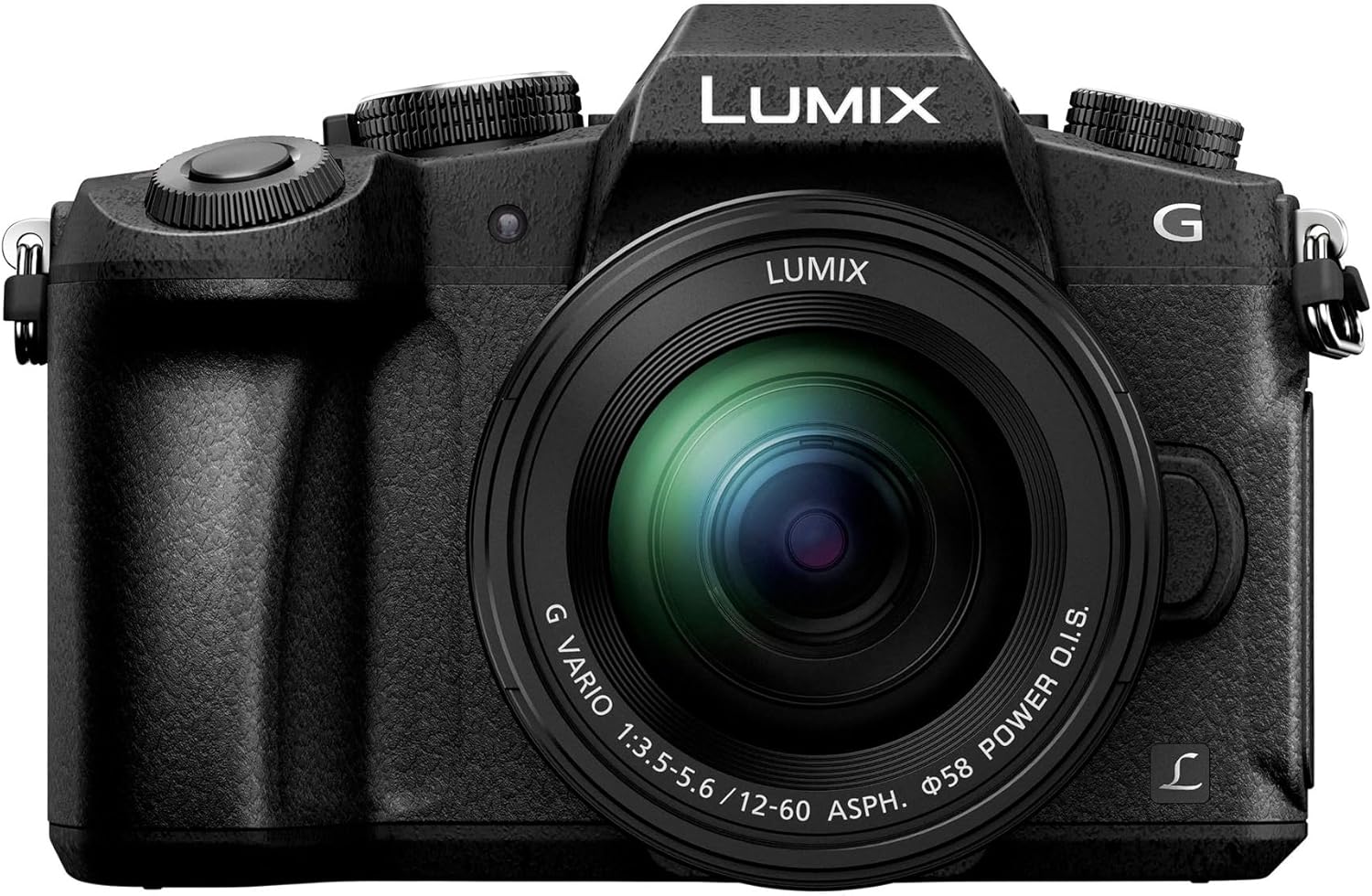
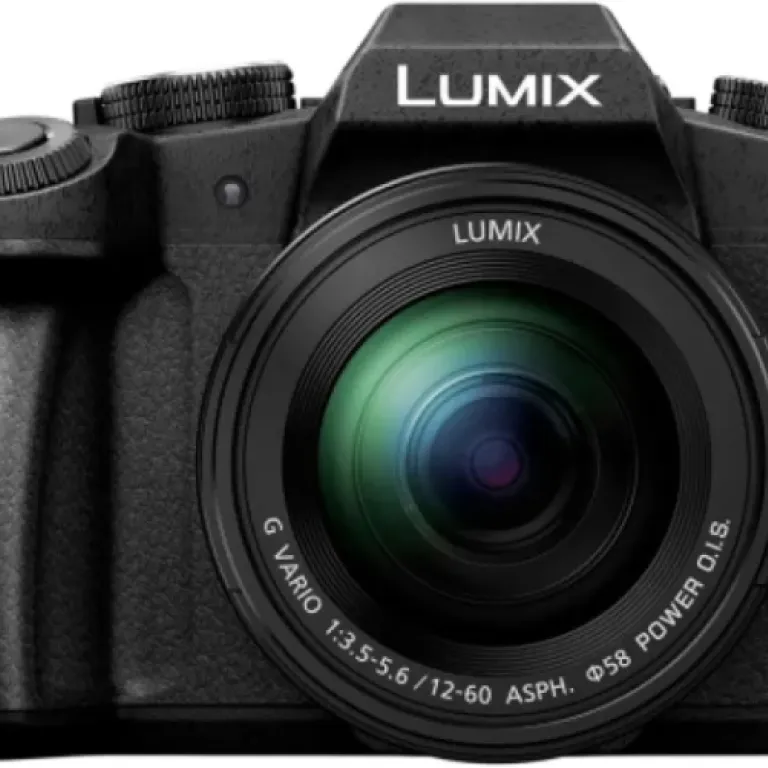
I’ve been using the Panasonic LUMIX G85 with the 12–60mm kit lens as my main camera for a while now, mostly for travel, casual photography, and some YouTube-style videos. I’m not a pro, just someone who got tired of the limits of a phone and wanted proper controls, a viewfinder, and better video. I went for this kit because it was often recommended as a good value hybrid camera, and I didn’t want to spend over a grand just to see if I’d stick with the hobby.
Right away, the G85 feels like a real camera, not a toy. It’s not massive like a DSLR, but it doesn’t feel flimsy either. The grip, the dials, the viewfinder, the flip-out screen – you get that “I’m actually in control” vibe. At the same time, it’s not so advanced that you’re lost in menus for three days before getting a decent shot.
In daily use, this thing is clearly aimed at people who want one camera that can do a bit of everything: photos of family, travel, some low-key paid gigs maybe, and especially video. If you mainly shoot video or vlogs, this body makes a lot of sense. If you want giant prints and crazy shallow depth of field, the Micro Four Thirds sensor is going to feel a bit limited compared to APS-C or full-frame, but for social media and normal prints it’s fine.
Overall, my experience is that the G85 is a pretty solid all-rounder with some clear strengths (stabilization, handling, lens ecosystem) and a few weak spots (autofocus in 4K, average battery, smaller sensor). It’s not perfect, but for the price bracket it sits in, it gets a lot of things right for everyday users.
Value for money: still a strong deal if you know what you’re getting
In terms of value, the G85 kit hits a nice spot, especially if you buy it on sale or used. You’re getting a stabilized body, a weather-sealed standard zoom (12–60mm, equivalent to 24–120mm), 4K video, a fully articulating screen, and access to the whole Micro Four Thirds lens ecosystem. For someone who wants a single camera to learn on and use for both photos and video, that’s a lot of features without paying current-year flagship prices.
Where the value discussion gets tricky is when you compare it to newer APS-C bodies. If your main focus is still photography and you care about resolution, low-light performance, and shallow depth of field, you can find APS-C DSLRs or mirrorless bodies in a similar price range that will give you cleaner high-ISO files and more megapixels. On the other hand, many of those don’t have as good stabilization, or they lack 4K, or they don’t offer the same compact size with such a flexible 24–120mm equivalent kit lens.
For video-focused users, the G85 still makes a lot of sense. You get 4K, solid stabilization, a flip screen, and decent controls. The main compromise is the autofocus in 4K, which is usable but not great. If you’re okay with that, or you’re fine using manual focus for serious work, the price/performance ratio is pretty solid. You also benefit from relatively cheap Micro Four Thirds lenses compared to some other systems.
So, value-wise: if you want a do-it-all hybrid on a budget and you’re not obsessed with having the latest sensor or perfect AF, this kit is good bang for the buck. If you’re purely into stills and don’t care about video, or you’re very picky about low-light performance, your money might be better spent on a comparable APS-C body instead.
Design & handling: feels like a small DSLR, in a good way
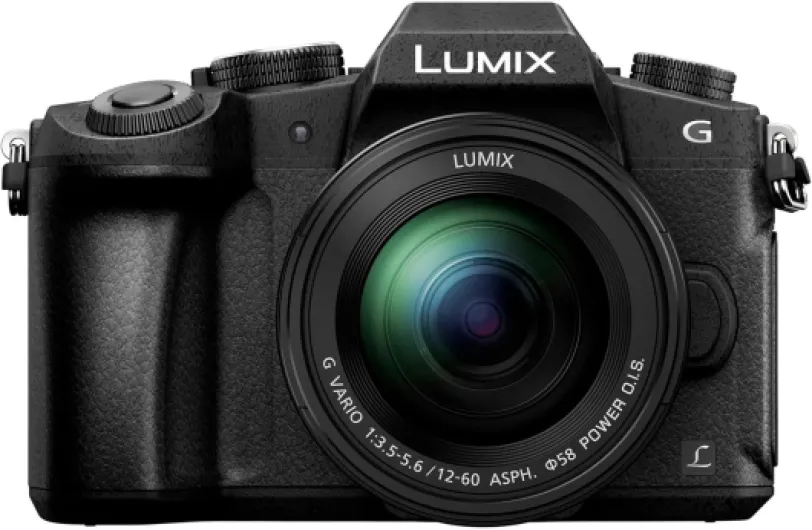
In the hand, the G85 feels more like a compact DSLR than a tiny mirrorless toy. The grip is deep enough that you can hold it all day without your fingers cramping, even with the 12–60mm lens mounted. I’ve carried it around cities and on hikes, and it strikes a good balance between not feeling like a brick and not feeling like a point-and-shoot. At about 1.1 pounds for the body, plus the lens, it’s light enough to keep in a bag without thinking twice.
The button layout is pretty practical. You get two main dials (front and rear) for shutter and aperture, a mode dial, drive dial, and several customizable function buttons. They’re a bit flush with the body, so with gloves on it’s not ideal, but with bare hands you get used to it quickly. The shutter button is sensitive in a nice way – half-press to focus feels clear, and the actual shutter press is soft, not clunky.
The fully articulating screen is a big plus if you do video, vlogs, or low/high angle shots. You can flip it around to face you, tilt it up or down, or fold it inwards to protect it when you’re just using the viewfinder. The touchscreen is responsive and makes changing focus points or diving into menus faster. The menu system itself is typical Panasonic: a lot of options, but once you learn where things are, it’s logical enough.
One thing I appreciate is the weather sealing. It’s not a tank, but I’ve used it in light rain and dusty areas without babying it, and it held up fine. The 12–60mm kit lens is also weather-sealed, which is rare at this price. Overall, the design is practical and focused on usability. It’s not flashy or pretty, but it feels like a camera built to be used, tossed in a bag, and dragged around regularly.
Battery life: not terrible, not great – plan on a spare
Battery life on the G85 is one of those things that’s just “okay”. It’s not unusable, but if you’re used to DSLRs that last all day on one battery, you’ll notice the difference. With mixed use – some photos, some 4K clips, some menu fiddling – I usually get through a half day to a day on one battery, depending on how much video I shoot and how often I use the screen versus the viewfinder.
If you mostly shoot photos and use the EVF, you can stretch it out a bit. But once you start doing 4K video, live view, Wi‑Fi transfers, and a lot of chimping (reviewing images), the battery drains faster. It’s not a shock; most mirrorless cameras around this age and price have similar issues. Still, it’s enough of a limitation that I’d call an extra battery basically mandatory if you’re going on a day trip or shooting an event.
Charging is done via the external charger, not over USB, which is a bit old-school but at least means you can charge a battery while using another one. The batteries themselves are small and light, so carrying two or three in a small pouch is no big deal. I haven’t noticed any weird degradation yet, but like most camera batteries, performance dips a bit in cold weather.
In short, the battery life is serviceable but nothing more. For casual weekend shooting, you’ll probably survive with one battery if you’re careful. For travel, events, or any serious video work, just budget for at least one spare – it’s not worth the stress of watching the battery icon blink red halfway through something important.
Build quality & durability: feels tough enough for real use
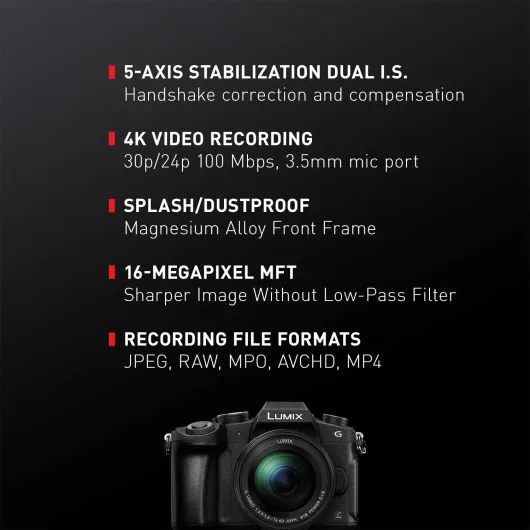
The G85 doesn’t feel like a cheap plastic toy. The body uses magnesium alloy on the top and front, with solid-feeling plastics elsewhere, and a rubberized grip that hasn’t peeled or worn weirdly for me so far. I’ve thrown it in backpacks without a dedicated camera compartment, used it in light rain, and carried it on a strap bouncing around all day – no rattles, no loose parts, no weird creaks.
The weather sealing is a big plus in real life. I’ve used it in drizzle and near the sea where there’s spray and humidity, and I didn’t feel the need to baby it. Obviously, I’m not dunking it in water, but for typical travel and outdoor shooting, it feels trustworthy. The fact that the 12–60mm kit lens is also weather-sealed means the whole setup is more usable in bad conditions than a lot of entry-level kits.
The articulating screen is often a weak point on cameras, but on this one the hinge feels solid. I’ve flipped and rotated it constantly for low angles, selfies, and storage, and so far there’s no wobble or play. The buttons are still clicky, and the dials haven’t become sloppy. The hot shoe cover stays in place, which sounds minor but is the kind of thing that often disappears on cheaper bodies.
Long-term, the only thing I’d keep an eye on is the rubber grip if you live in a very hot or humid place; some cameras tend to get sticky over the years, but I haven’t seen that yet on this one. Overall, for the price level, durability and build quality feel pretty solid. It’s not a pro body you’d abuse on a war zone assignment, but for travel, hikes, and everyday life, it holds up well.
Image quality & autofocus: good overall, with some quirks
On the photo side, the 16 MP Micro Four Thirds sensor is decent. You’re not getting super high resolution, but for social media, prints up to A3, and everyday shooting, it’s enough. The lack of a low-pass filter helps keep fine details reasonably sharp. Colors out of camera are neutral and usable; I usually shoot RAW + JPEG and tweak the RAWs for anything important. Compared to APS-C cameras, you do notice a bit more noise at higher ISOs and less background blur, but that’s expected for this sensor size.
In low light, you can push the ISO to 3200 or 6400 in a pinch, but you’ll start to see grain. The stabilization helps more than the sensor here: being able to use slower shutter speeds handheld means you can keep ISO lower for static subjects. For moving subjects in low light, it’s harder – that’s where a faster lens would help more than the body itself.
Autofocus is a mixed bag. For stills in good light, it’s quick and accurate enough. Face/eye detection works fine for casual portraits. Where it starts to struggle is in low light and especially in 4K video. Panasonic’s contrast-detect AF tends to “wobble” or hunt a bit when recording 4K, especially with moving subjects or busy backgrounds. If you’re doing sit-down talking-head videos and don’t move too much, it’s workable. For fast-moving vlog style with lots of movement toward/away from the camera, it can get annoying.
Continuous shooting is fine for this level: up to 9 fps in single AF and around 6 fps with continuous AF. For basic action or kids running around, it gets the job done, but it’s not a sports camera. Overall, performance is solid for the price: good enough image quality, very helpful stabilization, and autofocus that’s fine for photos and 1080p video, but only “okay” in 4K unless you manage your expectations or use manual focus.
What you actually get in this G85 starter kit
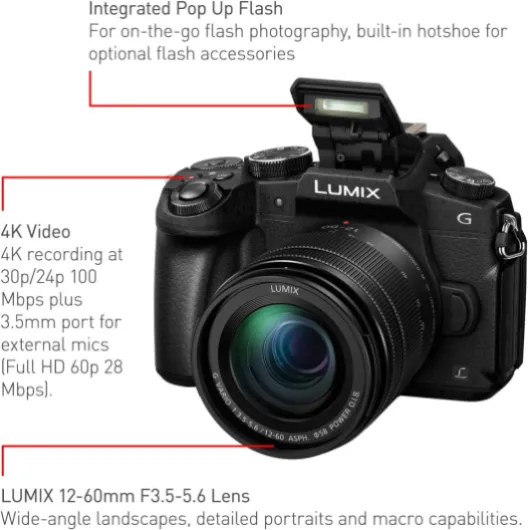
This kit is basically a complete entry point into the Micro Four Thirds world. You get the Panasonic LUMIX G85 body, the 12–60mm f/3.5–5.6 Power O.I.S. kit lens, a battery, charger, and the usual bits like body cap and hot shoe cover. No fancy extras like a remote, external mic, or extra battery – it’s barebones but enough to start shooting the day you unbox it.
The core of the camera is a 16 MP Micro Four Thirds sensor with no low-pass filter, and that’s paired with 5-axis in-body image stabilization (IBIS). When you mount the included 12–60mm lens, you also get lens stabilization (O.I.S.), and the body and lens work together as “Dual I.S.”. In practice, that’s one of the main selling points of this combo: handheld photos and video are much more stable than on older bodies or non-stabilized setups.
On the video side, it does 4K UHD (3840x2160) up to 30 fps, and 1080p if you want smaller files or higher frame rates. You also get Panasonic’s 4K Photo modes and Post Focus, which are basically tricks that pull stills or adjust focus from 4K video bursts. Honestly, they’re nice to have but I rarely use them – I mostly stick to normal photo and video modes.
For stills, you have the usual PASM modes (aperture priority, shutter priority, manual, etc.), 49 focus points, and a bunch of creative filters (toy effect, monochrome variants, miniature, etc.). The viewfinder is an OLED with 2.36M dots and the rear screen is a 3" fully articulating touch LCD with 1.04M dots. There’s Wi‑Fi for transferring images and remote control via the app, but no Bluetooth and no headphone jack. If you’re coming from a phone or a basic DSLR, this kit feels like a solid level-up without going into pro territory.
Pros
- Very effective in-body stabilization combined with stabilized 12–60mm kit lens
- Comfortable DSLR-style handling with weather-sealed body and lens
- Good 4K video features and fully articulating touchscreen for hybrid use
Cons
- Autofocus in 4K video can hunt and is less reliable than newer phase-detect systems
- Average battery life – extra batteries are basically required for longer shoots
Conclusion
Editor's rating
The Panasonic LUMIX G85 with the 12–60mm kit lens is a practical, no-nonsense camera for people who want to take photography and video more seriously without going all-in on pro gear. Its biggest strengths in real use are the stabilization, the handling, and the flexibility of the 24–120mm equivalent zoom range. Add the weather sealing and fully articulating screen, and you get a camera that’s easy to live with for travel, everyday shooting, and YouTube-style content.
It’s not flawless. The Micro Four Thirds sensor can’t match APS-C for low light and depth of field, the autofocus in 4K video is only okay, and the battery life is average enough that an extra battery is basically required. If you mainly shoot still photos and want the cleanest files and biggest prints for the money, there are APS-C options that make more sense. If you’re doing fast-paced vlogs with lots of movement and need rock-solid continuous AF, this might frustrate you.
If you want a compact, weather-sealed hybrid camera with strong stabilization, decent image quality, and access to a mature, affordable lens system, the G85 kit is a pretty solid choice, especially at current prices. It suits hobbyists, content creators starting out, and anyone who wants one camera that can handle a bit of everything without being too bulky or too expensive. People chasing the latest tech or top-tier autofocus should probably look higher up the range or at other brands.