
Summary
Editor's rating
Value for money: where it makes sense and where it doesn’t
Design: tiny pancake feel, very plastic, very portable
Build & durability: fine for normal use, not for abuse
Image quality & autofocus: strong center, edges need help
What this RF16mm actually is (and what it isn’t)
Real-world use: vlogging, interiors, events, and some quirks
Pros
- Very small and lightweight, great for travel and vlogging
- Affordable way to get a 16mm ultra-wide field of view on RF
- Good central sharpness and close focusing distance for creative shots
Cons
- Strong distortion and vignetting that basically require software correction
- Plastic build with no weather sealing and no included hood

Specifications
View full product page →| Brand | Canon |
A tiny wide-angle that tempted my wallet
I picked up the Canon RF16mm F2.8 STM because I wanted something small, wide, and cheap to throw on my EOS R body for travel, vlogging, and tight interiors. My main wide lens is heavier and a lot more expensive, so I was curious to see if this little pancake-style prime could handle everyday use without annoying compromises. I’ve used it for a couple of weeks on walks, in small rooms, and for some casual video and city shots.
First impression: it’s almost comically small on a full-frame R body. It makes the camera feel closer to a compact than a serious mirrorless setup. That’s both good and bad. Good because you actually feel like carrying it everywhere; bad because it doesn’t exactly scream “rugged pro gear” when you hold it. But that’s kind of the deal at this price point.
In real use, the main thing that stands out is how wide 16mm feels on full frame. Indoors, I finally stopped backing into walls to fit everyone in. For video, especially handheld or on a gimbal, the field of view is great for walking-and-talking without cutting off your head. But the flip side is the obvious distortion and vignetting, especially if you look at uncorrected files.
So overall, my mindset with this lens is: it’s a budget ultra-wide prime. I didn’t expect miracles, and it behaves exactly like that. It’s capable, very handy, but not perfect. If you’re okay doing some corrections in post and you’re not too precious about perfect corners, it’s pretty solid. If you want flawless optics and bulletproof build, this isn’t it.
Value for money: where it makes sense and where it doesn’t
From a value perspective, this lens sits in an interesting spot. It’s one of the cheapest RF full-frame primes you can buy, especially in the ultra-wide range. If you compare it to Canon’s RF 15–35mm f/2.8L, the price difference is huge. Of course, that zoom gives you better build, weather sealing, image stabilization, and cleaner optics, but it’s also several times the cost and much heavier. So if you just need a wide option occasionally and don’t want to drop big money, the RF16mm makes a lot of sense.
What you’re paying for here is mainly: small size, light weight, decent f/2.8 aperture, and acceptable image quality after corrections. If you already use editing software, the distortion and vignetting are annoying but manageable. If you’re on a tight budget or just building out your RF kit slowly, this is a practical way to get an ultra-wide look without wrecking your bank account.
Where the value drops a bit is if you’re super picky about image quality or you rarely shoot wide. If you only occasionally need 16mm and you already own something like a 24–105mm, you might be better off renting a better wide zoom when needed instead of buying this and then never using it. Also, if you shoot JPEG-only and don’t want to touch editing software, the out-of-camera look might frustrate you, especially for architecture or real estate.
For me, the value feels solid: it’s not perfect, but the price lines up with what you get. It’s a good match for people who want a lightweight vlogging lens, travel shooters who like compact kits, and beginners moving into RF who want to experiment with ultra-wide without spending a fortune. If you’re expecting pro-level performance at a budget price, you’ll be a bit disappointed. If you see it as a cheap, handy tool with some flaws, it’s easier to appreciate.
Design: tiny pancake feel, very plastic, very portable
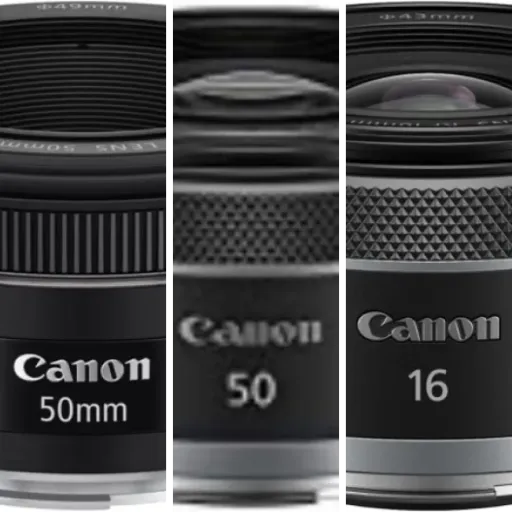
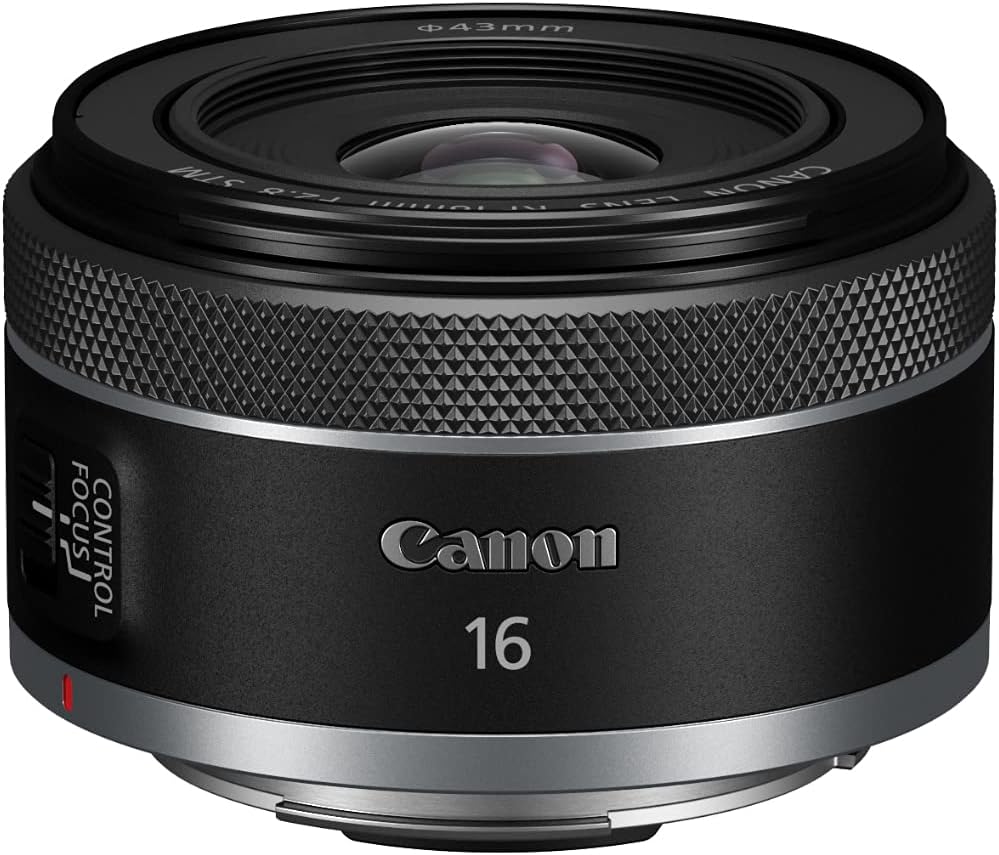
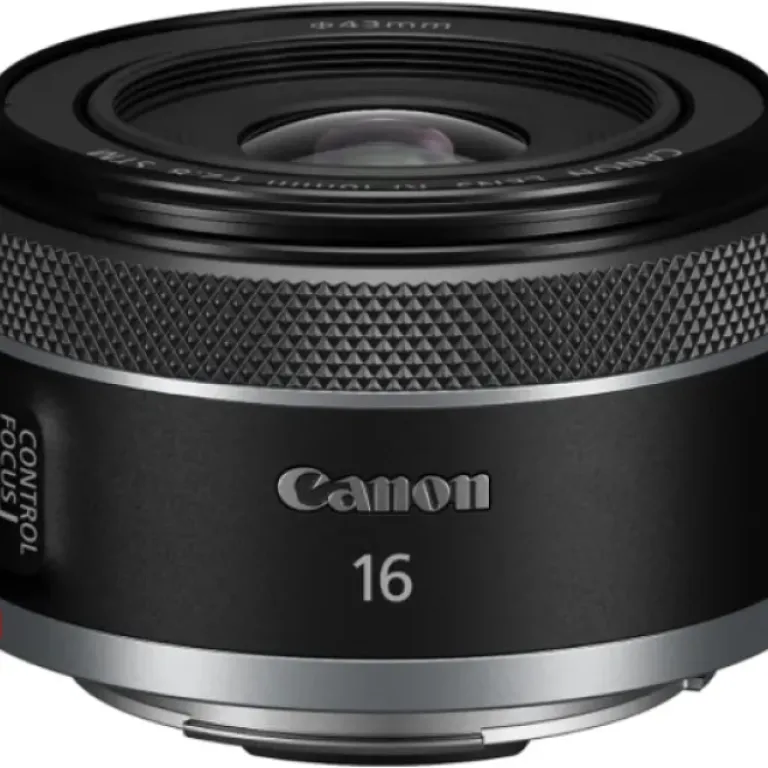
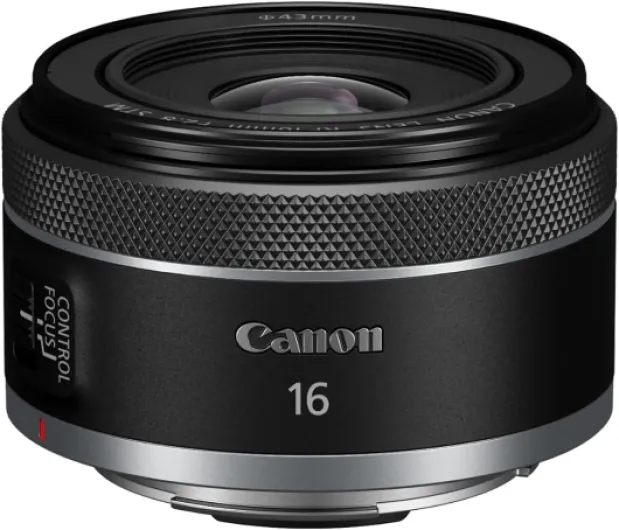
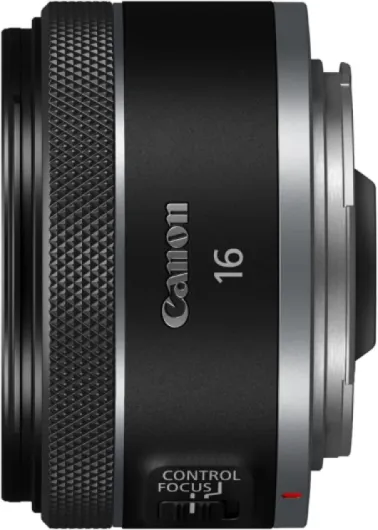
Design-wise, this thing is basically a pancake lens for the RF system. It’s short, light, and doesn’t unbalance the camera at all. On my EOS R, it makes the body feel way less bulky, which is nice when you’re walking around a city or traveling and you don’t want a huge setup hanging off your neck. Compared to my 24–105mm, it’s night and day in terms of size and how noticeable it feels in a bag.
The flip side: it looks and feels pretty plastic. The mount is metal, but the rest of the body is clearly from Canon’s budget line. The manual/control ring is narrow but usable, and it has a decent clicky feel. There’s no AF/MF switch, which I actually miss. If you want to switch to manual focus, you have to dive into the camera menu. It’s not the end of the world, but it’s slower than just flicking a switch on the lens, especially if you’re used to higher-end glass.
There’s also no lens hood included. For a wide-angle lens that can catch flare pretty easily, that’s annoying. You either buy the official hood (which feels overpriced for a bit of plastic) or grab a third-party one. I ended up using a cheap generic hood and a 43mm filter; the 43mm filter size is a bit random, so if you already have filters, chances are you’ll need step-up rings or new ones.
In day-to-day use, the design is clearly focused on being compact and affordable rather than tough. It doesn’t feel like it will fall apart, but I wouldn’t throw it loose in a bag with keys and metal gear. For casual shooting, hiking, city trips, and gimbal work, the form factor is great. Just don’t expect a tank. It’s more like a lightweight tool that you treat with a bit of care and it will do its job.
Build & durability: fine for normal use, not for abuse
On the durability side, this lens is clearly from Canon’s budget lineup. The barrel is mostly plastic, and there’s no weather sealing. I’ve used it in light drizzle and dusty city streets with no immediate issues, but I wouldn’t push my luck in heavy rain or very rough conditions. It feels more like a lens you carry on holiday or for casual shoots, not something you’d drag through a sandstorm or a long, wet hike without protection.
The mount is metal, which is good, and after a couple of weeks of taking it on and off the camera, I didn’t notice any play or looseness. The control/focus ring still feels fine, no grinding or wobble. But the overall feel is definitely more “plastic gadget” than “pro tool”. If you’re used to Canon L lenses, you’ll feel the difference right away. That said, the low weight means that if you do bump it into something, there’s less momentum, which probably helps it survive minor knocks.
One thing to note: some people online have mentioned getting Error 01 with faulty copies (lens-body connection issues). I didn’t get that problem on my unit, but it’s worth knowing that quality control might not be as tight as on more expensive lenses. The good news is that if you buy from a big retailer, returns and exchanges are straightforward if you happen to get a bad copy.
If you treat your gear reasonably well—keep it in a small pouch or compartment in your bag, use a cheap hood or filter for basic protection, and avoid harsh weather—it should last. I don’t see anything that screams “this will fall apart soon”. But I also wouldn’t call it tough. It’s more like: fine for normal people, not built for abuse. For the price, that’s acceptable, but you should be aware of it before relying on it as your only wide lens on a serious trip.
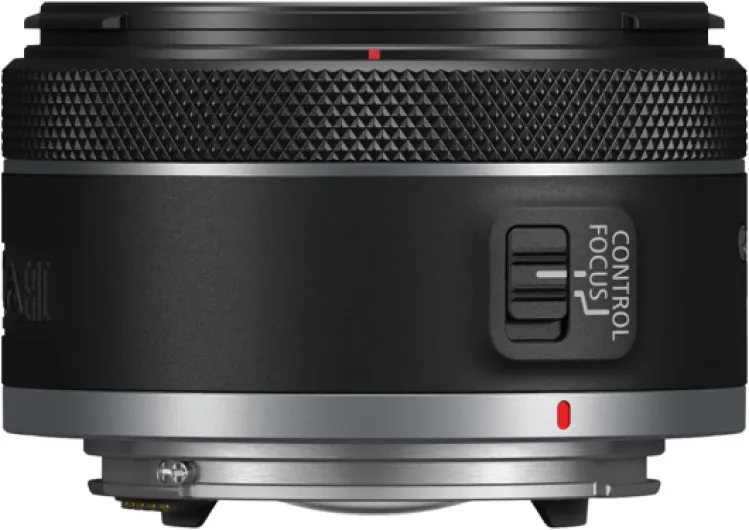
Image quality & autofocus: strong center, edges need help
Let’s talk about how it actually shoots. In the center of the frame, this lens is genuinely good for the price. At f/2.8, it’s already usable, and by f/4–5.6 it’s pretty sharp in the middle. For group photos, vlogging, and general wide shots, I was happy with the detail. Colors look like typical Canon: neutral and easy to work with. Clients or friends looking at the final photos didn’t complain, and honestly, most people won’t pixel-peep the corners anyway.
The problems show up more in the corners and edges. There’s clear barrel distortion and vignetting in uncorrected files. If you shoot raw and look at the image without a profile, buildings bow out, and the corners go dark. It’s fixable in Lightroom or Canon’s software with the built-in profile, and once you apply that, the images look much more normal. But that correction is basically mandatory if you care about straight lines and even brightness. This is not a lens you buy if you hate doing any post-processing.
Autofocus has been mostly reliable for me. In decent light, it locks on quickly and quietly. For video, the STM motor is quiet enough that I didn’t hear it on my on-camera mic in normal situations. In low light, it can hunt a bit and feel slower, especially compared to more expensive RF lenses. But for walking vlogs, handheld shots, and static scenes, it’s fine. Eye AF and subject tracking worked like they usually do on my body; the lens didn’t really get in the way.
One surprise: the close focusing distance is actually fun. You can get really close to objects and still show the environment around them. It’s not a macro lens, but for detail shots in a café, food, or small objects on a table, it gives you that exaggerated perspective look that’s pretty cool. Just be aware that if you put faces near the edges at this distance, they will look stretched and weird. Keep people closer to the center and you’re good.
What this RF16mm actually is (and what it isn’t)
The Canon RF16mm F2.8 STM is a fixed focal length ultra-wide prime designed for Canon’s RF mount mirrorless cameras. On full frame, 16mm is properly wide: great for landscapes, interiors, architecture, and vlogging. On an APS-C RF body (like an R7 or R10), it behaves more like a 25–26mm equivalent, so still wide, but not as extreme. I used it on a full-frame body, which is clearly where Canon intended it to shine.
Specs in practice: it weighs about 5.7 oz (around 160g) and is very short, so it barely sticks out from the camera. It has a maximum aperture of f/2.8, which is decent for low light and gives you a bit of background blur if you get close. Minimum focusing distance is about 5.1 inches (13 cm), which sounds like a spec-sheet detail but actually matters: you can get really close to objects and still include a lot of background.
There’s a stepping motor (STM) for autofocus, which is meant to be smooth and fairly quiet for video. There’s also a control/focus ring, like other RF lenses, that you can set to adjust things like ISO, aperture, or exposure compensation. No image stabilization in the lens, so you’re relying on the camera’s IBIS (if it has it) or your own steady hands or a gimbal.
What it isn’t: it’s not weather sealed, it’s not a pro L-series lens, and it’s not optically perfect. You can see barrel distortion, vignetting, and some chromatic aberration in raw files. Canon clearly expects you to use software corrections, and if you’re okay with that, it’s fine. If you like your files perfect straight out of camera with no editing, that’s where this lens starts to feel more like a compromise than a bargain.
Real-world use: vlogging, interiors, events, and some quirks
In practice, this lens is very handy for tight spaces. I used it in small rooms where my 24–105mm just couldn’t go wide enough, and suddenly I could fit the whole group plus some background without standing in the hallway. For real estate-style shots or rental photos, it does the job, as long as you correct the distortion afterward. If you skip that step, door frames and walls will look curved, and it screams “cheap ultra-wide”.
For vlogging, 16mm on full frame is a sweet spot. I could hold the camera at arm’s length and still have my head, shoulders, and a chunk of background in frame without feeling cramped. The f/2.8 aperture also helps indoors so you’re not cranking ISO as high. Paired with Canon’s Webcam Utility, it also works well as a webcam lens, letting you sit fairly close to the camera without your face taking up the entire frame. That’s actually more comfortable during calls, and you can show some of your environment.
For events, I used it a bit for large group photos and big rooms. It’s not as flexible as a zoom, obviously, but when you just need “as wide as possible” and you’re stuck against a wall, it saves the shot. You do have to be careful with people near the edges; faces and bodies can get stretched and look odd. I usually try to keep key people closer to the center and let the less important details creep into the edges.
Overall effectiveness: it gets the job done in the situations it’s built for. It’s not an all-rounder, but as a dedicated ultra-wide tool in your bag, it’s pretty solid. You just need to accept the extra editing step and a bit of perspective weirdness at the edges. If you already work in Lightroom or similar, that’s no big deal. If your workflow is straight-out-of-camera JPEGs with no corrections, you might be less happy.
Pros
- Very small and lightweight, great for travel and vlogging
- Affordable way to get a 16mm ultra-wide field of view on RF
- Good central sharpness and close focusing distance for creative shots
Cons
- Strong distortion and vignetting that basically require software correction
- Plastic build with no weather sealing and no included hood
Conclusion
Editor's rating
The Canon RF16mm F2.8 STM is basically a budget ultra-wide workhorse in a tiny package. It’s light, compact, and gives you that very wide 16mm look on full frame without needing a huge, expensive zoom. In the center, image quality is good, autofocus is reliable enough, and the close focusing distance makes it more versatile than it looks on paper. For vlogging, tight interiors, cityscapes, and casual travel shots, it does the job and stays out of your way.
The trade-offs are clear though: visible distortion and vignetting in uncorrected files, softish corners, no weather sealing, and a very plastic build. It also doesn’t come with a hood, and the odd 43mm filter size means you might need to buy new filters. If you’re okay correcting your images in software and treating the lens with reasonable care, these issues are manageable. If you want perfect files straight out of camera or pro-level durability, this isn’t the right lens.
Who is it for? People who want a cheap, lightweight ultra-wide for RF—vloggers, beginners, travel shooters, and anyone building an RF kit on a budget. Who should skip it? Pixel-peepers, heavy-duty outdoor shooters, and those who hate doing post-processing. For the price, it’s a pretty solid tool, as long as you walk in knowing exactly what you’re getting—and what you’re not.