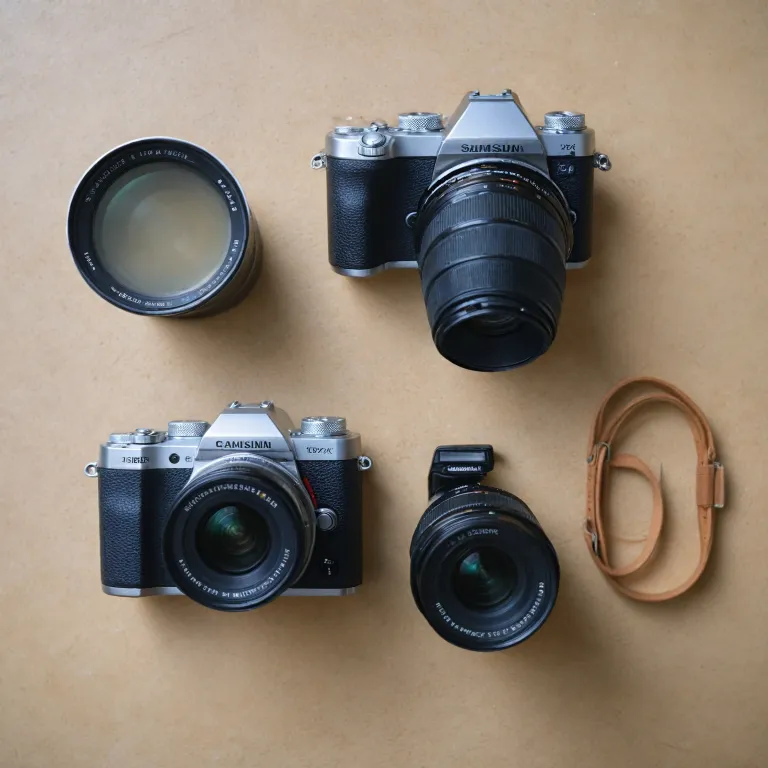
Understanding canon r50 vs r100 for first time mirrorless buyers
When comparing canon r50 vs r100, you are really weighing two different entry level philosophies inside the canon eos mirrorless range. The Canon EOS R50 aims to be a flexible camera body for hybrid creators who care about both still images and video, while the Canon EOS R100 focuses on simplicity for people who mainly want straightforward shooting with minimal settings. For a person seeking information, the challenge is to read spec sheets, understand each sensor and digic processor, and then translate those numbers into real world image quality and autofocus behavior.
Both cameras sit in the canon mirrorless APS C segment, so neither offers a full frame sensor, yet their 24 megapixel sensor designs still deliver detailed images for large prints. The EOS R50 uses a newer sensor with faster read out speed and a more advanced digic processor, which improves autofocus tracking, video fps options, and overall shooting speed when capturing fast action. The EOS R100 shares a similar resolution but relies on an older processor, which affects burst fps, iso range handling, and how quickly the camera can move data from sensor to memory card during continuous frames per second sequences.
From the outside, canon r50 vs r100 may look similar, but the handling experience differs once you start using the lcd screen and controls. The R50 includes a fully articulating touch screen, higher resolution dot display, and more direct access buttons, which help beginners learn exposure, shutter speed, and iso adjustments without diving endlessly into menus. The R100 keeps a fixed non touch lcd screen and a simpler interface, which can feel limiting for video recording time framing, yet reassuring for users who want a basic camera that just focuses and shoots images without distraction.
Sensor, autofocus, and image quality differences between canon r50 vs r100
The heart of canon r50 vs r100 lies in how each sensor and autofocus system handles challenging light and motion. Both cameras use APS C canon eos sensors with around 24 megapixel sensor resolution, but the R50 benefits from upgraded microlenses and faster sensor read out, which reduces rolling shutter in video and improves tracking during high speed shooting. This faster read out also helps the digic processor analyze focus points more quickly, supporting advanced subject detection autofocus and more reliable auto focus in low light scenes.
On the R50, Canon implements Dual Pixel CMOS AF II, which expands the number of focus points across the frame and improves subject recognition for people, animals, and vehicles. This autofocus system works hand in hand with the digic processor to maintain focus at higher fps rates, making the camera better suited for sports, kids, or street photography where subjects move unpredictably. In contrast, the R100 uses an earlier autofocus design with fewer focus points and less sophisticated tracking, which still delivers sharp images for static subjects but can struggle when continuous shooting speed and frames second demands increase.
Image quality from canon r50 vs r100 remains broadly similar at base iso, yet differences emerge as you push the iso range upward. The R50’s newer processor handles noise reduction more intelligently, preserving fine image detail and color when shooting at higher iso values in dim interiors or night streets. The R100’s older processing pipeline can produce slightly softer images at the same iso, and its more limited maximum iso range means you may need to compromise with slower shutter speeds or accept more motion blur when light falls.
For photographers comparing mirrorless cameras from different brands, sony often appears as an alternative, yet canon has refined its own approach to color and autofocus integration. In canon r50 vs r100, the R50 narrows the gap to sony by offering more advanced autofocus, higher video resolution, and better subject tracking, while the R100 competes mainly on price and simplicity. If you want to choose canon for its color science and lens ecosystem, understanding how each camera body processes images and manages autofocus will help you decide which model is better for your style.
When evaluating the lcd screen, resolution dot count matters for judging focus accuracy during live view shooting and video. The R50’s higher resolution lcd screen and touch screen interface make it easier to check critical focus, swipe through images, and adjust focus points quickly, especially when recording video or using manual focus aids. The R100’s lower resolution dot display and lack of touch screen limit this flexibility, which can slow down your workflow when you need to review images or change focus points rapidly during a busy shooting session.
For a deeper dive into how these autofocus and sensor differences affect real projects, many creators compare them in long term field tests such as entry level mirrorless camera reviews. These comparisons often highlight how the R50’s faster shutter options, more responsive autofocus, and better iso range handling translate into a higher keeper rate for action images. Meanwhile, the R100 tends to appeal to users who rarely push the camera to its limits and mainly want reliable stills at moderate speeds.
Video, fps, and recording time in canon r50 vs r100
For many buyers, canon r50 vs r100 becomes a question of how seriously they plan to use video alongside still images. The EOS R50 clearly targets hybrid creators with uncropped 4K video up to 30 fps and Full HD modes reaching 120 frames second, which allows smooth slow motion sequences. This combination of higher resolution video and flexible fps options makes the R50 better suited for vlogging, travel films, and social media content where image quality and autofocus reliability during recording time are critical.
The EOS R100, by contrast, offers cropped 4K video at 24 fps and more modest Full HD frame rates, which significantly narrows the field of view and reduces flexibility for handheld shooting. Because the sensor read out is slower and the digic processor is older, the camera must apply a heavy crop to manage data throughput, which can make wide angle framing difficult even with the RF S 18 45mm kit lens. This crop also affects stabilization options, since any shake becomes more visible at the tighter effective focal length, especially when the camera body lacks in body stabilization and relies on lens based systems.
Autofocus during video is another key difference in canon r50 vs r100, particularly for people who film themselves using the lcd screen as a reference. The R50’s Dual Pixel CMOS AF II system maintains smooth autofocus transitions, tracks faces reliably, and supports subject detection across a wide range of focus points, which is essential for professional looking video. The R100’s simpler autofocus and more limited auto focus coverage can lead to hunting or missed focus when subjects move quickly, making it less ideal for dynamic video shooting even though it remains acceptable for static talking head clips.
Both cameras use the same LP E17 battery, yet effective battery life in video varies because the R50’s more powerful processor and higher resolution modes draw more power. In practice, creators often carry at least one spare battery and a fast memory card to avoid interruptions during long recording time sessions. The R100’s simpler processing can sometimes stretch battery life slightly longer in basic Full HD recording, but the trade off is lower resolution and fewer fps options, which may not satisfy users who want cinematic slow motion or detailed 4K footage.
When comparing canon r50 vs r100 to sony mirrorless cameras in the same price range, video specifications become a central talking point. Sony often emphasizes high fps and advanced autofocus in its APS C line, yet Canon’s R50 narrows that gap by offering uncropped 4K, strong autofocus, and a fully articulating touch screen that simplifies self shooting. The R100 competes more on affordability, providing a path into the canon eos ecosystem for people who mainly care about still images and only occasionally record short video clips.
Real world testing backs up these spec sheet impressions, as shown in the case study where a YouTube creator alternated between both cameras for travel vlogs. The dataset notes that "R50 provided better framing with flip screen, sharper video with uncropped 4K; R100 required tighter compositions due to crop and lacked reliable video AF." For readers who want to explore more creator focused bodies and accessories, resources such as mirrorless video camera guides can help clarify which combination of fps, sensor performance, and autofocus tools best fits their workflow.
Handling, screen design, and usability in everyday shooting
Beyond pure specifications, canon r50 vs r100 feels very different once you hold each camera body and start shooting. The R50, though slightly heavier, offers a deeper grip, more customizable buttons, and a fully articulating lcd screen that rotates for high, low, and front facing angles. This flexibility matters for street photography, travel, and vlogging, where you often need to adjust composition quickly while keeping an eye on focus and exposure information on the screen.
The R100 emphasizes compactness and simplicity, with a lighter camera body and a fixed lcd screen that keeps costs down but limits creative angles. Without a touch screen, navigating menus and moving focus points requires more button presses, which can slow down beginners who are still learning how shutter speed, aperture, and iso interact. For a person seeking information about usability, this difference in screen design and resolution dot count can be as important as raw image quality, because it shapes how enjoyable the camera feels in daily use.
In canon r50 vs r100, the R50’s touch screen interface also makes it easier to select focus points directly on the screen, pinch to zoom into images, and swipe through bursts to find the sharpest frame. This is particularly useful when reviewing high speed shooting sequences, where you may have dozens of images captured at high fps and need to check which frame has the best autofocus lock. The R100’s more basic interface can handle these tasks, yet the process is slower and less intuitive, which may discourage experimentation with continuous shooting and advanced autofocus modes.
Both cameras accept the same RF mount lenses and use similar memory card slots, so your choice does not lock you out of future upgrades within the canon mirrorless range. If you later decide to move toward a full frame canon eos body, many RF lenses will transition smoothly, preserving your investment in optics and accessories. This shared ecosystem is one reason many buyers choose canon over sony or other brands, even when individual camera bodies differ in features like fps, video resolution, and autofocus sophistication.
Battery life in everyday shooting is broadly comparable between canon r50 vs r100, though the R50’s more advanced processor and higher resolution screen can consume more power during long live view sessions. Carrying an extra battery and a high speed memory card is advisable for both models, especially if you plan to shoot bursts at high frames second or record extended video clips. For travel photographers, the slightly lighter R100 may feel better around the neck all day, yet the R50’s superior handling and touch screen often outweigh the small weight penalty. These resources often highlight how features like focus points coverage, lcd screen articulation, and digic processor generation influence real world usability more than minor differences in megapixel sensor counts. In the end, the way a camera encourages you to shoot, review images, and adjust settings will determine whether you feel confident bringing it everywhere.
Autofocus behavior, focus points, and shooting speed in practice
When you look closely at canon r50 vs r100, autofocus behavior and shooting speed reveal how each model serves different photographers. The R50’s Dual Pixel CMOS AF II system spreads a dense grid of focus points across most of the frame, allowing the camera to track subjects as they move unpredictably. Combined with high fps burst modes and a responsive digic processor, this autofocus design makes the R50 better for sports, wildlife, and energetic family scenes where timing and focus precision matter.
The R100, while still using Dual Pixel technology, offers fewer focus points and less sophisticated subject detection, which affects how confidently it can maintain focus during continuous shooting. Its maximum fps with continuous autofocus is lower, and the buffer clears more slowly to the memory card, which can interrupt long bursts. For users who mainly photograph static subjects, landscapes, or posed portraits, this limitation may not be critical, but it becomes noticeable when you try to capture fast sequences of images at high frames second.
Shutter options also differ subtly in canon r50 vs r100, influencing how each camera handles motion and rolling shutter artifacts. The R50 offers faster electronic shutter speeds and more refined control over burst shooting, which pairs well with its advanced autofocus and higher fps capabilities. The R100 focuses on basic mechanical shutter operation, which is reliable for everyday shooting but less adaptable when you want to freeze very fast action or minimize distortion in rapid pans.
In low light, autofocus performance depends on both sensor sensitivity and how the digic processor interprets contrast and phase information from the sensor. The R50’s newer processor and broader focus points coverage help it lock focus more confidently at higher iso settings, preserving image quality while maintaining usable shutter speeds. The R100 can still achieve accurate focus in many dim situations, yet it may hunt more or require slower shutter speeds, which risks motion blur in handheld shooting.
Comparing canon r50 vs r100 with sony rivals again highlights how autofocus ecosystems differ between brands. Sony often markets dense phase detection grids and rapid subject recognition, yet Canon’s R50 narrows the gap by combining its autofocus system with intuitive touch screen controls and clear on screen feedback. The R100, meanwhile, competes more on price and the strength of the canon eos lens ecosystem, offering adequate autofocus for casual users who do not need cutting edge tracking or maximum fps.
For photographers who want to push these cameras to their limits, experimenting with different focus modes, focus points layouts, and burst settings is essential. Using zone autofocus, eye detection, and continuous shooting on the R50 can dramatically increase your keeper rate when photographing children, pets, or street scenes. On the R100, learning when to rely on single point autofocus and how to balance shutter speed, iso, and aperture will help you extract the best possible image quality from its more modest autofocus and shooting speed capabilities.
Battery life, storage, and long term ownership considerations
Choosing between canon r50 vs r100 also means thinking about how each camera will fit into your life over several years. Both models use the same LP E17 battery and standard SD memory card format, which simplifies logistics and allows you to share accessories if you own multiple canon eos bodies. However, differences in processor power, lcd screen brightness, and video usage patterns can lead to slightly different real world battery life outcomes between the two cameras.
The R50’s more advanced digic processor, higher resolution dot lcd screen, and richer video modes naturally consume more energy, especially when recording 4K at higher fps or using continuous autofocus. Many hybrid shooters carry two or three batteries to ensure they can cover a full day of mixed stills and video shooting without interruption. The R100, with its simpler screen and more basic video options, can sometimes stretch a single battery further during casual stills sessions, though heavy use of live view and continuous shooting will still drain power steadily.
Storage considerations in canon r50 vs r100 revolve around how you plan to balance image quality, video resolution, and recording time. Shooting uncropped 4K video on the R50 at higher fps generates large files that demand fast, high capacity memory cards, especially if you want to avoid buffer slowdowns during extended takes. The R100’s cropped 4K and more modest Full HD modes produce smaller files, which can be easier to manage for beginners, yet they also limit flexibility if you later decide to edit more ambitious video projects.
From a long term ownership perspective, both cameras benefit from Canon’s commitment to firmware updates, lens development, and accessory support within the canon mirrorless range. Firmware can refine autofocus algorithms, improve subject detection, and occasionally extend video features, though hardware limits mean the R50 will likely maintain its advantage in autofocus and video over the R100. For users who expect to grow their skills and perhaps move toward more demanding shooting scenarios, starting with the R50 may provide a longer runway before feeling constrained.
Resale value and upgrade paths also matter when evaluating canon r50 vs r100 as part of a broader camera journey. Because both use the RF mount, lenses purchased today can migrate to future APS C or full frame canon eos bodies, preserving your investment even if you later outgrow an entry level camera body. Historically, models with stronger video features, better autofocus, and more flexible lcd screen designs, such as the R50, tend to retain value slightly better than very basic bodies like the R100.
Finally, maintenance habits will influence how long either camera delivers peak image quality and reliable autofocus performance. Regularly cleaning the sensor with a blower, wiping lens contacts, and storing gear in a dry environment will protect both the R50 and R100 from dust and fungus. Paying attention to battery life cycles, updating firmware, and using high quality memory cards will ensure that your chosen camera continues to handle high fps bursts, long recording time sessions, and demanding shooting conditions without unexpected failures.
Which users benefit most from canon r50 vs r100 in the canon eos ecosystem
Understanding who benefits most from canon r50 vs r100 requires looking beyond isolated specs and considering real world shooting habits. The EOS R50 clearly targets hybrid creators who value strong image quality, advanced autofocus, and flexible video tools in a compact camera body. Its uncropped 4K video, higher fps options, articulating touch screen, and sophisticated focus points coverage make it better for vloggers, travel photographers, and enthusiasts who want to push their skills.
The EOS R100, on the other hand, serves people who mainly want a straightforward stills camera with occasional video, prioritizing low cost and simplicity over cutting edge features. Its lighter body, basic lcd screen, and simpler autofocus system reduce complexity for users who might feel overwhelmed by too many options. For a person seeking information and trying to choose canon within the mirrorless cameras market, the R100 represents an accessible gateway into the canon eos ecosystem without a large initial investment.
Within the broader context of APS C mirrorless cameras, canon r50 vs r100 also reflects how Canon positions itself against sony and other competitors. The R50 competes directly with midrange sony bodies by offering comparable autofocus, strong video resolution, and a user friendly interface that leverages the touch screen and clear on screen menus. The R100 instead competes with budget models, focusing on delivering solid image quality and reliable autofocus at a price that undercuts many rivals, even if its fps, video modes, and lcd screen features are more limited.
For families, students, and travelers who mostly shoot still images of daily life, the R100’s combination of a 24 megapixel sensor, decent iso range, and straightforward shooting modes may be entirely sufficient. They can enjoy good image quality, acceptable autofocus, and manageable file sizes without worrying about advanced video codecs or high frames second slow motion. If they later become more serious about photography or video, they can upgrade to a more capable canon mirrorless body while keeping their lenses, memory card collection, and accessories.
Enthusiasts who already understand exposure, shutter speed, and autofocus modes will likely appreciate the R50’s deeper feature set and better performance envelope. Its faster fps bursts, more responsive autofocus, and flexible lcd screen encourage experimentation with action, low light, and creative video projects. For these users, the ability to rely on strong autofocus tracking, high quality images at elevated iso, and robust video recording time makes the R50 a more future proof choice within the canon eos range.
Ultimately, canon r50 vs r100 is less about which camera is objectively better and more about which aligns with your expectations, budget, and willingness to grow. If you want a simple, affordable entry level camera body that delivers good images with minimal fuss, the R100 is a logical starting point. If you aspire to create polished video, capture fast action with confidence, and explore the full potential of mirrorless cameras, the R50 offers a richer toolkit that will reward your curiosity over many years.
Key statistics on canon r50 vs r100 performance
- Canon EOS R50 uses a 24.2 megapixel APS C sensor with a maximum ISO of 51200, while the EOS R100 offers a 24.1 megapixel APS C sensor with a maximum ISO of 25600.
- R50 records uncropped 4K video up to 30 fps and Full HD up to 120 fps, whereas R100 records heavily cropped 4K at 24 fps and Full HD up to 60 fps with 120 fps limited to HD 720.
- R50 achieves burst shooting speeds of up to 12 fps with electronic first curtain shutter and 15 fps with electronic shutter, while R100 delivers slower continuous shooting with autofocus.
- Body only weight for the R50 is approximately 375 g, compared with about 356 g for the lighter R100.
- Average body only pricing places the R50 around 679.99 USD and the R100 around 559.99 USD in the same market region.
Common questions about canon r50 vs r100
Is the Canon EOS R50 better than the EOS R100 for video ?
Yes, the R50 is better for video because it offers uncropped 4K up to 30 fps, higher Full HD frame rates, more advanced autofocus, and a fully articulating touch screen that simplifies self recording. The R100’s cropped 4K, limited fps options, and basic autofocus make it more suitable for occasional clips rather than serious video projects. For creators who prioritize video quality, flexibility, and reliable focus, the R50 is the stronger choice.
Which canon eos camera is more suitable for beginners, R50 or R100 ?
The R100 is more suitable for absolute beginners who want a simple, affordable entry level camera focused on still images. Its straightforward controls, lighter body, and lower price reduce the learning curve, even though the lcd screen and autofocus options are more limited. The R50 remains beginner friendly but targets users who are ready to explore advanced features, video, and faster shooting.
How do the autofocus systems differ between Canon R50 and R100 ?
The R50 uses Dual Pixel CMOS AF II with more focus points, better subject detection, and faster tracking, which improves performance in both stills and video. The R100 relies on an earlier autofocus implementation with fewer focus points and less sophisticated tracking, adequate for static subjects but weaker for fast action. In practice, the R50 delivers a higher keeper rate when photographing moving subjects or recording dynamic video scenes.
Does either camera offer full frame capabilities in the canon mirrorless lineup ?
Neither the R50 nor the R100 uses a full frame sensor; both are APS C bodies within the canon mirrorless RF mount system. However, they can use many RF lenses that also work on full frame canon eos cameras, which helps future proof your lens investment. If you plan to move to full frame later, starting with RF lenses on either body is a sensible strategy.
Is it worth paying extra for the Canon EOS R50 over the R100 ?
It is worth paying extra for the R50 if you value better video, faster fps, advanced autofocus, and a more versatile lcd screen for creative shooting. These features make the camera more capable across a wider range of situations, from travel and family events to vlogging and action photography. If your needs are modest and budget is tight, the R100 still offers solid image quality and a straightforward experience at a lower cost.