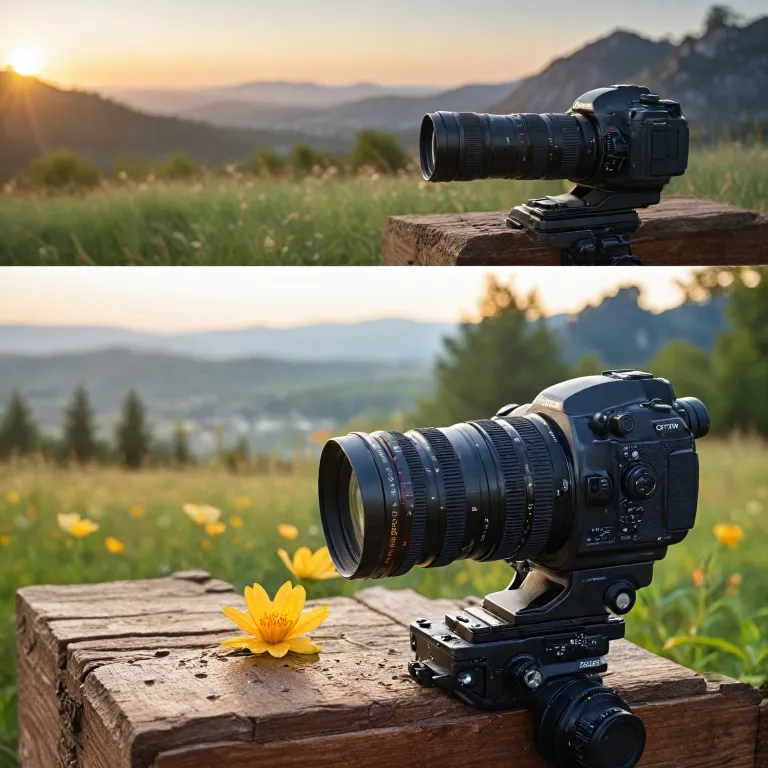

Understanding what makes a lens large in scope
How to Recognize a Lens with a Large Scope
In photography, the term "large scope" often refers to lenses that offer a wide field of view or a significant range of focal lengths. These lenses allow photographers to capture more of a scene, making them ideal for landscapes, architecture, and even group portraits. Understanding what makes a lens large in scope starts with a few key concepts: focal length, angle of view, and sensor format.
- Focal Length: This is the distance (in millimeters) between the lens and the camera sensor when the subject is in focus. Shorter focal lengths (like 14mm or 24mm) provide a wider angle, while longer focal lengths (like 200mm) offer a narrower view. Wide angle lenses and zoom lenses with a broad range are often considered large scope lenses.
- Angle of View: This describes how much of the scene the lens can capture. A wide angle lens, for example, can take in more of the environment, which is crucial for scope photography. Fisheye lenses are extreme examples, providing a very wide field view.
- Sensor Format: The size of your camera’s sensor (full frame, APS-C, or micro four thirds) affects the effective focal length and field of view. A lens may be labeled as 24mm, but on a crop sensor, its equivalent format could be closer to 36mm, changing the scope of your image.
When choosing a camera lens for large scope photography, you’ll encounter both prime lenses (fixed focal length) and zoom lenses (variable focal lengths). Each has its advantages, which we’ll explore further. The best lens for your needs depends on your style, the camera format, and the type of scenes you want to photograph.
For those interested in a classic example of a versatile photography lens, check out this 50mm lens review. It’s a great starting point for understanding how focal length and angle play into your creative options.
As you continue exploring, you’ll see how large scope lenses can open up new possibilities, but also present unique challenges and considerations for your camera setup and shooting style.
Benefits of using a lens with a large scope
Expanding Creative Possibilities with Large Scope Lenses
Using a lens with a large scope in photography opens up a world of creative opportunities. These lenses, often recognized for their wide angle or extended focal length, allow photographers to capture more of the scene in a single frame. Whether you are photographing vast landscapes, architecture, or crowded events, a large scope lens can make a significant difference in your results.
- Wider Field of View: Large scope lenses, such as wide angle lenses and fisheye lenses, provide a broader field view. This means you can fit more into your image, making them ideal for landscape photography, group shots, or any situation where space is limited.
- Versatility in Framing: With zoom lenses that cover a large focal length range, you can quickly adjust your composition without changing your position. This flexibility is especially useful when photographing dynamic scenes or when you need to switch between wide and close-up shots.
- Enhanced Storytelling: A lens with a large scope helps convey scale and context. For example, using a wide angle lens on a full frame camera can emphasize the vastness of a scene, drawing viewers into the story behind the photograph.
- Creative Effects: Some large scope lenses, like fisheye lenses, introduce unique distortions that can add artistic flair to your images. These effects are popular in both creative and commercial photography.
- Improved Low-Light Performance: Many prime lenses with wide apertures and large scope capabilities allow more light to reach the sensor, resulting in better image quality in challenging lighting conditions.
When considering the best lens for your needs, it's important to think about the equivalent format and focal lengths that suit your camera and style. For those interested in exploring a versatile option, check out this test of a popular zoom lens kit that demonstrates the practical benefits of a large scope lens in real-world photography.
Understanding these benefits will help you make informed decisions as you explore the different types of camera lenses available, from prime lens options to advanced zoom lenses. Each lens brings its own unique perspective to your photography, expanding your creative toolkit and enhancing your images.
Challenges when working with large scope lenses
Common obstacles with wide and large scope lenses
Working with lenses that offer a large scope in photography can be rewarding, but it comes with its own set of challenges. Whether you’re using a wide angle lens, a zoom lens with an extensive focal length range, or even a specialized fisheye lens, understanding these hurdles is key to getting the best results from your camera.
- Distortion and perspective issues: Wide angle and large scope lenses often introduce distortion, especially at the edges of the image. This can make straight lines appear curved and alter the proportions of subjects, which is a common concern in architectural and landscape photography.
- Managing light and exposure: Because these lenses capture a broader field view, they can include more light sources or contrasting areas in a single frame. This sometimes leads to overexposed highlights or underexposed shadows, making it tricky to balance the exposure across the image.
- Focus accuracy: Achieving sharp focus across the entire image can be more difficult with large scope lenses, particularly when using wide apertures or photographing at close distances. Depth of field becomes shallower, and focus fall-off can be more noticeable.
- Size and weight: Large scope zoom lenses and some prime lenses tend to be bulkier and heavier than standard camera lenses. This can make handheld shooting tiring and may require additional support, such as a tripod. For those seeking stability, consider checking out the best tripods for photography.
- Compatibility with camera format and sensor size: Not all large scope lenses are optimized for every camera format. For example, a lens designed for full frame cameras may behave differently on a crop sensor, affecting the equivalent focal length and field of view.
- Cost and accessibility: High-quality large scope lenses, whether prime or zoom, often come with a higher price tag. Specialized options like fisheye or ultra-wide angle lenses can be even more expensive and harder to find.
Understanding these challenges is essential before investing in a new photography lens. It helps you select the right lens for your needs and prepares you to overcome common obstacles in scope photography. With the right approach and equipment, you can make the most of your camera’s capabilities and achieve stunning wide angle images.
Choosing the right large scope lens for your digital camera
Key factors to consider when selecting a large scope lens
When searching for the best lens with a large scope for your digital camera, it’s important to match your needs in photography with the technical features of the lens. Here are some essential points to guide your decision:- Focal length and field of view: The focal length determines how wide or narrow your field of view will be. Wide angle lenses (such as 16mm or 24mm) offer a broader perspective, making them ideal for landscape or architecture photography. On the other hand, longer focal lengths (like 70mm or 200mm) are better for capturing distant subjects, such as in wildlife or sports photography.
- Prime vs. zoom lenses: Prime lenses have a fixed focal length, often providing sharper images and wider apertures. Zoom lenses allow you to adjust the focal length, giving you more flexibility in framing your shots. Consider whether you need the versatility of a zoom or the image quality of a prime lens for your style of scope photography.
- Sensor and equivalent format: The size of your camera’s sensor affects the effective focal length of your lens. For example, a 24mm lens on a full frame camera will give a true wide angle view, while on an APS-C sensor, it will appear more like a 36mm lens. Always check the equivalent format to ensure you get the desired angle of view.
- Maximum aperture: A lens with a large maximum aperture (low f-number) allows more light into the camera, which is helpful in low-light situations and for achieving a shallow depth of field. This is especially important for photographing in challenging lighting conditions or when you want to isolate your subject from the background.
- Build quality and compatibility: Make sure the lens is compatible with your camera model and sensor format. Look for robust construction, weather sealing, and smooth zoom or focus rings, especially if you plan to use the lens in demanding environments.
Matching lens features to your photography goals
Choosing the right large scope lens depends on what you want to photograph. Here are a few scenarios:- Landscape and architecture: Wide angle lenses (like 14mm or 16mm) are excellent for capturing expansive scenes and dramatic perspectives.
- Events and travel: A versatile zoom lens (such as 24-70mm) gives you flexibility to photograph a variety of subjects without changing lenses.
- Wildlife and sports: Telephoto zoom lenses (like 70-200mm or longer) help you get close to distant action while maintaining image quality.
- Creative effects: Fisheye lenses and specialty angle lenses can provide unique, distorted perspectives for artistic photography.
Practical considerations for lens selection
- Check the weight and size of the lens, especially if you plan to travel or shoot handheld for long periods.
- Consider your budget. Large scope lenses, especially those with wide apertures or advanced features, can be a significant investment.
- Read reviews and sample images to see how the lens performs in real-world scenarios. Look for details about sharpness, distortion, and color rendering.
- If you enjoy solving photography-related crossword clues or mini crossword puzzles, knowing the terminology (like focal length, angle, and format) can help you better understand lens specifications and make informed choices.
Practical tips for maximizing results with large scope lenses
Mastering Composition and Framing
When using lenses with a large scope, such as wide angle or ultra wide angle lenses, pay close attention to how you compose your shots. The broad field view can easily include unwanted elements at the edges of your image. Take a moment to scan the frame through your camera’s viewfinder or LCD before pressing the shutter. Adjust your position or focal length to keep the focus on your subject and avoid distractions.
Managing Distortion and Perspective
Wide angle and large scope photography lenses often introduce distortion, especially at the edges. This can be creative, but sometimes it’s not desirable. To minimize distortion, try to keep the camera level and avoid tilting it up or down. For architectural or landscape photography, consider correcting perspective in post-processing. If you’re using a full frame sensor, remember that the equivalent format and focal length can affect how much distortion appears in your images.
Optimizing Focus and Depth of Field
Large scope lenses, including both zoom lenses and prime lenses, often have a deep depth of field. This means much of the scene will be in focus, which is great for landscape photography. However, if you want to isolate a subject, use a wider aperture or get closer to your subject. Experiment with different focal lengths and aperture settings to find the best balance for your style of photography.
Leveraging Light and Exposure
Because large scope lenses capture a wide area, they can also let in a lot of light, especially if you’re using a lens with a large maximum aperture. Be mindful of exposure settings, particularly in bright outdoor conditions. Use your camera’s histogram or exposure meter to avoid blown highlights. For best results, consider using filters to control light, especially when photographing scenes with high contrast.
Practical Shooting Techniques
- Use a tripod for stability, especially with longer focal lengths or in low light.
- Try bracketing exposures to ensure you capture the full dynamic range of a scene.
- Practice panning and moving with your camera to explore creative angles and perspectives.
- Review your images at 100% to check for sharpness and unwanted elements in the frame.
Adapting to Different Formats and Sensors
The field view and image equivalent of a lens can change depending on your camera’s sensor size. For example, a wide angle lens on a full frame camera will have a different scope compared to the same lens on a crop sensor camera. Always check the equivalent focal length for your camera format to achieve the desired angle and scope in your photography.
Comparing large scope lenses: a quick reference table
Quick Comparison of Popular Large Scope Lenses
| Lens Type | Focal Length (mm) | Angle of View | Format Compatibility | Best Use Case | Prime or Zoom |
|---|---|---|---|---|---|
| Ultra Wide Angle Lens | 10-18 | Up to 107° | APS-C, Full Frame | Architecture, Landscape | Zoom |
| Wide Angle Prime Lens | 24 | 84° | Full Frame | Street, Environmental Portraits | Prime |
| Standard Zoom Lens | 24-70 | 84°–34° | Full Frame | General Photography | Zoom |
| Fisheye Lens | 8-15 | Up to 180° | Full Frame, APS-C | Creative, Artistic | Zoom |
| Super Zoom Lens | 18-300 | 76°–5° | APS-C | Travel, Wildlife | Zoom |
- Focal length is a key factor in determining the scope of a lens. Shorter focal lengths offer a wider field of view, making them ideal for large scope photography like landscapes or architecture.
- Angle of view describes how much of the scene the lens can capture. Lenses with a large angle are best for photographing wide scenes.
- Format compatibility matters. A lens designed for full frame cameras will behave differently on an APS-C sensor, affecting the equivalent focal length and field view.
- Prime lenses offer fixed focal lengths, often with better image quality and low-light performance. Zoom lenses provide versatility, letting you adjust focal length for different scopes.
- For those seeking the best lens for a specific scenario, consider your camera format, desired angle, and whether you prefer the flexibility of zoom or the sharpness of a prime lens.
Understanding these differences can help you select the right camera lens for your photography needs, whether you are capturing wide landscapes or searching for the answer to a crossword clue about angle lenses. Each lens type brings its own strengths and challenges to the field of view and image quality.